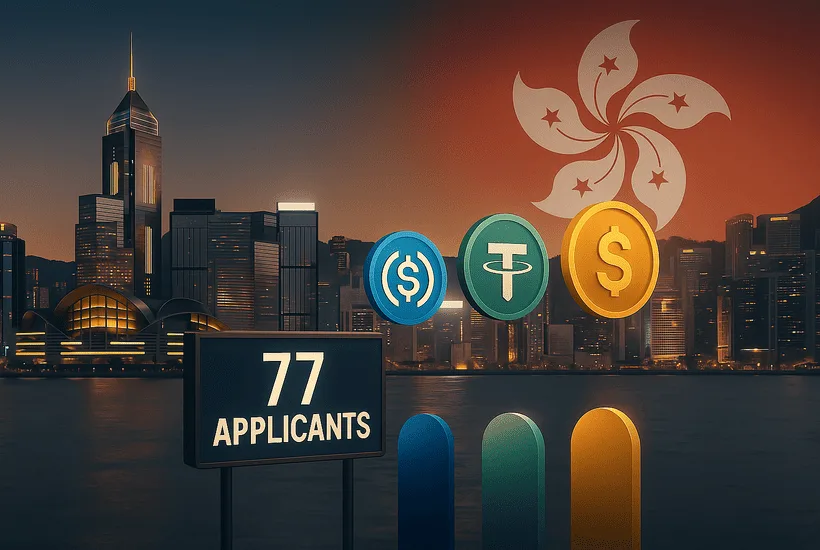


Hong Kong’s initiative for stablecoins has triggered a contemporary licensing frenzy. According to a report by The Standards the Hong Kong Monetary Authority (HKMA) reports that it has received 77 expressions of interest by the August 31, 2025, deadline for its upcoming issuer framework, attracting a much wider audience than typical crypto enthusiasts. Banks, payment processors, asset managers, and Web3 startups are now all eager to have a voice in shaping the movement of fiat-pegged tokens within Asia’s financial infrastructure. The HKMA is maintaining the confidentiality of names and emphasizing that an EOI serves merely as an initial gesture, not a fast track to approval.

The legal framework is established; the Stablecoin Ordinance became effective on Aug. 1, 2025, but the process is deliberately slow. Deputy CEO Darryl Chan Wai-man cautioned that approvals are improbable before 2025 advances significantly, pointing to the substantial effort required to review intricate applications. That evaluation extends beyond whitepapers. Regulators require robust reserve structures, strict segregation and custody measures, prudent investment strategies, real-time verification processes, and AML/CFT systems that can endure cross-border pressures.
The race to control Hong Kong’s stablecoin payment rails
The range of interest emphasizes what is at risk. Previous reports have indicated that leading companies like Standard Chartered and Ant Group are investigating their positions in the framework, while even state-owned behemoths such as PetroChina have examined stablecoins for international transactions. The message is unequivocal: this competition is not just crypto against crypto; it serves as a trial to manage the next wave of digital payment systems for trade and treasury transactions in and through Hong Kong.

For issuers, the immediate challenge is patience and trustworthiness. The HKMA has indicated a purposeful narrowing that will favor operational resilience rather than speed. Anticipate an initial shortlist, followed by a limited flow of licenses solely for teams that can demonstrate effective reserve matching, prudent risk management, robust governance, and smooth interoperability with banking partners. If carried out as intended, Hong Kong’s initial group could establish a model for compliant, bank-quality stablecoins throughout the area.