Bitcoin may remain volatile in the short term as oil prices stay unstable. However, Binance Research says these shocks usually do not change Bitcoin’s medium-term path.
In its 25 March report titled “The Mechanism of Oil Prices Impact on Bitcoin,” the firm explained that Bitcoin often reacts with sharp price swings after sudden jumps in oil prices. Even so, that pressure tends to fade within a few days.
The report comes amid a fresh energy shock caused by the Middle East crisis. According to Binance Research, the current disruption in Hormuz has followed a pattern that has been witnessed in previous geopolitical events.

Bitcoin reacts sharply to oil price surges but the impact fades quickly
During the initial stages, investors become risk averse due to the increase in oil prices, which affects inflation, financial conditions, and market sentiment. This causes BTC to become volatile.
But the report argues that Bitcoin does not always stay tied to the oil move for long. Instead, once the first wave of fear passes, BTC returns to trading on crypto-specific factors such as institutional demand, spot buying, and corporate accumulation.
Binance described this pattern, saying “Bitcoin’s response pattern to oil shocks is ‘short-term volatility amplification followed by independent medium-term pricing ”.
Institutional demand and ETF inflows support BTC stability
The report found that Bitcoin usually follows its own path instead of moving with oil. It also used the recent Hormuz crisis as a key example.
Between 23 February and 18 March, the price of Brent crude increased by 46 percent, while Bitcoin increased by 15 percent over the same period.
As per Binance, the price of BTC was weak initially, followed by a narrow range, and then an increase. This shows the market was able to absorb the shock.
The exchange highlights the institutional demand as the main reason Bitcoin stayed firm.
As per the report, spot Bitcoin ETFs recorded $1.7 billion in net inflows during the crisis period between 2 March and 17 March. At the same time, corporate buyers remained active. Binance said these demand sources helped support Bitcoin when wider market pressure increased.
The report stated that, “Three independent evidence chains—ETF net inflows, Coinbase Premium turning positive, and continued corporate treasury accumulation—document institutional capital executing a counter-cyclical allocation strategy during the crisis.”
Binance says Bitcoin risks mostly come from within the crypto market
Looking at history, Binance argued that Bitcoin’s bigger risks usually come from inside the crypto market itself. The report pointed to the Russia-Ukraine conflict, when Bitcoin still rose in the weeks after the war began.
However, the bigger selloff came later as crypto firms collapsed, including Terra/Luna and Three Arrows Capital. Because of that, Binance said internal market failures remain a more serious threat to Bitcoin than oil-driven volatility.
The Hormuz crisis sent Brent crude from $69 to above $104 in less than three weeks. That was a rise of nearly 50 percent. Even Bitcoin was under pressure at this time. After hitting an all-time high of $90,000 in January, it declined to the $65,000 mark by mid-February.
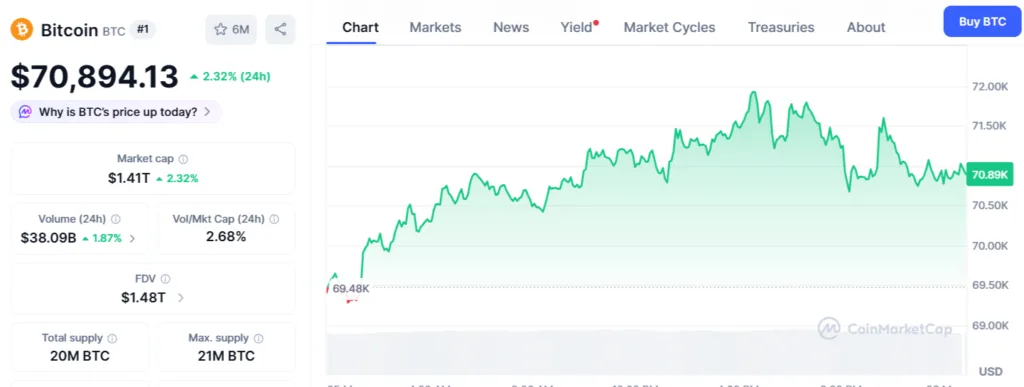
However, it was bought again, and it is now rising again. At present, Bitcoin is at $70,894, up 2.23 percent in the last 24 hours.