



A solo Bitcoin miner hit a major milestone on Thursday. The Miner identified as bc1q-edvj, found a Bitcoin block and claimed the 3.125 BTC subsidy. Transaction fees pushed the total near 3.12 BTC.
At the time, that payout sat near $225,000. The block arrived through CKPool, a solo-focused service. The result highlights how Bitcoin mining still rewards luck, not only scale.
Solo Bitcoin miner lands a rare block reward on CKPool
The miner aimed about 70 terahashes per second at the network. That share equals a tiny slice of global hashing power. Reports estimated odds near 0.001 percent at that hash rate. They also pegged the rig at about 0.00000667 percent of total network power. CKPool developer Con Kolivas, known as Dr-ck, flagged the feat on X. He wrote that a miner this size has “a 1 in ~100,000 chance” daily. He added that the average wait runs near 300 years.

The reward matched the current era after the 2024 halving. Bitcoin pays 3.125 BTC per block before fees. That subsidy halves about every four years. Fees vary with mempool demand and block space pressure. The dollar value moved with Bitcoin’s spot price during the hour.
Solo Bitcoin miner odds show how rare the event remains
Bitcoin mining works as a race to solve a cryptographic puzzle. Every ten minutes, the network expects one winner. Pools win most blocks because they combine massive hash power.
They also smooth payouts by sharing rewards across members. A solo Bitcoin miner faces sharp variance, even with steady uptime. Most days end with no block and no payout. One day ends with everything.
This block also followed another CKPool solo win about a week earlier. That earlier miner used more than triple the hash rate. Even so, it still counted as tiny versus the network total. Two wins in one week do not signal a trend.
CKPool keeps solo mining simple without changing the math
CKPool targets miners who want solo rules with less setup work. It lets users mine without operating a full Bitcoin node. CKPool supplies the storage and bandwidth behind the scenes. Miners connect, submit shares, and wait for a rare full solution. If they hit a block, they keep the block reward. CKPool takes a 2 percent fee for the service.
The service has logged hundreds of successful solo blocks over time. The latest win marked the 313th CKPool solo block. That figure sounds large until you stretch it across years. It also reflects many miners trying small hash rates. Some miners even point spare, older rigs at CKPool for a long-shot attempt. Each attempt buys a lottery ticket in Bitcoin mining.
Bitcoin mining competition rises as hash rate moves higher
The win is linked to a sharp rise in network hash rate over 24 hours. BitInfoCharts data show a near 15 percent jump. More hash rate raises competition for every block. It can also lift mining difficulty at the next adjustment. That dynamic squeezes margins if price does not rise too.
For small operators, costs often decide survival faster than difficulty. Power prices vary by region and season. Older ASICs also run less efficiently per terahash. A solo Bitcoin miner with a single unit may accept slim odds for a story. Larger farms focus on predictable cash flow instead. Both groups still compete in the same Bitcoin mining race.
Bitcoin price holds firm as solo miner lands $225K reward
The solo win circulated as Bitcoin traded around the low $70,000 range. That price level helped frame the payout near $225,000. Even so, the solo Bitcoin miner win spread fast because it offered a simple, human hook.
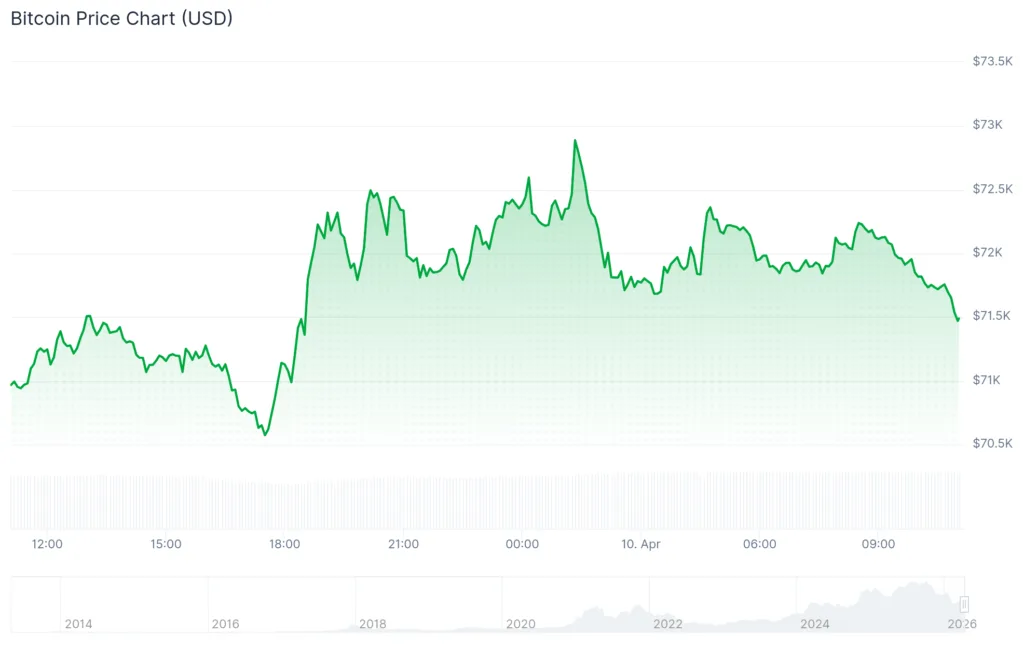
Yet market narratives also turned sharply bearish in parallel coverage. Bloomberg Intelligence strategist Mike McGlone warned of a possible drop to $10,000. He described it as an unwind of the pandemic liquidity era.
Price matters because it sets miner revenue in fiat terms. If price falls and hash rate stays high, weaker rigs shut down first. If the price rises, new machines often come online quickly. That feedback loop can keep Bitcoin mining competitive through cycles. It does not change that loop. It only changes who can try, and how easily they can try.