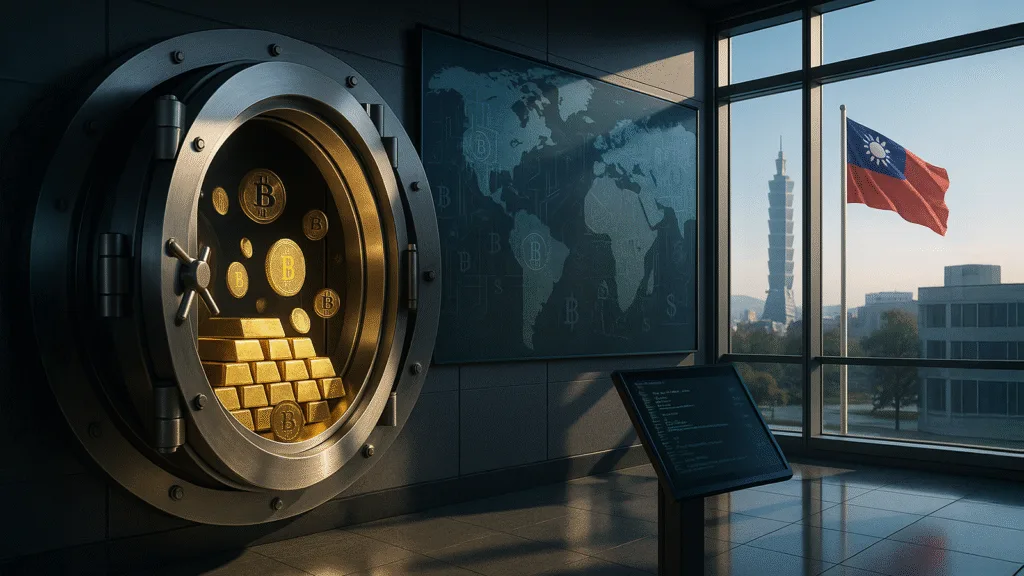



The Central Bank of Taiwan and the Executive Yuan announced they are formalising a study to test including Bitcoin as part of the nation’s reserves. The pilot programme will initially use confiscated Bitcoin that is attained from legal proceedings and not purchase new Bitcoin for the project. The country will test custody, valuation, and integration protocols for a potential reserve allocation.
The development was spearheaded by legislator Dr. Ju-chun Ko, who urged Taiwan’s Central Bank and Executive Yuan to consider Bitcoin as a hedge against the volatility of the new Taiwan Dollar. Ko’s proposal gained traction earlier in May 2025, when he publicly called for a strategic review of Taiwan’s reserve composition.

Samson Mow, CEO of Bitcoin infrastructure firm JAN3, backed the initiative, citing Taiwan’s potential to lead Asia in sovereign Bitcoin adoption. Mow met with Ko and other lawmakers to discuss regulatory frameworks and custody models for digital assets
Bitcoin pivot amid currency volatility
Taiwan holds roughly $577 billion in foreign reserves, of which about 92% is tied up in U.S. Treasury bonds. This heavy reliance on U.S. bonds has become concerning as it increases the volatility in the new Taiwan Dollar, too. Washington’s interest-rate policy has caused major intra-day fluctuations in the Taiwanese dollar recently. In order to reduce this risk, Bitcoin is being evaluated as a hedge against currency and geopolitical uncertainty.
Taiwan’s current crypto regulation landscape
Taiwan’s regulatory regime treats cryptocurrencies, including Bitcoin, as speculative digital virtual commodities and not legal tender. The Financial Supervisory Commission (FSC) and the CBC have been active in enforcing anti-money-laundering (AML) rules. Virtual Asset Service Providers (VASPs) must register and comply with AML standards, and digital asset activities may be regulated under the Securities and Exchange Act if tokens qualify as securities.
Taiwan’s Central Bank is expected to draft supportive regulations over the next six months, with a full audit of seized Bitcoin holdings due by year-end. The pilot program will assess Bitcoin’s viability as a strategic reserve, including its impact on liquidity, volatility, and long-term fiscal resilience.
If successful, Taiwan will join a growing number of Asian economies to formally integrate Bitcoin into its treasury mix, experimenting with crypto-backed fiscal strategies.