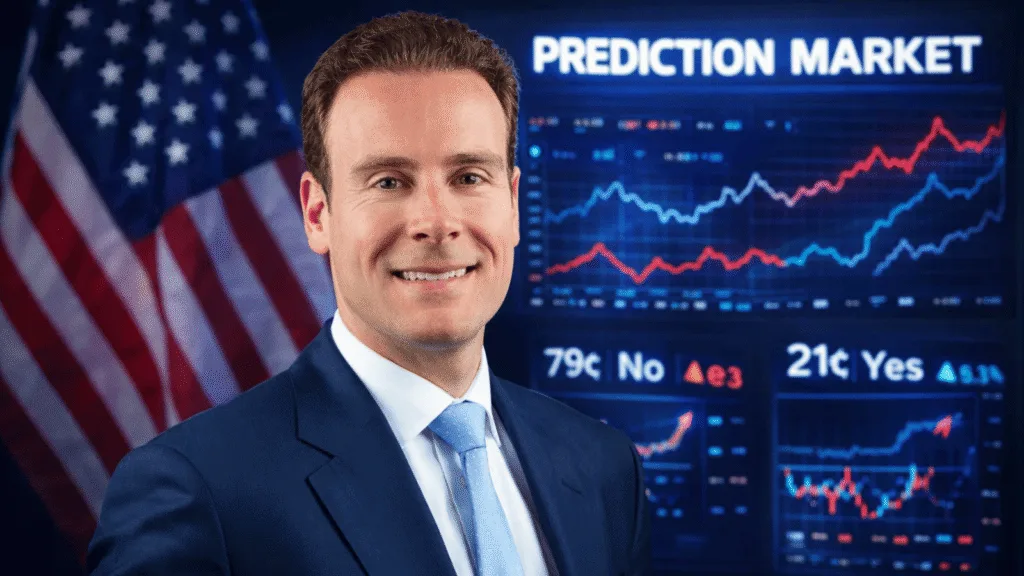



The U.S. Commodity and Futures Trading (CFTC) has initiated the process to formulate the regulations to oversee prediction markets like Kalshi and Polymarket. The federal agency said the development is nudged by the rising popularity of prediction markets that has been observed in recent months.
The CFTC has proposed that prediction markets must be required to get a clearance from the agency. It has also intended to allow trading contracts that are not susceptible to manipulation to be made live on prediction platforms.
Platforms offering sports contracts — wherein people can bet on the future outcomes of sporting events — may need to collaborate with state sports and gaming authorities to mutually agree on terms and conditions, as per CFTC’s proposal.

Michael Selig, serving as the 16th Chairman of the CFTC, has batted in favour of prediction markets calling them an exciting innovation.
The CFTC has invited public feedback on the regulations that have now entered the discussion phase in the U.S. The agency has published an Advanced Notice of Proposed Rulemaking (ANPR) inviting comments from industry players as well as the public.
“Today’s action is an important step in the Commission’s continued effort to promote responsible innovation in our derivatives markets,” Selig said. “This begins the process of new rulemaking grounded in a rational and coherent interpretation of the Commodity Exchange Act, while reassuring the American people that the CFTC will exercise its exclusive jurisdiction over prediction markets.”
The calls for clear rules overseeing prediction markets started to intensify after the states of Nevada and Massachusetts started cracking down on Kalshi, Coinbase, and Polymarket over offering unauthorized and unlicensed betting services.
The CFTC has long argued that prediction markets fall under the category of commodity derivatives, that are federally within CFTC’s jurisdiction.
Prediction markets can be explained as online exchange platforms that let people purchase shares in the possible outcome of a future event. In a typical prediction market, every contract pays out exactly $1.00 if the event happens and $0.00 if it does not.