



Crypto lender BlockFills has filed for bankruptcy as the prolonged downturn in the crypto industry continues to weigh on digital asset companies.
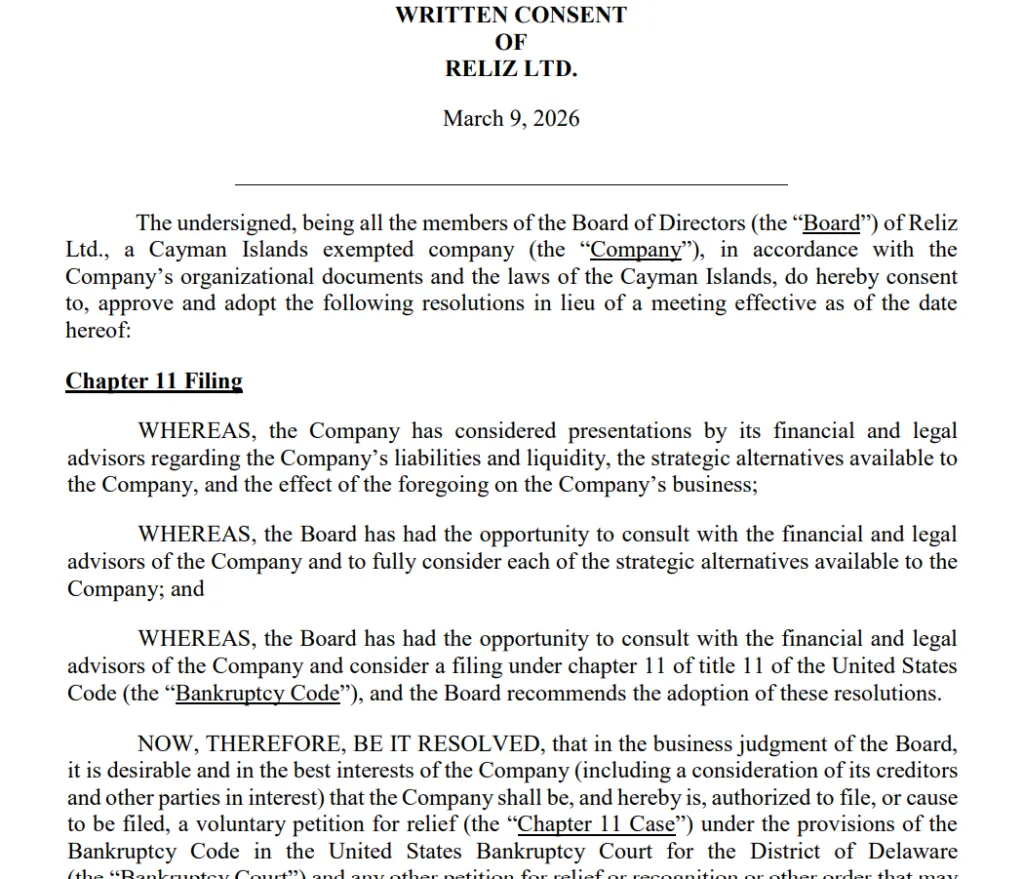
On Sunday, the firm’s operator, Reliz Ltd., along with three related entities, submitted voluntary Chapter 11 bankruptcy petitions in the United States Bankruptcy Court for the District of Delaware.
Filing for Chapter 11 allows the companies to restructure their debts while continuing to operate under court supervision.

The move comes at a time when the crypto industry has been under pressure in what can be referred to as the “crypto winter,” forcing many businesses in the industry to rethink their financial situation.
Debts mounts on BlockFills
According to court documents, Reliz Ltd. had assets that fell within the range of $50 million to $100 million, while its liabilities rose to the range of $100 million to $500 million.
In a statement, BlockFills said the decision to file for bankruptcy came after extensive discussions with investors, clients, creditors and other stakeholders.
The company said seeking Chapter 11 protection was the most responsible way to preserve the value of the business and improve potential recoveries for those involved.
The filing will allow the firm to restructure its operations under court supervision while continuing to maintain transparency throughout the process.
According to the statement, several BlockFills-related entities filed voluntary restructuring petitions on March 15, 2026, in the United States Bankruptcy Court for the District of Delaware.
What led to the bankruptcy?
BlockFills had been facing increasing financial pressure in the months leading up to its bankruptcy filing.
Reports last month indicated that the company had lost around $75 million and was exploring options such as selling the business or securing emergency funding to stabilize its operations.
The firm provides a range of services to institutional clients, including crypto lending and borrowing, derivatives trading and over-the-counter execution. Its client base includes hedge funds, asset managers, market makers and mining companies. BlockFills is also backed by several institutional investors, including Susquehanna Private Equity Investments, CME Ventures and Nexo Inc..
The company’s troubles deepened after a lawsuit from Dominion Capital, which alleged that the firm had mishandled millions of dollars in customer crypto assets and commingled client funds. A U.S. federal judge later issued a temporary restraining order as the dispute unfolded.
Earlier in February, BlockFills had already paused customer withdrawals and deposits, citing difficult market conditions while it worked with investors and clients to restore liquidity to the platform.