



Amid the lack of a comprehensive set of crypto regulations, India has decided to fasten its oversight over the digital assets sector. The Financial Intelligence Unit of India (FIU-IND) has reportedly added more security layers to the KYC requirements for crypto exchanges stepping into 2026.
As part of new user onboarding, crypto exchanges operating in India will need to collect live selfie verification and geo-tags as part of their KYC details.
As per the official document viewed by Coin Headlines, FIU’s live selfie feature will verify facial features in more depth than regular face-ids. Actions like eye blinking and head movements will be recorded under the live selfie requirement, to ensure that deepfakes for breaches and hacks can be identified and flagged immediately.

In terms of geo-tagging, data like the latitude and longitude of the locations will be recorded alongside the dates, timestamps, and IP addresses related to the initiation of a new account registration.
Among other notable changes to the crypto KYC system, the FIU has instructed exchanges to adhere to the “penny-drop” method to ensure that the bank account being linked to the new account is active and in use by the registrant.
Submissions of a secondary identification document alongside the PAN card has also been mandated by the government for those looking to sigh-up on a crypto exchange. Aadhaar cards, passports, and voter IDs reportedly make for legible secondary documents.
In addition, OTP verification through both, phone number and email ids have been made compulsory for exchanges to process before confirming users to join crypto platforms.
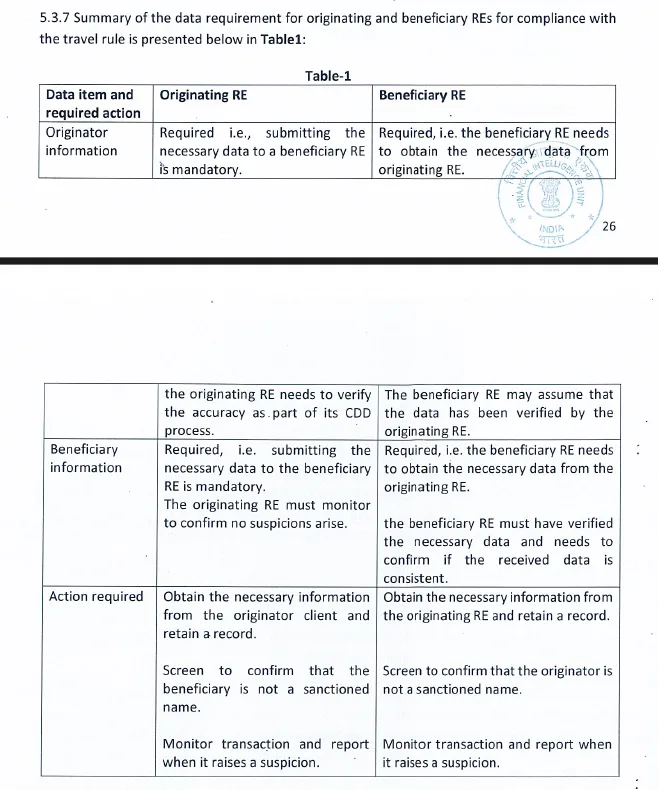
Source: FIU
At present, the FIU is the chief agency regulating and overseeing India’s crypto ecosystem. Exchanges looking to operate legally in the world’s most populated country first need to complete a registration with the FIU.
The agency has clearly strongly advised crypto players to refrain from Initial Coin Offerings (ICOs) and Initial Token Offerings (ITOs) citing financial risks to investors, and subsequently the national financial ecosystem.
Privacy coins that can help conceal transactions are under the detection radar. While India has not banned them, it is possible that these tokens would be pushed into being delisted in due time.
The public reaction to the development seems mixed. While some have called these changes “smart”, the others have pointed out at India’s skepticism towards the $3 trillion industry.
Last year, the RBI had filed a document showing resistance towards creating regulations around crypto to keep digital assets away from the mainstream financial landscape.
The country, that is yet to regulate stablecoins and establish market structure guardrails around crypto, has been maintaining a sharp sight on identifying unregistered exchanges. Recently, the country on 25 foreign exchanges including BingX, LBank, CoinW, and ProBit Global.
Ahead of the 2026-2027 budget announcement, the government has invited public suggestions on economic strategies and required changes through the MyGov app. Members of the crypto fraternity are urging community members to use this opportunity and highlight the requirement of more comprehensive guidelines.
Crypto purchasing, trading, and holding is legal in India. The country, however, charges 30 percent taxes on crypto incomes while also slashing a one percent TDS on each step of the transaction. The crypto community has been urging for a revision of these tax rates for four years since the rules were deployed — but the finance ministry has maintained stark silence so far.