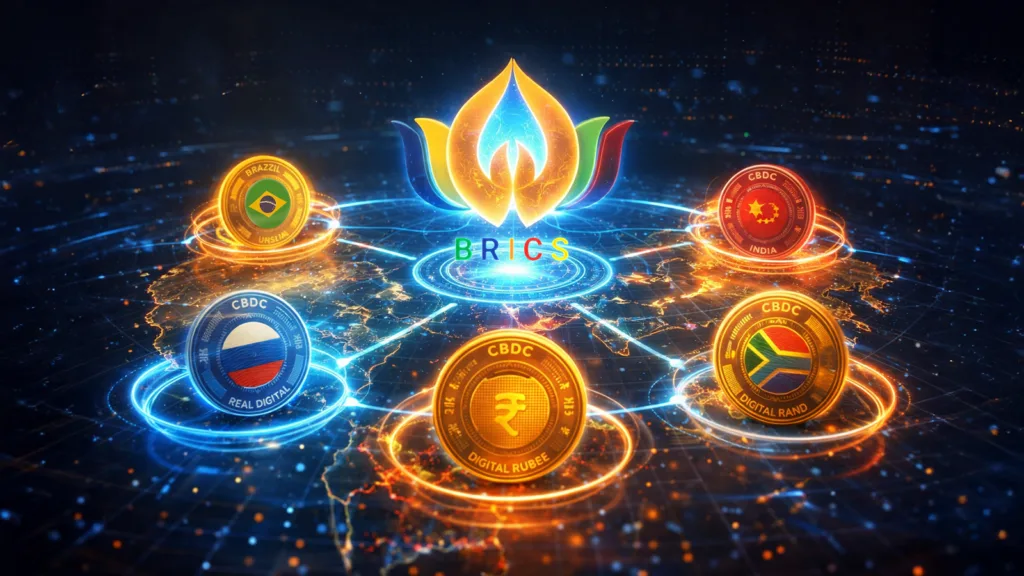



In a move that may irk U.S. President Donald Trump, India is prepared to propose the interlinking of official CBDCs of the BRICS nation. India’s agenda for the 2026 BRICS summit will have this proposal recommended by the Reserve Bank of India (RBI) itself, a Reuters report citing sources familiar with the matter said on Monday.
If approved by all members of the BRICS group, the move could establish an internal settlement system for Brazil, China, Egypt, Ethiopia, India, Indonesia, Iran, Russian Federation, South Africa, and the UAE — which could reduce the dominance of the USD to facilitate international settlements.
India, as the president of the BRICS this year, is set to host the 18th edition of the summit. It will be the first time that the proposal to link CBDCs of the BRICS nations be officially brought to the table, the Reuters report said.

A CBDC or a Central Bank Digital Currency can be defined as the blockchain representation of fiat currencies maintaining a 1:1 ration. Transactions facilitated through CBDCs would leave a permanent and immutable log on the blockchain, bringing more transparency to the financial system. Since CBDCs can only be issued by central banks, they could function like crypto — offering instant, P2P transactions — but be more regulated than digital assets.
While India, Russia, Brazil, and China have made strides in the development of their respective CBDCsc — eRupee, Digital Ruble, Drex, and eCNY — other BRICS members like Iran, Ethiopia, Egypt, South Africa, and Indonesia are still lacking in their CBDC efforts. As per reports, Indonesia is still developing its CBDC ‘Digital Rupiah’ under the name ‘Project Garuda’.
BRICS stroke de-dollarization concerns
Elaborate discussions among the BRICS nations on India’s proposal could take a while though. These discussions first started in 2024 under the presidency of Brazil. At the time, the RBI had floated the proposal to create an internal payment system to facilitate quick, cross border settlements among member nations.
In December 2024, President Trump had warned the BRICS nations to brace for massive tariff hikes if they create internal payment networks with the aim to de-dollarize.
The U.S. President himself is a staunch critic of CBDCs who believes that these central bank-issued tokens would only increase the financial surveillance over people’s day-to-day financial activities.
For now, an official confirmation on India’s plan to propose this CBDC-linked payment network to the BRICS group remains awaited.