




The UK’s National Crime Agency (NCA) said Thursday that it led an international operation targeting crypto fraud and freezing more than $12 million in suspected criminal proceeds.
The action, called Operation Atlantic, focused on approval phishing scams that trick users into giving criminals access to their crypto wallets.
Investigators and private sector partners identified more than 20,000 victims across the United Kingdom, the U.S., and Canada. They also traced more than $45 million linked to crypto fraud schemes worldwide.

Operation Atlantic tracks approval phishing scams
Operation Atlantic ran from March 16 to March 20. It brought together the UK’s National Crime Agency, the US Secret Service, the Ontario Provincial Police, and the Ontario Securities Commission.
The agencies worked from the NCA’s London headquarters and shared intelligence in real time. City of London Police, the Financial Conduct Authority, and other international bodies also took part.
The operation, meanwhile, centered on approval phishing, a scam that relies on wallet permissions rather than direct transfers. Criminals usually lure victims with fake investment offers or fake service requests.
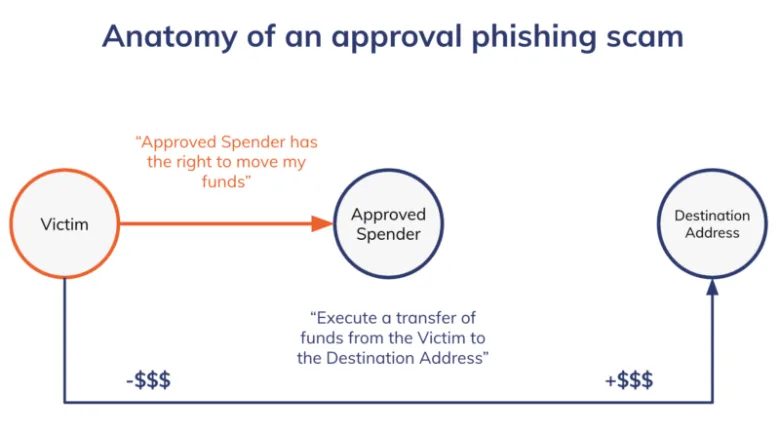
When a user signs the request, the scammer gains permission to access certain tokens in the wallet. That access can then be used to move funds without a separate transfer from the victim.
Authorities stated that one UK victim lost more than GBP 52,000 (roughly $69,898) in this type of fraud. Investigators used blockchain tracing tools, technical support, and direct outreach to identify people who had already lost money or still faced immediate risk. Fast coordination helped them secure funds before criminals moved them again.
Investigators are still reviewing the intelligence gathered during the action to support victims and pursue more cases. The agency linked this work to the government’s fraud strategy, which aims to connect industry data and law enforcement action earlier.
Public and private groups worked side by side
The operation relied on joint work between law enforcement and private companies that track transactions and monitor scam activity.
According to the NCA, private sector partners helped trace illicit transfers, identify victims in real time and support asset seizure efforts. That cooperation allowed investigators to act while fraud networks were still active.
“Operation Atlantic is a powerful example of what is possible when international agencies and private industry work side by side,” noted Miles Bonfield, Deputy Director of Investigations at the NCA. “This intensive action has led to the safeguarding of thousands of victims in the UK and overseas, stopped criminals in their tracks and helped save others from losing their funds.”
Bonfield added, “We know that fraudsters operate globally and, together with our international partners, so will the NCA to target them wherever they are based.”
His comments pointed to the cross-border nature of crypto fraud and the need for coordinated enforcement.
Binance said it supported the operation through its Special Investigations team. The exchange argued that its staff worked on-site at the NCA’s London headquarters and helped with live account screening, scam intelligence, and research into scam websites that remained active during the operation.
The company also mentioned that it shared information on possible bad actors to support seizure efforts.
Binance said no funds were frozen or seized from accounts on its platform during Operation Atlantic. It said the criminal proceeds targeted in the case were held outside Binance. The company added that its role focused on victim identification, intelligence support, and law enforcement outreach.
How approval phishing drains wallets
Approval phishing has become a common threat in crypto because it can look like routine wallet activity.
Many users connect their wallets to websites, token platforms, or apps without checking the permissions they grant. A malicious approval can give an attacker the right to spend certain tokens from the wallet.
Unlike older scams, approval phishing does not always depend on a victim sending money directly to a criminal.
Instead, the victim signs a permission request that looks harmless. Once that approval is in place, the attacker can use it to drain assets. In many cases, the loss becomes clear only after the funds are gone.
“Approval phishing is one of the most damaging types of scams targeting crypto users today,” said Flavio Tonon, Binance’s senior regional advisor for Europe, the Middle East, and Africa.
He said the case showed how public and private groups can work together against fraud. He also said blockchain transparency makes it harder for criminals to hide their activity for long.
Authorities said the operation also identified scam websites that were still targeting users at the time. That part of the work helped investigators step in before more victims lost funds.
The NCA said it will continue reviewing the intelligence gathered during the March operation to support active cases and help people who may still be at risk.
Crypto fraud cases keep rising
The operation came as official data showed higher losses tied to crypto-related fraud. As we reported on April 7, the FBI’s Internet Crime Complaint Center said Americans reported losing $11.37 billion to scams and fraud linked to cryptocurrency and other digital assets in 2025. That was 22 percent higher than the year before.
In 2025, the FBI documented 181,565 crypto-related complaints, compared to 150,103 in 2024, a 21 percent rise. The average loss per victim was approximated to be about 62, 600.
Almost 18,600 individuals responded that they had lost over 100 thousand dollars. The data revealed that the cryptocurrency was still a prevalent aspect of online fraud incidents in the US.
The recent move in the UK, the US, and Canada is in the form of more authorities stepping up crackdown against fraud networks that rely on crypto, stolen data, and cross-border payment services.
On April 3, Cambodian legislators also took a step towards a cybercrime framework trying to crack down on scam compounds and on-line fraud activities.
Authorities in other parts of the world have been under increasing pressure to crack down on cross-border organized fraud groups.