
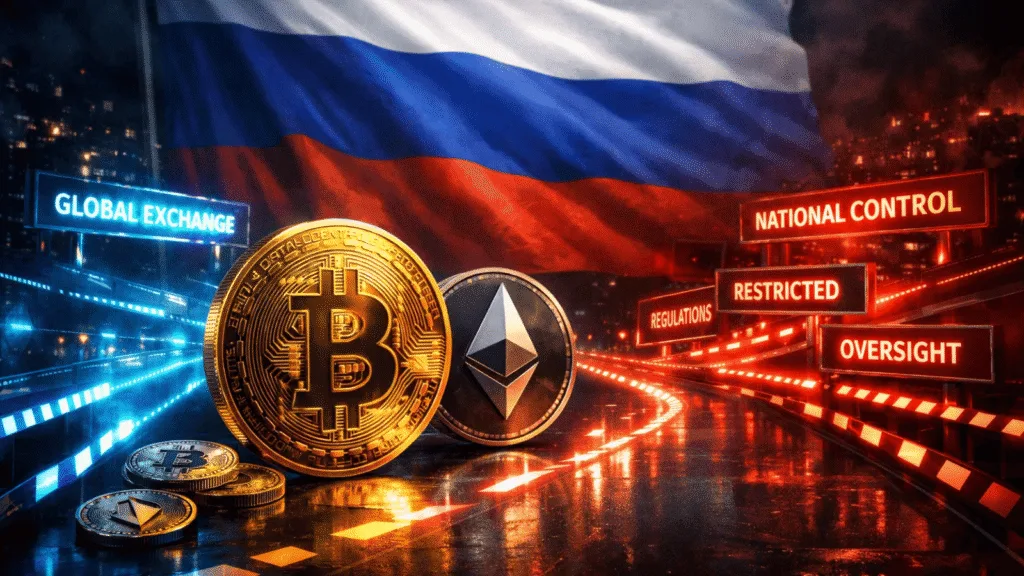



Russian authorities are looking towards imposing a blockade on international crypto exchanges, a move that can help the sanctioned nation excel its homegrown exchanges.
According to local media reports, industry experts say Russia could begin blocking foreign cryptocurrency exchange websites as early as this summer, in a move designed to align with the rollout of new domestic crypto regulations.
The possible restrictions could happen at the same time as the government’s promise to put new crypto market laws into effect by July 1. This would be part of a larger effort to bring digital asset activity under stricter national control.

Moscow may mirror “Belarus Model”
Some experts think that Moscow might pursue a policy similar to the one in Belarus, where access to some foreign platforms is limited in order to promote local services, which are regulated by the government.
But it might be hard to completely block Russian traders from using foreign platforms. Tech-savvy traders can easily circumvent website bans using VPNs and other technologies.
Even so, such a step would mark a significant shift in Russia’s approach to controlling cross-border crypto activity.
Russia pays hefty amounts in foreign crypto transactions
Sergey Shvetsov, who chairs the supervisory board of the Moscow Exchange, said Russians are paying around $15 billion in fees to foreign cryptocurrency exchanges.
In simple terms, that’s a huge amount of money flowing out of the country to overseas platforms.
Shvetsov said the Moscow Exchange wants to start “competing for this pie” as soon as possible. That means it plans to launch or expand its own crypto-related services to attract Russian traders and keep more of those fees within the domestic financial system, boosting its own profits in the process.
According to market analysts, if the government further cracks down on foreign cryptocurrency services, it will not have the desired effect of cleaning up the market.
Rather, it could lead to more fraud, higher transaction costs, and the development of black markets. As the expert says, a more effective policy would be to give existing cryptocurrency services in Russia the opportunity to register or work as partners of Russian exchanges and brokers.
Otherwise, a more fragmented and difficult-to-trace market could develop quickly.
It is also reported that a simple website block could be more of a publicity stunt than a serious policy response, considering the huge amount of money that is being processed in cryptocurrency markets.
Regardless of what policies the government adopts, the cryptocurrency market will likely adapt quickly.