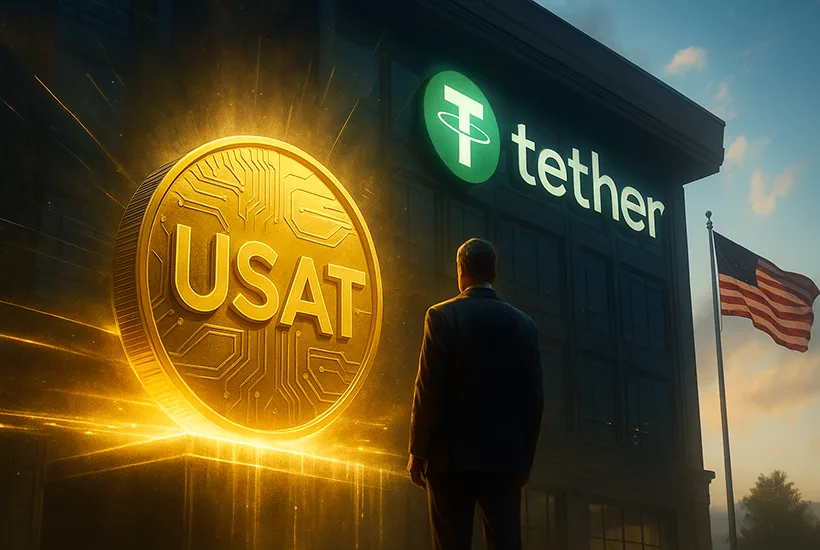


Tether, the company behind the world’s most widely used stablecoin USDT, has formally announced a new stablecoin for the U.S. market called USAT. The announcement came in on September 12, 2025, and also placed Bo Hines as CEO of its U.S. division. With this, Tether intends to comply with new American regulations under the GENIUS Act and gain greater legitimacy in the United States.
Anchorage Digital Bank, which is a nationally chartered trust bank under U.S. oversight, will be the issuer of USAT. The reserves behind USAT will be managed by Cantor Fitzgerald. Bo Hines, formerly a director on President Trump’s White House Crypto Council or crypto advisory group, previously appointed as Tether’s strategic adviser for U.S. affairs, will lead USAT from Charlotte, North Carolina.

What makes USAT different from USDT?
SAT is being designed to fully comply with U.S. stablecoin rules instituted under the GENIUS Act. These rules mandate asset-backing, transparency measures like monthly reserve disclosures, audits, and issuance by entities under U.S. jurisdiction. Unlike USDT, which is currently a “foreign stablecoin issuer” when servicing U.S. users and may need to seek reciprocity under new law, USAT will be issued onshore via Anchorage Digital, and thus directly under U.S. regulatory frameworks.
USAT’s reserves will be backed by highly liquid, U.S. dollar-denominated assets like U.S. Treasury bills, and subject to stricter transparency and audit obligations. In contrast, USDT historically has had a more mixed reserve composition (including non-cash equivalents) and has faced criticism over transparency.
By creating a fully regulated U.S. version of a stablecoin, Tether aims to protect its market position against competitors like Circle, Paxos, and capture more institutional and business demand within the U.S.