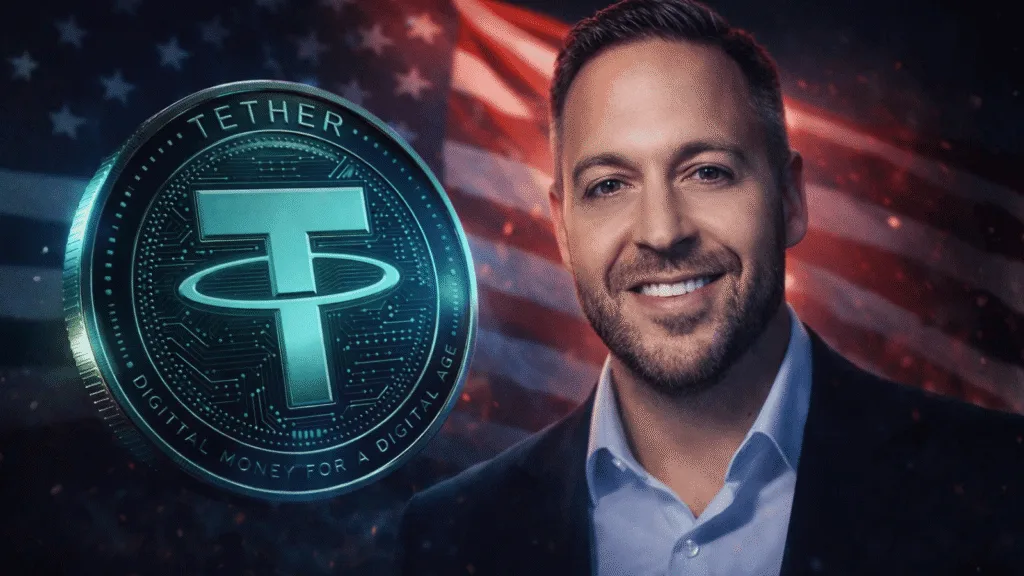



Washington’s fight over stablecoin rules has pulled in a new political player tied to Tether. The Fellowship PAC, a crypto-backed super political action committee, has named Jesse Spiro, Tether U.S. vice president of regulatory affairs, as its chairman.
The move comes as lawmakers continue to argue over the CLARITY Act and the rules that could shape the stablecoin market in the United States.
One of the main sticking points is whether crypto firms should be allowed to offer rewards to users who hold stablecoins.

Fellowship PAC puts Jesse Spiro in top role
In a statement on Wednesday, the Fellowship PAC said Spiro will lead the group as it expands support for candidates who back crypto policy and broader technology growth in the United States.
The announcement gives the PAC a chairman with direct ties to Tether US, one of the firms now closely linked to the stablecoin debate in Washington.
The group said it was formed to support America’s position in digital assets and entrepreneurship. It described its mission as backing leaders who favor open markets, clear rules, and long-term growth in financial technology. Under Spiro, the PAC stated it will soon begin announcing its first endorsements.
”This is a pivotal moment for American innovation. We have an opportunity to ensure the United States remains the global hub for builders, entrepreneurs, and technological progress. Fellowship PAC is committed to supporting leaders who understand what’s at stake and are willing to act,” Spiro noted.
Moreover, that message places the PAC inside a wider push by parts of the crypto industry to gain more influence in Washington before the 2026 midterm elections. It also ties Tether more directly to a policy fight that is no longer limited to lawmakers, regulators, and lobby groups.
Stablecoin rewards remain a major point of conflict
The biggest dispute in the current Senate debate centers on stablecoin rewards. Lawmakers and industry groups have disagreed on whether firms should be able to pay users for holding dollar-backed tokens.
That issue has emerged as one of the main reasons the CLARITY Act has struggled to advance.
Supporters of these rewards say they could help firms grow stablecoin use and build new payment products. Critics, especially in banking, say the model could pull money away from bank deposits.
Banks rely on deposits to fund lending, and that concern has turned the issue into a major point of pressure in Washington.
The latest draft has not eased those tensions. As we reported, Coinbase declined to support the most recent version of the bill.
Circle also came under pressure as reports pointed to resistance against models that would let firms offer rewards tied to stablecoin products such as USDC.
A compromise proposal also failed to settle the matter. That proposal would have allowed companies to reward users for using stablecoins rather than simply holding them. Even that version did not appear to win enough backing.
As a result, the stablecoin rewards issue has moved to the center of the crypto policy debate in Washington. It now shapes not only the future of the CLARITY Act, but also the balance of power between crypto firms, banks, and lawmakers.
Crypto political money keeps growing before midterms
Spiro’s appointment comes as crypto-backed political groups prepare for another costly election cycle. The Fellowship PAC launched in September 2025 with more than $100 million in committed backing, according to public reporting. The group said it plans to support ”pro-innovation, pro-crypto candidates.”
That figure has drawn attention because the crypto industry already showed its political strength in recent elections. Fairshake, another crypto-backed PAC supported by companies such as Ripple Labs and Coinbase, spent more than $130 million on media buys during the 2024 election cycle. It also reported having $193 million ahead of the 2026 midterms.
The Fellowship PAC filed its statement of organization with the Federal Election Commission in August. As of Dec. 31, it had reported no contributions or expenditures. Even so, the group has mentioned it has access to more than $100 million.
Public details about the source of that backing remained unclear at the time of publication.
That lack of detail has not reduced interest in the PAC’s next move. With primary contests already underway and the general election still months away, crypto-backed committees may play a larger role in shaping campaign messages and candidate support.
Tether faces pressure on more than one front
The timing of the PAC move also matters because Tether is dealing with separate questions around stablecoin oversight and financial reporting. Tether’s USDT remains the largest stablecoin by supply, but it is not available to US citizens or residents. In the United States, the company has moved forward with a separate compliant product called USAT.
At the same time, Tether is moving toward its first full financial statement audit. As previously reported, KPMG was selected to handle the review, while PwC is helping the company prepare its internal systems, controls, and reporting processes.
The company had announced earlier on March 24 that it had engaged a Big Four accounting firm for its first full audit.