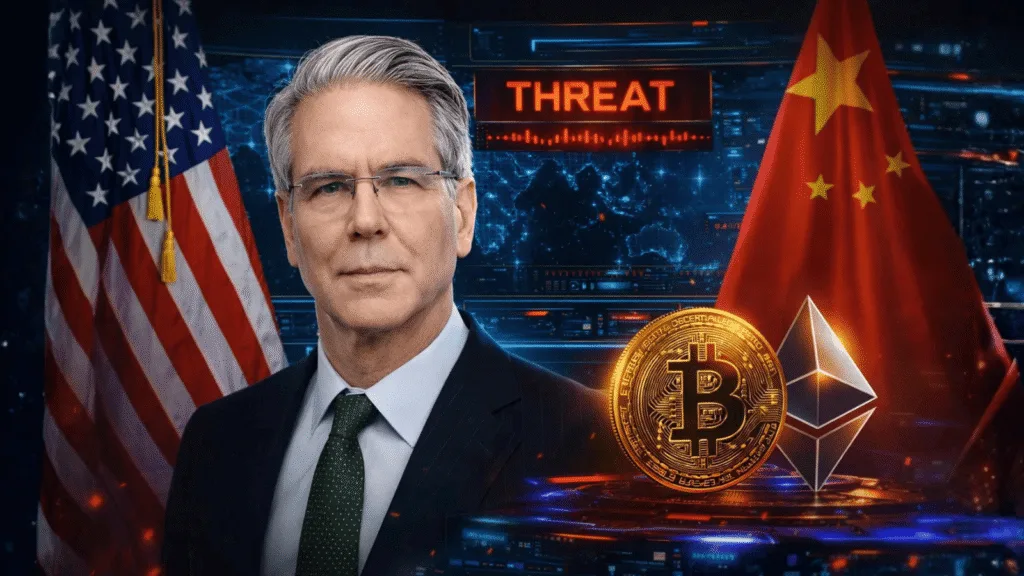



The U.S. Treasury is watching China’s moves in digital assets and blockchain closely, but officials say it’s too early to tell exactly what Beijing is aiming for.
Treasury Secretary Scott Bessent, speaking this week, was asked if China is trying to use blockchain or digital currencies to challenge American financial leadership, to which he answered, “We don’t know that for sure.”
The statement comes as both the U.S. and China are running fast to win the digital asset leadership race.

China’s gold-backed digital assets rumors unconfirmed
Bessent acknowledged there’s a lot of speculation about Chinese digital assets possibly backed by something other than the yuan, perhaps even gold, but said there’s no confirmed evidence yet.
“There are lots of rumors… We haven’t seen that,” he added.
He pointed to Hong Kong as a major testing ground. “They have a very large sandbox in Hong Kong, and the Hong Kong Monetary Authority is actively traveling the world, looking at different mechanisms. So I would not be surprised,” he added.
Investors eye China’s gold-backed digital assets
China has been experimenting with its digital yuan for years and exploring blockchain applications to make trade and financial services more efficient.
Market reports have suggested that a gold-backed digital asset could be used to offer an alternative to traditional fiat systems and extend China’s influence globally. But Bessent’s remarks underline the uncertainty: while the chatter is real, the facts are still emerging.
The Treasury’s careful stance reflects a bigger picture for the market. Global digital finance is evolving fast, and it’s hard to separate rumor from reality.
“The sandbox in Hong Kong is quite large, and the authorities there are clearly experimenting with different mechanisms,” Bessent said, stressing that monitoring and engagement are key.
As countries around the world explore central bank digital currencies (CBDCs) and blockchain-based solutions, the U.S. is taking a measured approach by watching, learning, preparing and then implementing rather than jumping to conclusions.
Bessent’s comments highlight just how complex the landscape has become, where technology, geopolitics, and finance increasingly overlap, and why Washington is treading carefully in understanding China’s next moves.