



The Turkish government is working to shape up its crypto regulations and keep pace with other regions like the U.S. and the EU that have already made strides in the digital assets policy work. As per fresh reports from the local news outlets, Turkey is considering a ten percent tax on crypto incomes.
The Turkish Grand National Assembly is looking to include digital assets under its tax laws, legitimizing their status under the country’s legal and financial framework. Lawmakers reportedly opened parliamentary discussions on the subject on Monday.
Essentially, Turkey is assessing if local crypto firms should automatically deduct ten percent tax from users’ crypto profits every three months and sent it to the government directly. This will eliminate the chances of individuals trying to flout crypto tax laws that is not uncommon in manual filing of annual tax returns.

Crypto service providers, meanwhile, are likely to see 0.03 transaction transaction tax on transfers they facilitate.
As of now, Turkey has not levied any taxes on crypto gains. Under the proposed law, the maximum limit on crypto taxes is being seen as 20 percent. Even at this rate, Turkey will offer lower crypto tax rates compared to India, that keeps showing crypto adoption in research reports but levies a 30 percent tax on crypto incomes. Even Japan is revising its 55 percent tax on miscellaneous income to cap it at a more crypto-friendly 20 percent.
The sudden nudge to bring clarity to the crypto laws in Turkey could be because the country, last year, led in the crypto transaction volumes in the Middle East and North Africa region. As per Chainalysis, Turkey had clocked $200 billion worth of crypto transactions between July 2024 and June 2025.
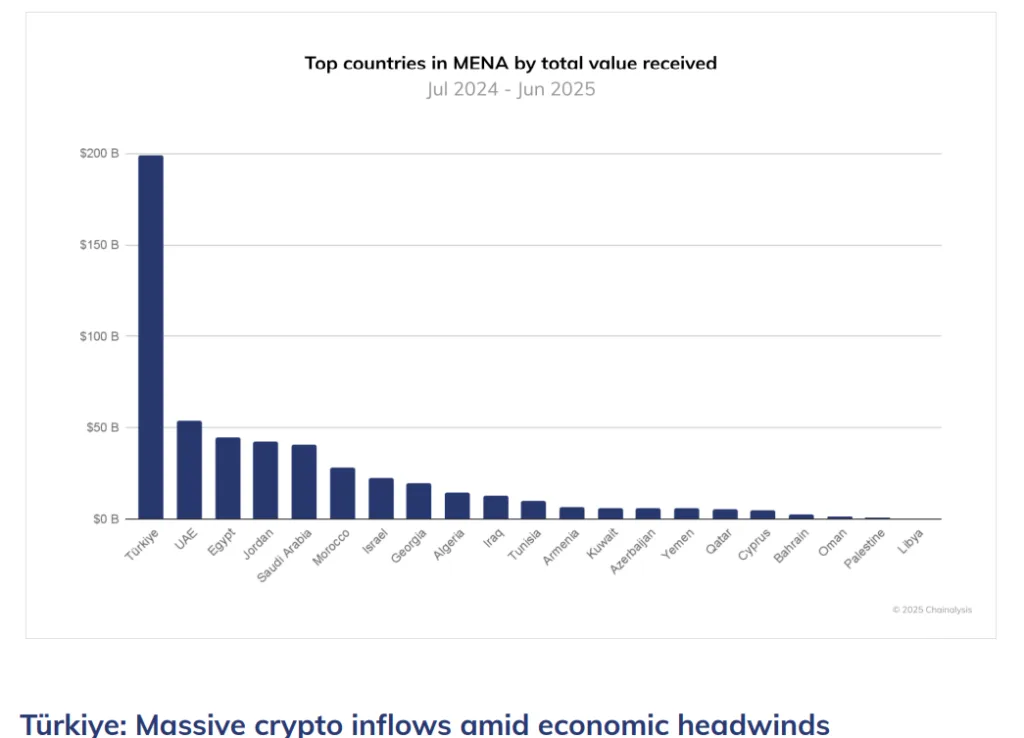
Source: Chainalysis
Realizing the seeping of crypto use within its financial system, Turkey’s Ministry of Treasury and Finance has been stepping up its oversight of the crypto sector since last year.
In October 2025, the country mandated crypto users to enter a minimum 20-character transaction description for each crypto transfer. It bracketed withdrawal timelines between 48 hours to 72 hours for all transactions. Turkey is also looking to tighten its noose around stablecoin transactions to curb illicit financial activities.
Under its refreshed anti-money laundering rules, Turkey is also looking to let authorities freeze suspicious crypto accounts.
Turkey houses a population of over 80 million residents. As of the most recent February 2026 data, the country’s annual inflation rate stands at around 30.6 percent — marking a notable drop from the 60–70 percent levels clocked in previous years, yet being high compared to Central Bank’s long-term targets.