



As US politicians talk about how to regulate DeFi, a new mechanism lets institutions borrow against staked SOL while keeping the assets in safe control.
Anchorage Digital has teamed up with Kamino and Solana Company to create a system that lets institutions borrow against staked Solana without having to move assets out of regulated custody. This could help solve a major problem between traditional finance and decentralised lending markets.
Anchorage said on Friday that the project will enhance the Atlas platform for managing collateral by connecting it to Kamino, a decentralised lending protocol built on Solana.

The work is being done with Solana Company, a publicly traded company that has a Solana SOL$84.43 treasury that was set up with Pantera Capital and Summer Capital.
Institutions can employ natively staked SOLs as collateral for on-chain borrowing while the assets stay at Anchorage Digital Bank, a federally authorised crypto bank. This means investors can still earn staking returns while accessing cash through Kamino’s lending markets.
Anchorage is responsible for managing collateral, which includes monitoring loan-to-value ratios, margin requirements, and, if necessary, liquidations. Institutions don’t have to shift assets into smart contracts because the collateral stays in separate custody. This restriction has previously kept regulated entities from participating.
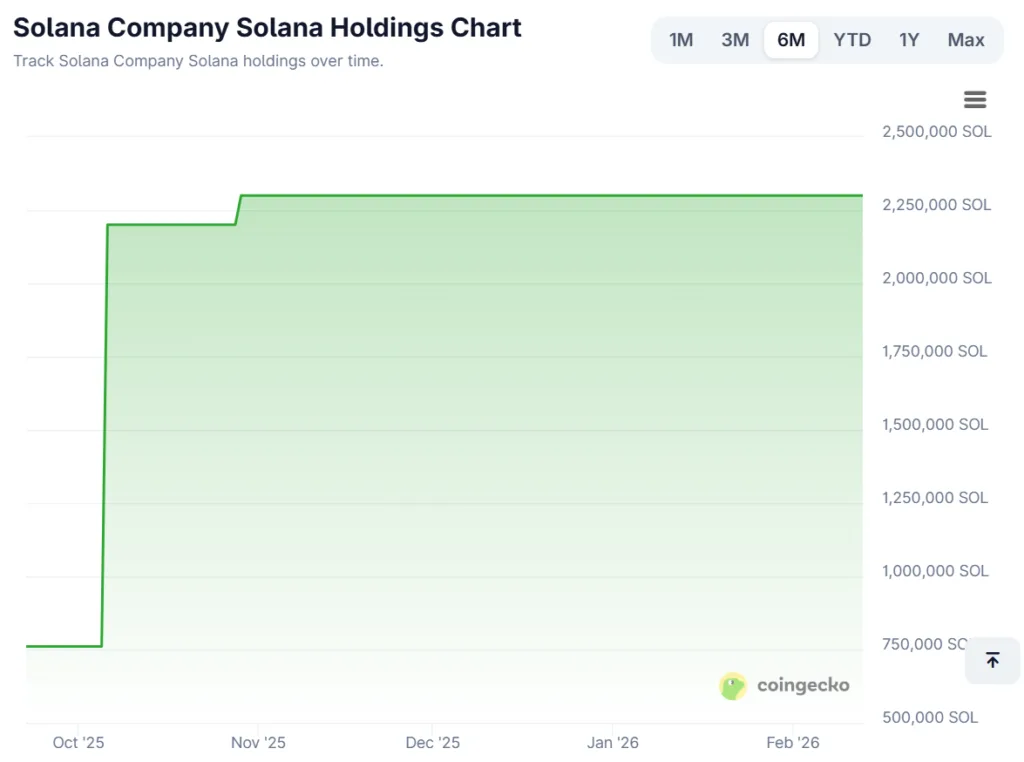
Source: CoinGecko
Regulatory backdrop and DeFi policy uncertainty
The merger between Anchorage Digital, Kamino, and Solana Company shows that more and more institutions are interested in decentralised finance. But same momentum is happening in the US, where the rules are still unclear. Lawmakers are still arguing about how to regulate digital assets and DeFi networks.
The proposed CLARITY Act is at the heart of the controversy. It attempts to make the rules and boundaries for digital assets, particularly DeFi protocols, clearer.
Some DeFi supporters say that the measure doesn’t do enough to clarify how decentralised protocols, developers, and governance structures should be treated under the law, even though it is meant to make things less confusing for people on the market.
Industry organisations are worried that earlier drafts of the language, including changes made in January, don’t do a good enough job of making a clear difference between centralised intermediaries and decentralised systems.
The Trump administration held a conference with industry representatives earlier this month to break the gridlock over the future of the CLARITY Act and get opinion on unresolved issues pertaining to DeFi oversight and market structure.