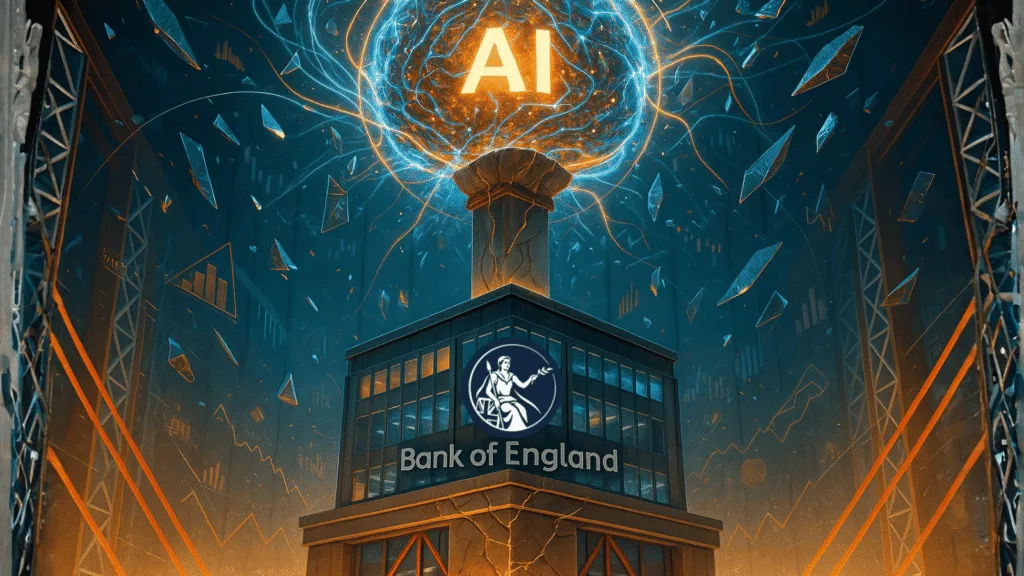



The Bank of England has released a financial stability report on Tuesda that has assessed global macroeconomic conditions and one of the key risks highlighted was AI and its ‘stretched’ valuations, particularly in the U.S.
The report says the valuations are similar to when the dot-com bubble took place, a pattern that created one of the more significant market crashes in U.S. and global markets.
It also said that debt markets are increasingly the choice of financing facility to fund these investments, noting that hyperscalers—companies that are building large swathes of AI infrastructure—could be spending more than $5 trillion over the next five years. The report noted that while a significant portion of these investments was likely to come from operating cash flows, debt would also end up financing the bulk of the expected capital expenditure.

The Bank of England had previously warned of a possible AI bubble in October, stating that unsatisfactory progress or a revision of future earnings due to competition in the industry creates multiple risks for the sector.
Other trends seen in the U.S. market were two large scale corporate defaults, which potentially reflected a weakness in the assessment of creditworthiness and poor underwriting standards.