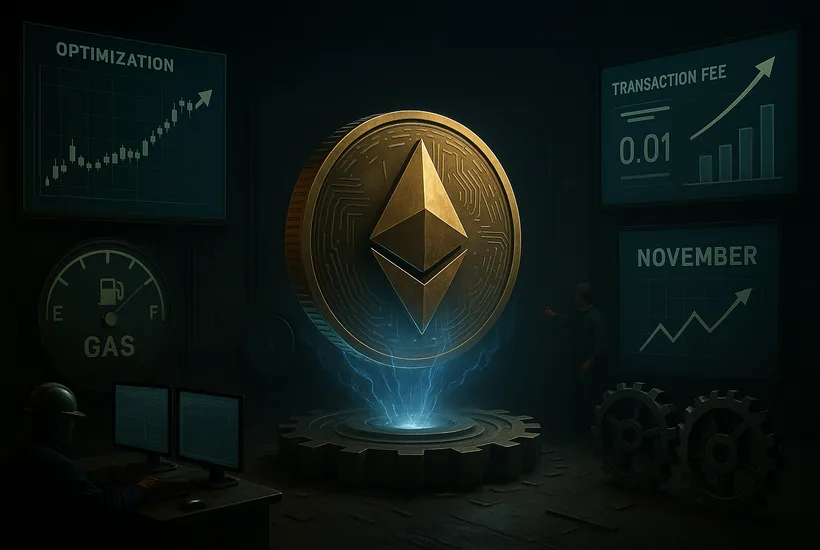



Ethereum developers are preparing to launch the Fusaka hard fork in November 2025, aiming to significantly improve the network’s efficiency and pave the way for further scalability upgrades. The planned upgrade was discussed during Ethereum’s All Core Developers Execution (ACDE) call on July 18 and is now looking to deliver by Q4.
The Fusaka upgrade is scheduled to take place about six months after Ethereum’s most recent hard fork, Pectra. Through Petra, features like account abstraction, higher validator staking cap, and enhanced performance for layer-2 solutions were introduced. Petra included enhancements like EIP-7549, which reduced validator reward variance, and other improvements related to light clients and data efficiency.
Benefits of the Fusaka upgrade
One major element discussed for Fusaka is the potential introduction of the Ethereum Object Format (EOF), which would enhance smart contract deployment and execution by improving code structure and reducing gas usage. However, some like Ethereum core developer Tim Beikoare were still debating whether to include EOF in Fusaka or delay it to a future upgrade.

If Fusaka remains on schedule, developers will begin testnet deployments by September. A finalized fork date will be confirmed after thorough testing to ensure smooth rollout and backward compatibility.
Glamsterdam planning next
In tandem with Fusaka, Ethereum researchers are also looking ahead to the Glamsterdam upgrade, which will focus on optimizing the consensus layer. Reports suggested that the feature upgrades in the Glamsterdam hard fork, the one after Fusaka, are set to be confirmed on August 1.
One should note that Ethereum frequently splits upgrades into execution layer (EL) and consensus layer (CL) tracks. For example, Petra upgrade was focused on the consensus layer, whereas Fusaka is likely an upcoming execution-layer upgrade. So, both Petra and Fusaka will be active initiatives, just on different parts of the Ethereum protocol.
At the same time, Ethereum validators have shown backing for a proposal to raise the network’s gas limit to 45 million, a move expected to lower transaction fees and boost scalability. CoinHeadlines had earlier reported how 50% had voted to increase the L1 gas limit to 45 million.
These rolling updates signal Ethereum’s commitment to improvements rather than sweeping overhauls, also reflecting the maturity of the network’s development strategy. But with stiff competition from faster and cheaper chains, the Fusaka hard fork will act as a vital step toward sustaining Ethereum’s dominance in decentralized finance and smart contracts.