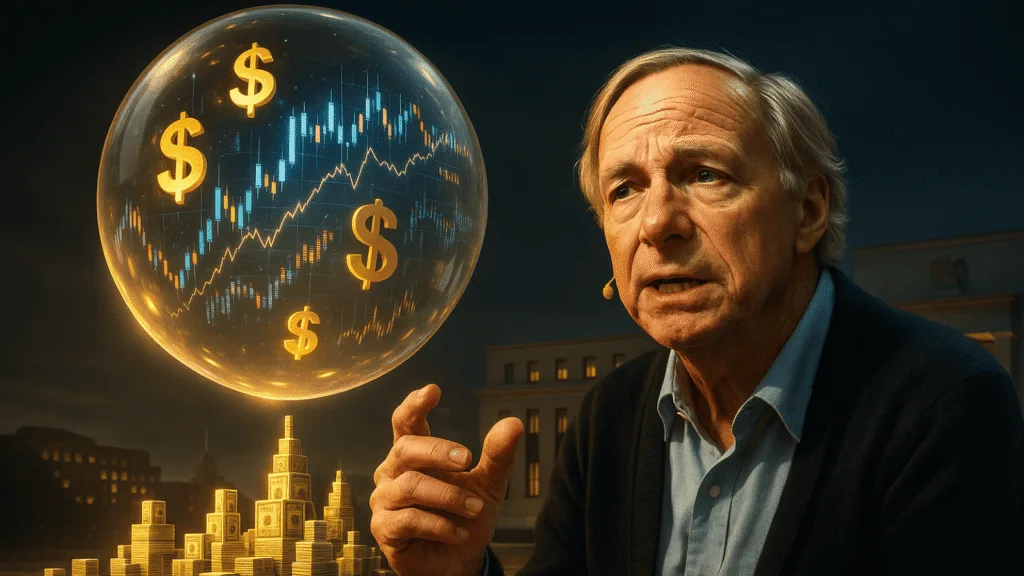



Former hedge fund billionaire Ray Dalio has warned that the US Federal Reserve’s decision to ease monetary policy is inflating a new economic bubble one that could lift hard asset prices but also signals the final phase of a 75-year economic cycle.
Easy policy amid growth is a red flag
Dalio said in an article posted on X Wednesday that the Fed’s rate cuts are coming at an unusual moment when economic activity remains strong, unemployment is low and asset markets are rallying.
He argued that while the Fed typically eases policy during downturns such as during the Great Depression or the 2008 financial crisis this latest move resembles a “late-stage economy” overloaded with debt.
This is a dangerous combination that tends to be more inflationary, Dalio wrote, cautioning investors to closely watch fiscal and monetary decisions in the coming months.

Debt monetization risks rising
Dalio warned that with fiscal policy already highly stimulative, the Fed’s easing effectively monetizes government debt rather than supporting private sector liquidity.
He cited massive Treasury issuance particularly in short-term maturities and widening deficits as signs that policymakers are fueling unsustainable growth.
Quantitative easing would effectively monetize government debt rather than simply re-liquify the private system.
According to Dalio, this policy mix leads to currency debasement and persistent inflation, boosting demand for Bitcoin (BTC), gold, and other hard assets as investors seek stores of value.
Investors divided over Fed’s next move
Fed Chair Jerome Powell acknowledged in October that policymakers remain split over the next rate decision.
A further reduction in the policy rate at the December meeting is not a foregone conclusion.
Data from the Chicago Mercantile Exchange shows that 69% of investors now expect a 25 basis-point rate cut at the next Federal Open Market Committee (FOMC) meeting in December.
The Fed already cut rates by 25 basis points in October, but the move which normally supports risk assets had little impact on crypto markets.