


New data availability solution aims to unify crosschain data and improve Web3 interoperability
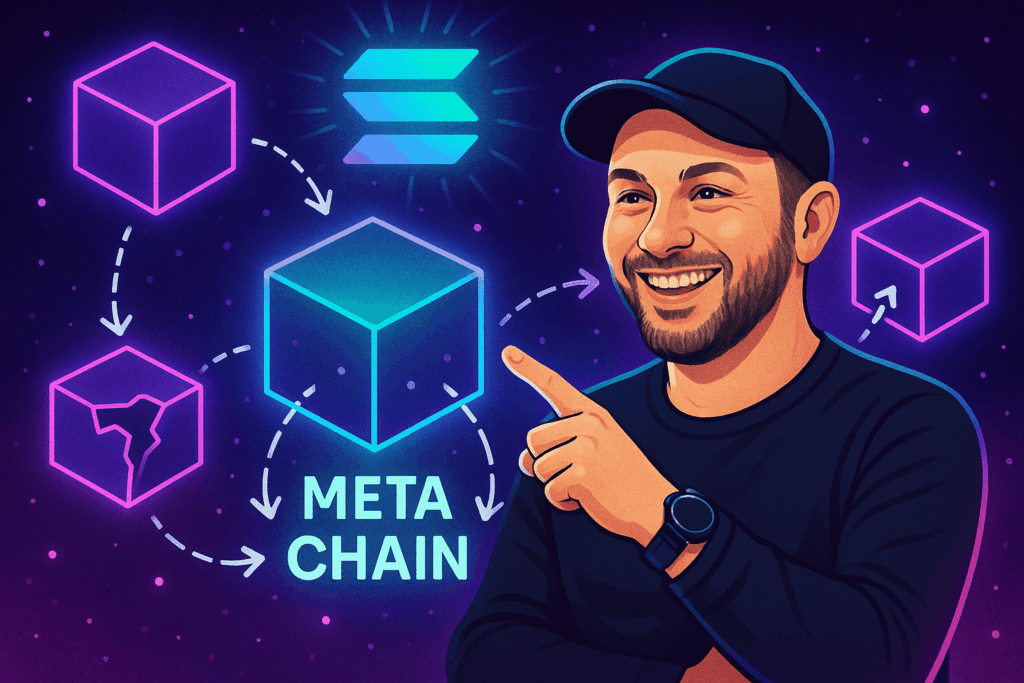
Solana Labs co-founder Anatoly Yakovenko has proposed the creation of a “meta blockchain” that would act as a unified data availability (DA) layer across leading blockchain networks. The proposal, revealed in a May 12 post on X, seeks to address the persistent issue of fragmentation and lack of interoperability between siloed layer-1 blockchains such as Ethereum, Celestia, and Solana.
The proposed meta chain would aggregate and order data from multiple chains, enabling seamless crosschain communication. The system would dynamically use the most cost-effective data availability service at any given time, improving both scalability and transaction efficiency across networks. Data availability layers are essential components in blockchain architecture, ensuring that networks can access the necessary data to validate and finalize transactions.
Blockchain interoperability remains a critical challenge for Web3 developers, as most layer-1 blockchains are not natively designed to communicate with each other. This has given rise to third-party interoperability solutions, including specialized DA layers, that attempt to bridge these isolated ecosystems.

Other major blockchains are also working on advancing data availability. Ethereum’s upcoming Fusaka upgrade, scheduled for release in late 2025, will introduce EIP-7594 to expand the Ethereum mainnet’s capacity as a data availability provider. The upgrade is expected to enhance Ethereum’s value proposition, especially if more layer-2 networks continue to rely on it for data availability needs.
Yakovenko emphasized that making data availability cheaper is key to reducing overall blockchain costs. By lowering the cost of accessing data, bandwidth—the fundamental bottleneck in blockchain performance—can be optimized, making transactions and operations across networks more efficient. The envisioned meta chain may also allow for rule-based transaction sequencing, potentially eliminating the need for external sequencers and enabling users to interact seamlessly across chains.
The concept aligns with broader industry discussions around crosschain cooperation and interoperable tokenomics. At Paris Blockchain Week 2025, Cardano founder Charles Hoskinson advocated for a shift from adversarial token models toward collaborative market structures that incentivize cooperation among networks.
Cardano is actively developing “Minotaur,” a multi-resource consensus protocol designed to unify consensus mechanisms across different blockchains. The protocol aims to provide a shared block reward system, reinforcing collaborative incentives in a multi-chain environment.
Together, these initiatives highlight a growing consensus among blockchain leaders that interoperability and aligned incentives are vital for the next stage of Web3 development.