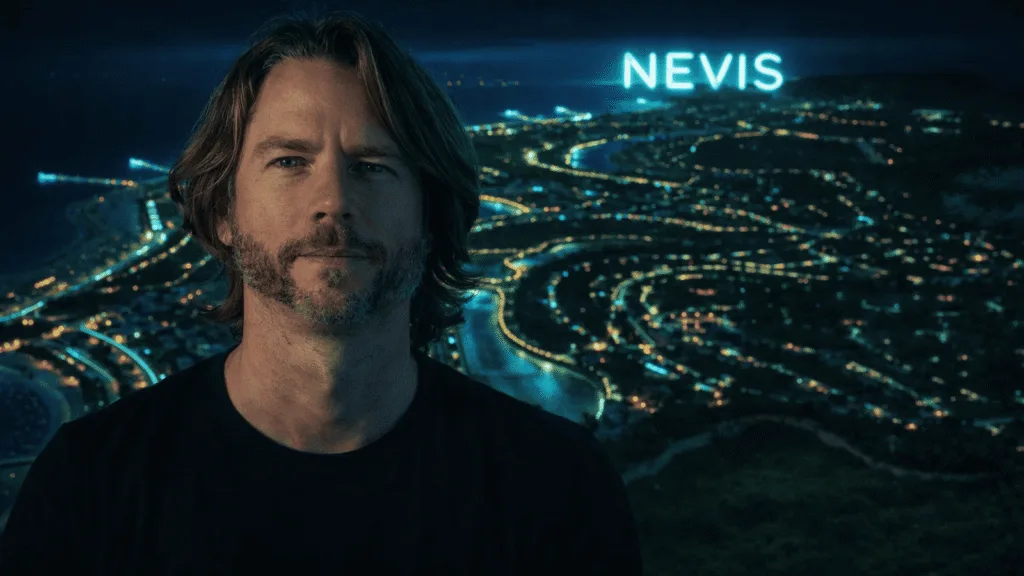



The Financial Times said that Olivier Janssen’s Destiny project would pay Nevis citizens $100 a month if the government authorized it. This caused a lot of local anger.
Olivier Janssens, a Belgian-born crypto millionaire, is said to have offered Nevis inhabitants $100 a month if the government approves his ambitions to build a tech-friendly libertarian society on the Caribbean island.
According to an email acquired by the Financial Times, Jannsens’ Destiny, a project that wants to buy and reorganise around 2,400 acres of property on a Caribbean island, will start paying its inhabitants $100 a month “immediately once the final agreement with the government is approved.”

The project first said in November 2025 that it would pay 30 East Caribbean dollars (US$11) a month. Now, it’s up to $100 a month.
People who were against the project strongly criticised the offer, saying it was an attempt to sway public opinion and get government approval.
Kelvin Daly, a member of the Nevis Reformation Party (NRP), spoke out against the move because he said it put pressure on the government to approve the development plans. Daly said on Facebook on Monday, “Janssens and De Primer have raised their bribe from US$30 a month to US$100 a month.”
Destiny is trying to get approval under St. Kitts and Nevis’ Special Sustainability Zones framework, which is a set of laws that were approved in 2025 that allow projects like this.
The goal is to spend $50 million on Nevis’ infrastructure to build hospitals, health centers, and villas, create more jobs, and provide 10% of the profits to locals and 10% to Nevis’ sovereign wealth fund.
Crypto Founders Explore “Network State” Communities
Janssens was one of the first people to invest in Bitcoin. In 2015, he sat on the board of the Bitcoin Foundation for a short time and declared the group was “effectively bankrupt.”
At the Network State Conference in Singapore in October 2025, Balaji Srinivasan, the former chief technology officer of Coinbase, presented a similar project.
He told tech and crypto fans to buy land together and build communities that are more tech-friendly. He called this Silicon Valley’s “ultimate exit” from “failing” US institutions.
Srinivasan also sent a document that stated there are 120 “start-up societies” being built around the world.