



Market overview: A new epoch in crypto infrastructure
The cryptocurrency economy is about to undergo a fundamental change as blockchains develop into massive information networks rather than just financial railroads. A sad truth was exposed by AI’s rise in 2024–2025: models rely on data quality, ownership, and durability rather than GPUs. Large proprietary datasets are protected by centralised AI labs. In the meantime, decentralised networks like Filecoin, Arweave, 0G Labs, and AVSs powered by EigenLayer are starting to establish themselves as the internet’s long-term “memory layer.” A new competition is being sparked by this: which chain will become the world’s repository of human knowledge?
AI developers are under intense pressure to find trustworthy, transparent, and censorship-resistant data. Training models on an endless amount of scraped content was the previous paradigm. The new paradigm calls for persistent storage for repeatable AI pipelines, verifiable data provenance, and financial incentives for curators. These days, cryptocurrency acts as the information’s settlement layer, generating a new demand cycle between storage tokens and modular AI-focused networks.
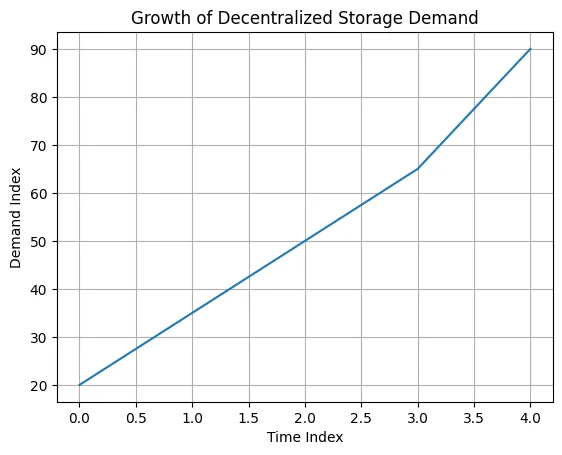
Permanent data for AI: Turning blockchains into eternal memory
If AI models are not retrained on reliable, consistent datasets, they deteriorate. Immutability is not guaranteed by traditional cloud providers, and their prices fluctuate. This dynamic is reversed by blockchain-based storage, which offers perpetual archiving at a set price. Every text, image, dataset, and scientific record can exist perpetually on decentralized networks with cryptographic verification under this new architecture.

This is revolutionary for AI. Reproducible training outcomes, merit-based creator attribution, and legally compliant provenance trails are finally made possible. Similar to how a blockchain verifies financial ownership, a neural network trained on unchangeable datasets can demonstrate ancestry. This is in perfect harmony with the legislative trends that call for AI auditability in the US, EU, and Asia. An entirely new economic layer supporting archivists, validators, and data publishers is being created by the growing need for organized, on-chain information.
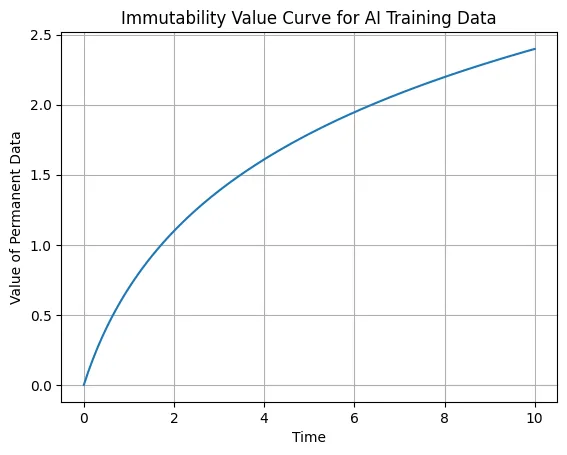
Decentralized vector databases: The missing intelligence layer
Permanence was resolved by the initial generation of cryptocurrency storage. Retrieval is resolved by the second generation. However, vector search the fundamental process of contemporary AI is the next frontier. Models may seek meaning rather than terms thanks to vector databases. Vector databases will become the semantic layer if blockchains take over as the storage layer. Emerging projects are experimenting with zk-verified search, decentralized embeddings, and retrieval markets that compensate nodes for superior replies.
As a result, on-chain knowledge engines become a new category.The network contains embeddings that depict the structure of human knowledge rather than static NFTs or documents. AI agents can interact with on-chain data by querying this layer instead than relying on centralized APIs. Sovereign AI is the end product, in which users own the models and the data they work with. This could surpass compute itself in value within the next ten years.

Incentivized data curation tokens: A new economic primitive
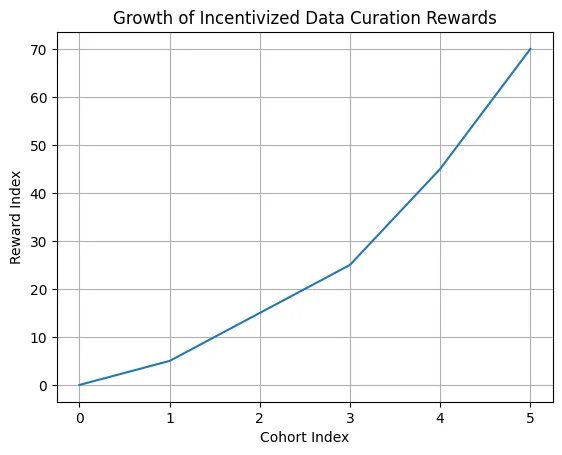
The curator is the unseen labor force in conventional AI pipelines. They maintain datasets, classify data, identify bias, and assess quality. However, they are not paid. Data curation tokens are a radical option put up by Crypto. Contributors are compensated under this approach for enhancing databases, verifying their legitimacy, eliminating duplication, and providing contextual metadata that raises the value of stored data.
As a result, data becomes an active asset class rather than a passive resource. Just as hash power boosts Bitcoin’s security, high-quality curation raises the network’s value. A market emerges where datasets vie for attention and the most trustworthy curators acquire sway. Over time, the network becomes a self-improving, economically governed knowledge ecosystem. This is one of the most potent recent developments in cryptocurrency, and conventional markets have yet to fully investigate it.
The coming data layer war: Who will win?
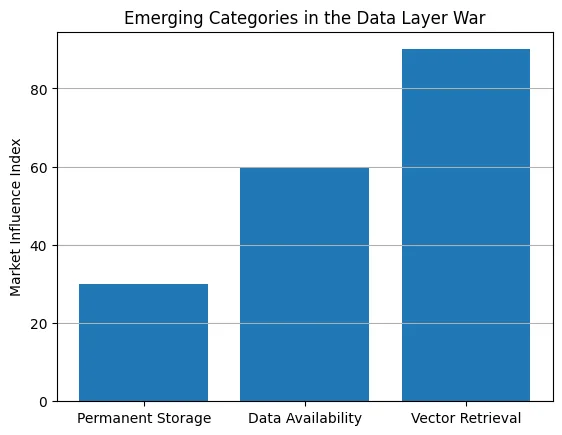
Three types of competitors are becoming more prevalent in the market. The goal of permanent storage networks like Filecoin and Arweave is to become the “Library of Humanity.” Celestia and 0G Labs are examples of high-performance data availability systems that aim to be the real-time foundation for AI pipelines. Semantic retrieval is the goal of emerging vector networks. Competition will expand into new domains, such as zk-attested retrieval, decentralized annotation marketplaces, and networks that integrate computing, storage, and intelligence into a single protocol, as AI models become more dependent on decentralized data.
The chain that balances incentives among curators, publishers, model makers, and regular users will ultimately prevail. This infrastructure competition is, in many respects, the most significant since Ethereum. The global data empire will indirectly influence how machine intelligence develops. Crypto is presenting itself as the fundamental layer of AI’s memory rather than as finance. This binds blockchain to the future of global information systems and moves the entire sector toward long-term significance.