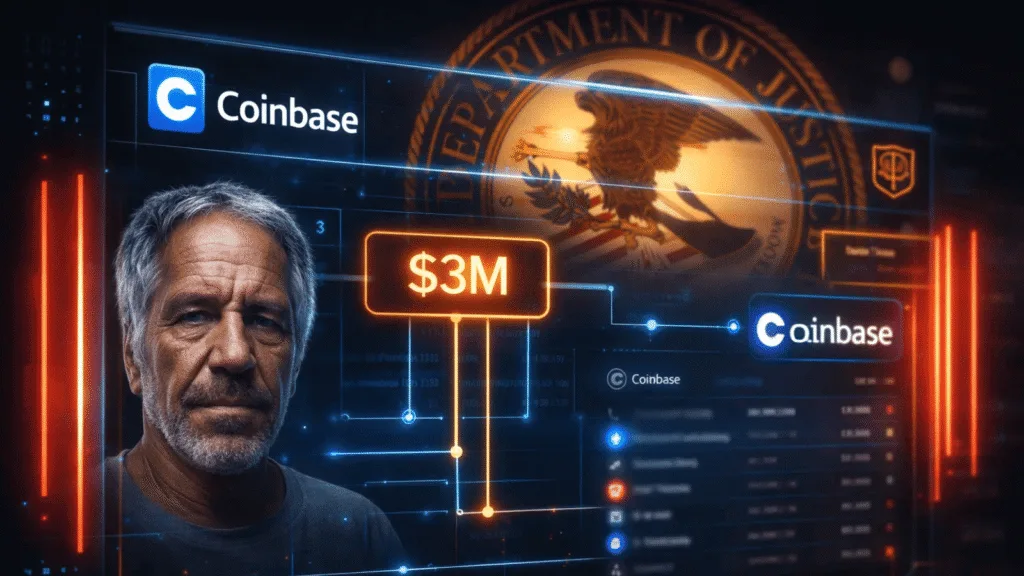



Jeffrey Epstein, a convicted paedophile, is said to have invested in Coinbase when it was still new, which has led to a lot of speculation about his role in the crypto industry.
Newly released papers from the U.S. Department of Justice show that Jeffrey Epstein quietly put $3 million into Coinbase in 2014, when the crypto exchange was still a new business trying to get off the ground.
At the time, few could have predicted that Coinbase would grow into the largest U.S.-based crypto platform and a publicly traded company now valued at around $51 billion.

While Epstein’s stake was relatively small in the bigger picture, the disclosure adds to the market’s worry about the criminally convicted’s support and involvement in early crypto ventures during the industry’s infancy.
It also highlights how widely Epstein’s financial interests stretched, reaching into emerging tech sectors years before the company’s explosive growth and mainstream adoption.
The development comes as major industry giants have been rattled with allegations of possible connections with Epstein, making many like Blockstream CEO coming forward to give explanations.
Emails reveal Epstein engaged with early crypto figures in 2014
Newly released emails show Jeffrey Epstein interacting with early crypto insiders back in 2014.
In one exchange, he asked associate Austin Hill to call him; Hill later replied that he had tried, but Epstein had already left, noting that a planned New York meeting couldn’t happen due to West Coast commitments, though a weekend meetup “on the island” was still floated.
In another message sent a few days later, Epstein reached out to early Bitcoin developer Amir Taaki, saying he had recently hosted “Andy Back”, likely Blockstream co-founder Adam Back, at his island.
The emails offer a more personal glimpse into Epstein’s connections within the early cryptocurrency community and the informal networks shaping the space at the time.
Epstein’s early access to crypto world
As Coinheadlines reported earlier, emails from 2013–2014 show that Jeffrey Epstein was quietly plugged into early conversations around Bitcoin and the wider crypto space.
In one exchange, Boris Nikolic shared a detailed Bitcoin explainer by investor Tren Griffin, the same note that had circulated among big tech names like Bill Gates, describing how Bitcoin was gaining traction among libertarian investors while worrying some economists who feared losing control over traditional finance.
A further email from 2014, with entrepreneur Austin Hill, indicated tensions within the industry, with concerns expressed at investors supporting both Ripple and Stellar at the same time. This was seen as supporting two rival projects. Additional opinions from Winklevoss twins, economist Steve Hanke, and journalist Kurt Eichenwald portrayed Bitcoin as a potential bubble or a bold new financial system.
Little Saint James, Epstein’s private island in the U.S. Virgin Islands, later became one of the most talked-about locations linked to his criminal cases.
Survivors and prosecutors said it was a place where he brought underage girls and carried out illegal activities. Court filings described how some were flown there on his private jet and stayed on the property.
The island has now been symbolic of the wider abuse network he was accused of running, and it featured heavily in investigations, lawsuits, and public discussions surrounding the case.
Blockstream CEO denies any financial ties to Jeffrey Epstein despite proofs
Blockstream CEO Adam Back has said that the company had no direct or indirect financial ties to Jeffrey Epstein or his estate, despite proof in DOJ documents.
Adam Back says that the only connection dated back to 2014, when Epstein was introduced through Joi Ito, then head of the MIT Media Lab, as a limited partner in Ito’s investment fund.
That fund made a small, minority investment in Blockstream during its early seed round but exited within a few months due to potential conflicts and concerns.
Back stressed that Epstein never invested directly in Blockstream. His remarks came amid renewed scrutiny of crypto’s early funding history and were aimed at distancing the company from Epstein’s legacy.
The link between Epstein and Ito, who managed the MIT fund in which Epstein invested, is not new. In a 2019 letter, Ito acknowledged that he first met the convicted sex offender in 2013 while raising funds for MIT.
Epstein’s $3 million investment in Coinbase, even though it was a small stake, shows that a wide range of investors, even those with questionable backgrounds, were willing to put money into early crypto startups.
Epstein’s investment in Coinbase, which would later become a $51 billion public company, shows how crypto’s early days had strange and sometimes surprising connections.
Epstein’s early investment in Coinbase has made people more interested in the history of funding and backers in the crypto world. Analysts and investors are now keeping a close eye on any new information about historical connections and changes in major cryptocurrency projects.