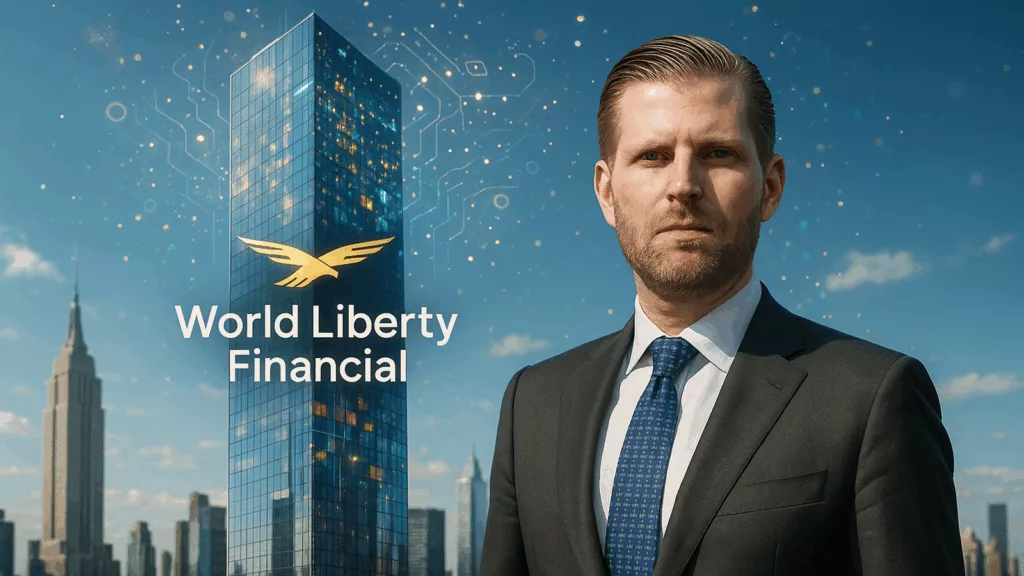



In a recent interview with CoinDesk TV, Eric Trump confirmed that he is actively working on a real estate tokenization effort tied to a building that is currently under development. He described it as ‘absolutely incredible,’ and echoed the similar sentiments of WLFI co-founder Zach Witkoff, who spoke at Token2049 in Singapore about bringing parts of the Trump real estate portfolio on-chain.
How does the tokenization model work?
Tokenization is the process of converting a real-world asset (in this case, real estate) into digital tokens tradable on a blockchain. Eric Trump indicated that via World Liberty Financial and its USD1 stablecoin, the project could allow individuals to invest in fractional shares of “high-profile properties.
Unlike traditional property deals requiring large capital or institutional backing, this model intends to open ownership to ordinary retail investors with entry levels possibly around $1,000. Investors might also receive benefits tied to the property like hotel perks or access. Trump framed the project as a way to avoid banking intermediaries: “Why do I have to go out using Deutsche Bank? Why can’t I go out to the masses?”

WLFI recently announced plans to roll out a debit card and a retail app to make USD1 usable for everyday payments infrastructure that could support the tokenized property ecosystem.
Ownership & governance questioned
While Eric Trump speaks publicly about democratizing property access, critics point to WLFI’s structure, in which the Trump family wields outsized control. A Reuters investigation revealed that the Trump family owns roughly 60% of the holding company that controls WLFI, and claims 75% of net revenues from token sales and 60% of operating revenue. The governance tokens earlier issued are non-tradable and confer voting rights in a centralized manner.
Moreover, WLFI recently inked a $1.5B deal with ALT5 Sigma, a publicly traded firm, where half the payment was in WLFI tokens. As part of that agreement, Eric Trump joined ALT5’s board. That move amplifies the overlap between the Trump crypto empire and conventional corporate finance players.
If successful, this initiative could reshape real estate investing by unlocking liquidity and broadening access for retail participants. For the Trump brand, tokenization might modernize its property business into the Web3 era.