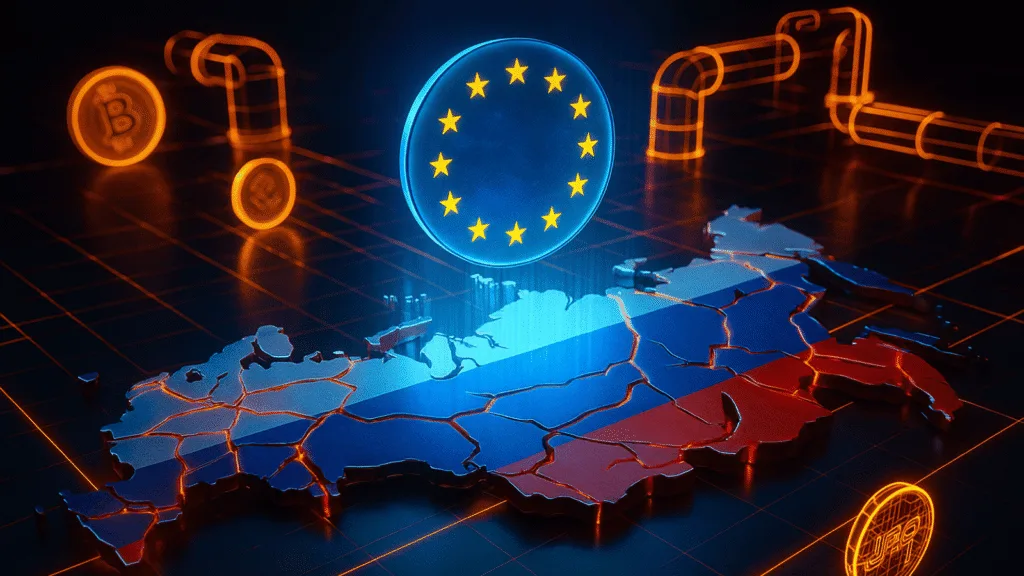



European Union leaders formally approved a new sanctions package against Russia on Thursday, marking one of the most comprehensive actions since the invasion of Ukraine began. The decision came just hours after US President Donald Trump unveiled sanctions against Rosneft and Lukoil, Russia’s largest oil companies, signaling renewed transatlantic unity against Moscow.
This is a clear signal from both sides of the Atlantic that we will keep up collective pressure on the aggressor, said European Commission President Ursula von der Leyen. Ukrainian President Volodymyr Zelensky also welcomed the move, calling it “very important” for sustaining economic pressure on Russia.
Ban on Russian LNG and crypto restrictions
The EU sanctions package introduces a phased ban on Russian liquefied natural gas (LNG), part of a broader plan to eliminate Russian fuel imports entirely by 2027, one year earlier than previously proposed. Short-term contracts will end within six months, while long-term ones will expire starting in 2027.

The package also tightens restrictions on cryptocurrency transactions, targeting Russia’s attempts to evade financial sanctions using digital assets. European regulators are increasingly focused on crypto’s role as a potential sanctions loophole, given its cross-border and pseudonymous nature.
Expanding the sanctions network
The EU expanded its list of sanctioned vessels by over 100 ships, bringing the total to 558, in an effort to crack down on Russia’s “shadow fleet” unregistered or uninsured vessels used to skirt global oil price caps.
In addition, 17 non-Russian companies were sanctioned for supporting Moscow’s military and industrial complex. Of these, 12 are based in China and Hong Kong, a move that has drawn criticism from Beijing.
China is not the creator of the Ukraine crisis, nor is it a party to it… We have not provided lethal weapons to any party involved in the conflict.
Economic and Geopolitical implications
European officials, including Denmark’s Foreign Minister Lars Løkke Rasmussen, said the new sanctions “have real impact and are hurting the Russian economy.” While Moscow continues to redirect trade toward Asia, the EU aims to tighten financial isolation and raise operational costs for Russia’s war efforts.
By targeting LNG, crypto channels, and global intermediaries, the EU seeks to close remaining gaps in its sanctions framework reinforcing Western economic unity as the war enters its third year.