

RWA tokenization has been the buzzword for the last year, but its actual story is older than that. Real World Asset Tokenization started back in the 2010s, but it is really over the last year or so that it has really caught everyone’s imagination.
With crypto attracting new investors every day, real estate tokenization is moving beyond the hype phase and into mainstream adoption, with retail and institutional investors increasingly turning to fractional ownership platforms.
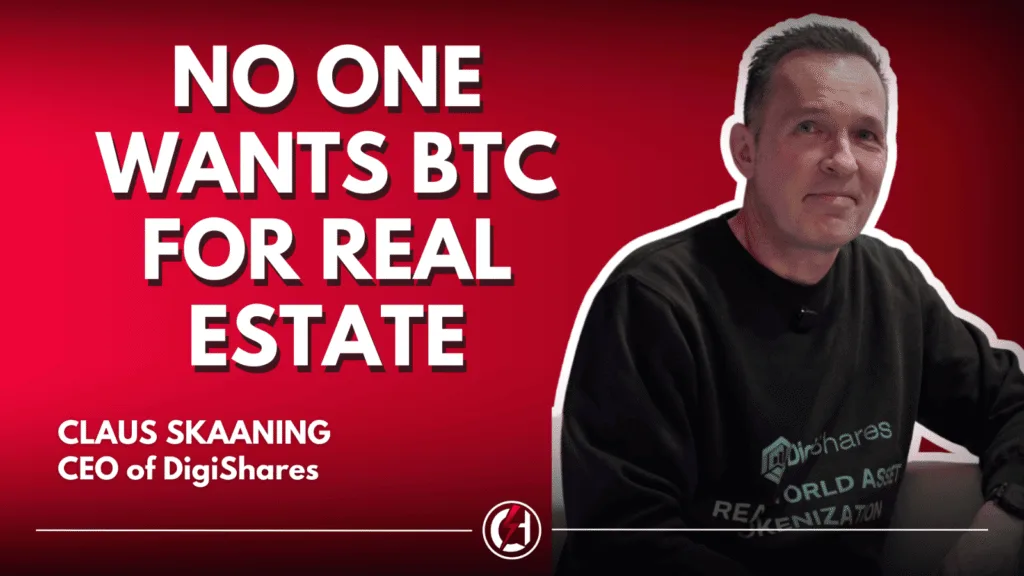
Speaking to Coin Headlines, at the PropTech Connect event in Dubai, Claus Skaaning, CEO of DigiShares, said the market for tokenization is growing by 50 to 100 percent annually. DigiShares has now been in the tokenization space for 7 years and they serve between 15 to 20 clients in the UAE and around 250 globally.

Retail adoption is accelerating
Claus feels the appeal of tokenization lies primarily in fractionalization, allowing investors to enter the property market with less capital than traditional real estate requires.
“Tokenization is really about fractionalization. So of course it lends itself more naturally to retail,” he said. “But retail is often difficult to target for legal reasons. So we also see more experienced investors, institutional investors coming in.”
Fractional ownership is the ideal option for investors looking to enter the real estate market as it allows you to start with less capital and gradually build your portfolio without needing the liquidity that the traditional real estate market demands.
“One of the big benefits of tokenization is that you can get onto the property ladder much earlier,” he explained. “You don’t have to wait until you have saved up to buy an entire property. You can sort of buy in fractions and get the value appreciation.”
UAE leads the way in regulation
When it comes to attracting the first time or small retail investor into RWA tokenization the driving force has to come from regulatory bodies. Claus points out that while crypto suffers from scams on a regular basis, tokenization has remained relatively untouched by such bad actors.
To keep tokenization safe for investors it is imperative that the regulation behind it remains robust, and the UAE is certainly showing the world how that should be done.
“Dubai is doing a great job actually on the regulatory side. They are taking it slow, but they’re being careful and cautious. And I think that is the right approach,” he said.
It is also important to keep tokenization safe from crypto’s volatility. That means it cannot be conflated with volatile cryptocurrencies like Bitcoin. While many felt it could become a means of payment for real estate assets, it is now clear that the volatility makes it an unreliable asset and the solution for digital payments lies in regulated stablecoins like USDC in the U.S. or the digital dirham in the UAE.
“Tokenization is really an infrastructure. It’s a new infrastructure for transacting with securities and real estate and assets in general,” he said. “Bitcoin is not a good means of payment because it’s so volatile. If you price your real estate assets in Bitcoin, the price is going up and down.”
The brief trend of some platforms accepting Bitcoin for real estate purchase seems to be well and truly over.
ROI and market outlook
Investors in tokenized RWA can expect healthy returns which tend to remain stable. The instability in the physical market does not impact the tokenized market to the same extent as the entry threshold is lower therefore it is easier to protect your liquidity.
When asked about portfolio allocation, he said: “In principle, it should be the same as a traditional real estate investment. Whatever you are investing into other real estate, you can also invest into tokenized real estate because it’s the same product. It’s just more efficient.”
Liquidity is at the heart of not just physical real estate but also tokenization. The entry may be at a lower threshold, but growth is driven by liquidity.
Claus does feel the way forward is to streamline distribution channels so investors can stay in the sector and go up the ladder.
“We are working on connecting tokenization to existing distribution channels so banks and large financial services providers can expose their investors to tokenized products,” he said. “We think that is some of the next steps that are necessary to take.”