



Immutable accountability in autonomous systems
Artificial intelligence has moved from its previous position as a minor component of cryptocurrency networks. It has now established itself as the main component of these systems. AI agents handle multiple tasks which include optimizing liquidity routing and recalibrating collateral thresholds and scoring protocol risk and adjusting treasury allocations and influencing governance outcomes. The system requires evaluation because it operates with automated processes. The system requires evaluation because it operates with automated processes. The verification process must include both action verification and reason verification.
The Blockchain Audit Trail for AI Decisions system records artificial intelligence decision processes and their associated risks and outcomes on an unchangeable ledger which functions as a permanent record. The organization does not pursue transparency because it wants to use transparency as a promotional tool. The organization develops its systems to track all activities which help control capital movements through autonomous systems. Financial systems now use algorithms that exceed human reaction capacities which makes it impossible to create trust through reputation-based systems. Trust must be based on cryptographic authentication.
Market context AI agents are already acting
AI has now entered its practical application phase in decentralized financial systems. AI-powered vault managers execute portfolio rebalancing activities throughout the day. The risk engines use their dynamic system to modify loan-to-value ratios based on actual volatility measurements.

Autonomous agents execute arbitrage operations by monitoring on-chain liquidity conditions and executing trades within thousandths of a second. Governance optimization bots conduct analysis of proposal sentiment and stake-weight dynamics to determine their voting behavior.Yet despite this growing autonomy, most AI systems remain structurally opaque. When an AI agent triggers a liquidation cascade or reallocates treasury assets into a volatile market, the external observer sees only the outcome.
The internal reasoning remains hidden within model parameters, training data biases, or evolving confidence metrics.The system becomes a structural liability because it depends on capital for its operation. Institutional participants cannot allocate meaningfully into AI-managed systems without a clear mechanism to reconstruct decision pathways. Organizations lose their ability to control actions because they lack a system to track their activities. The political sphere becomes involved in establishing the cause of an operational failure. The market will soon reach a state where it considers intelligent systems without proven tracking capabilities to be major threats.
Core architecture recording decision provenance
The blockchain-based audit trail system stores AI datasets and models through an on-chain method which does not allow direct data storage. The approach incurs high economic costs while facing major technical difficulties. The system uses cryptographic fingerprints to secure its decision-making processes which maintain the ability to reconstruct decisions. The system creates a record of every AI operation which includes the model version hash and data input details for that particular block height and the computed probability distribution for the action that was performed. The system records both confidence intervals and state transitions that occur between executions.
The elements get transformed into hashed references which use Merkle tree structures to enable complete data recovery from decentralized storage while only needing minimal on-chain verification. The result produces a decision graph which other people can use as proof.
The internal risk team and external auditor or regulator can follow the complete path from data input through to model inference and final action. The system failure analysis process enables examination of actual failure locations instead of making guesses. The process enables people to prove their intelligence while using time-based verification methods.
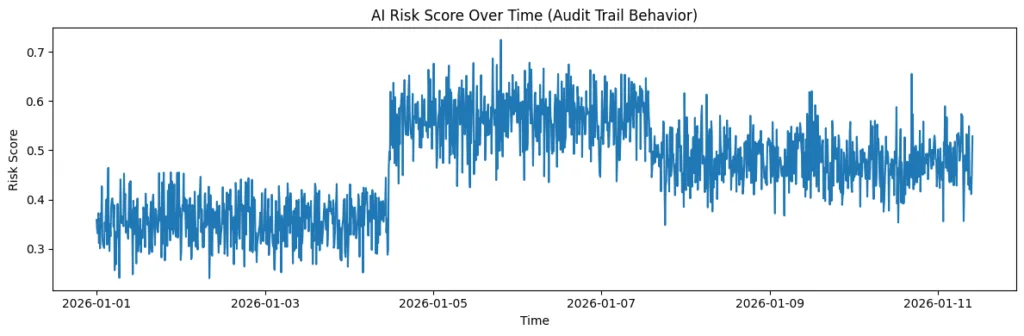
Structural importance from black box to verifiable agent
The lack of auditing systems turns artificial intelligence into an obscure system which operates in environments that have significant operational impact. The decentralized markets enable rapid liquidity loss which causes minor decision errors to multiply through chain reaction effects.
The incorrect analysis of market volatility together with a faulty oracle feed will spread through automated risk management systems resulting in liquidation waves and incorrect capital distribution. The analysis of events after they occur requires people to either disclose information voluntarily or provide internal documents since there are no permanent records available. The on-chain audit trail demonstrates causality through computational methods. The chain system does not understand human intentions because it solely maintains a record of actual events.
The transition establishes a new method of establishing trust in systems. Stakeholders conduct their own verification process for decision-making pathways instead of having to rely on the protocol’s post-event explanation. The process of creating transparency requires mathematical proofs which replace storytelling methods. As AI systems gain more autonomy, their creators need to establish better systems for monitoring their actions. The system will become more unstable because its flaws will continue to grow without any visible signs of damage.
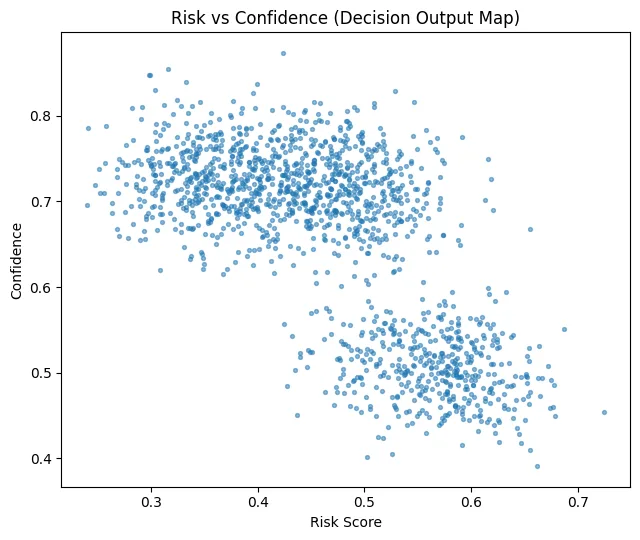
Transparent AI model behavior and behavioral drift
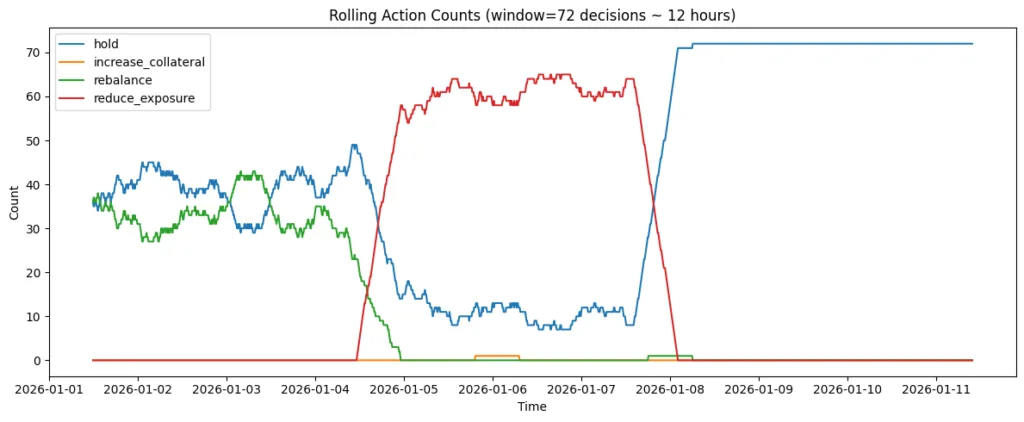
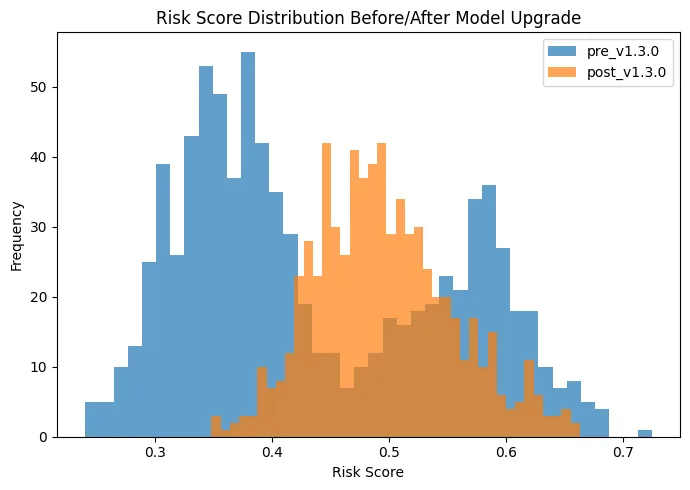
An audit trail provides more than forensic reconstruction because it enables researchers to conduct studies that analyze how people behave throughout time. The research study describes three distinct processes through which risk scores of models develop according to market volatility patterns and confidence intervals reduce their length during times of high stress and action frequency increases with liquidity market disruptions. The process of behavioral mapping enables researchers to observe AI systems through their statistical patterns which behave like human-made entities.
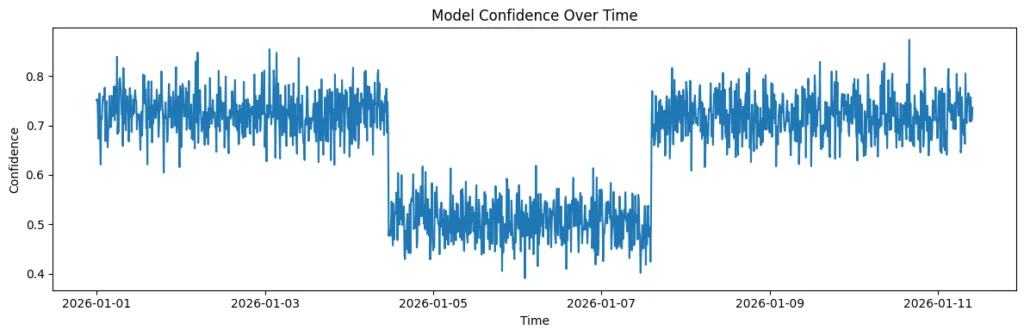
The identification of pattern deviations from established historical trends provides an early warning system for potential unstable conditions. The system can flag a model as defective when its output spread becomes excessive and links with unrelated market factors start to show unexpected patterns.
The new monitoring system enables organizations to detect abnormal activities before they reach critical status through continuous supervision instead of waiting for investigations to start. The audit layer functions as a compliance tool which develops into a predictive stability assessment system. The existence of intelligence-based evidence generates measurable pattern data.
Regulatory alignment and institutional integration
Regulatory bodies worldwide are intensifying their examination of algorithmic systems which have an impact on financial markets. The combination of AI and decentralized finance creates international legal challenges because it makes it difficult to determine who should be held responsible. The audit layer has permanent records which enable organizations to conduct their operations through established procedures without disclosing their proprietary software. The system enables regulators to check whether a decision was made according to specific rules while protecting confidential business information.
The system generates exportable compliance logs which use cryptographic methods to verify data and create time-stamped records of on-chain state changes. Institutional allocators experience reduced uncertainty through this process. Insurance providers who assess protocol risk obtain measurable data which enables them to evaluate their operational exposure. Compliance officers can use verified decision records to establish proof instead of depending on their integrity. In an environment where capital resources are limited organizations that can demonstrate their operations will outperform their competitors.
Competitive positioning accountability as a market signal
The combination of blockchain audit trails with AI decision-making protocols shows complete organizational development. The system proves its capability to operate at full industrial capacity because its automated functions work as a complete system. The growing rivalry between AI-powered DeFi platforms will result in transparency systems becoming the primary element which distinguishes between retail testing and institutional usage. Investors prefer to invest in markets which provide them with certainty about potential losses.
Opaque AI systems may generate short-term yield advantages, but over time, trust deficits translate into liquidity discounts. The system establishes its authentic trustworthiness through an unchangeable auditing system which operates as a permanent system component. The market evaluates both perception and actual results, which makes accountability a valuable business resource.
Macro alignment the verification layer thesis
Your training extends to data records which exist until the month of October in the year 2023. Blockchain technology established itself as a solution to establish trust for settling transaction payments. Automated smart contracts function as self-executing programs which carry out predetermined operational commands. The artificial intelligence system now conducts ongoing optimization for this operational process. The stack requires optimization verification which serves as its essential element. A blockchain audit trail introduces a third structural layer: verification of machine reasoning.
The system uses three core components which include execution, intelligence, and verification to build its complete infrastructure system. Intelligent execution lacks strength because it depends on verification to function correctly. Autonomous finance systems establish a permanent trust system through their operational processes. The crypto market will experience continuous advancements in automated trading systems during its future development. The operational need for unchanging reasoning documentation becomes more crucial because human operators reduce their direct management of daily activities. The situation requires organizations to establish mandatory accountability measures because machines now operate financial assets without human input.