


Hardware wallets for maximum XRP security
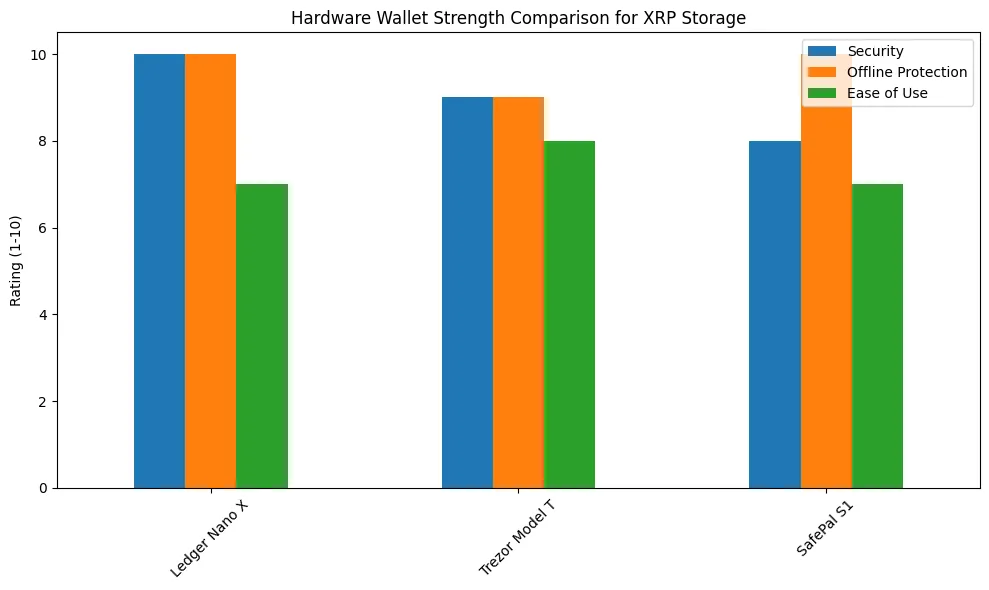
Hardware wallets continue to be the most reliable and secure option for storing XRP when long-term security is your top concern. Your private keys are shielded from online threats and malware by devices such as the Ledger Nano X. Additionally, Ledger supports numerous of coins and provides excellent safety for XRP, which makes it appealing for varied portfolios.
Comparable security is offered by the Trezor Model T, which is built on an open-source and transparent infrastructure. Customers who appreciate verified, community-reviewed security will find its open firmware appealing, and its touchscreen interface simplifies transaction verification.
For those looking for a less expensive solution that is nonetheless extremely secure, the SafePal S1 enables air-gapped signing, which means the device never connects directly to the internet. All offline approvals use QR-signing, which reduces risk without sacrificing utility.When you have a lot of XRP or want to protect yourself from online threats, exchange hacking, or wallet breaches, hardware wallets are the best choice.

Software wallets for everyday XRP use
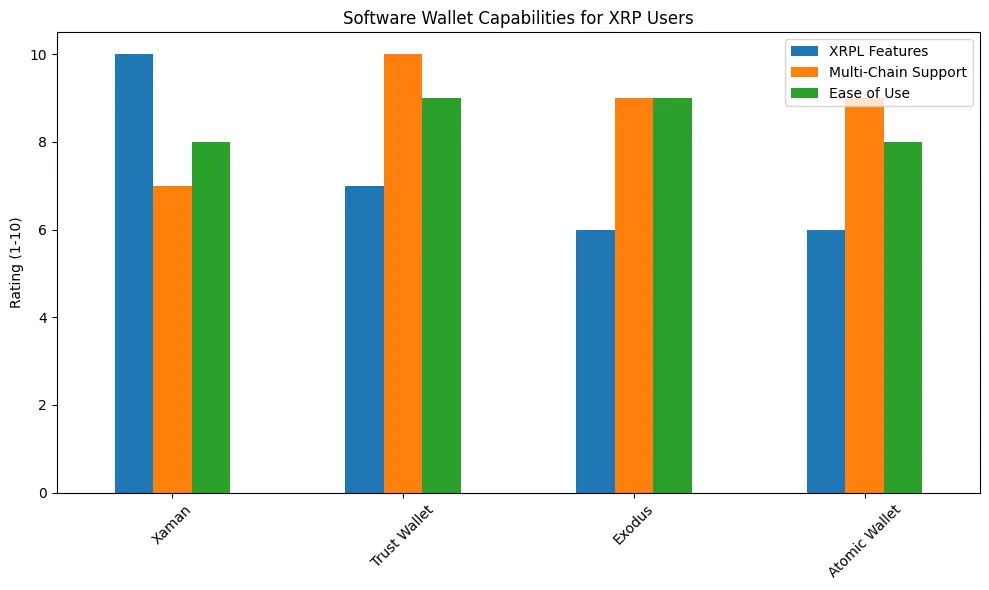
If speed, convenience, and daily access are your top priorities, software wallets are a great choice. Xaman (formerly XUMM), the most XRPL-native wallet, was developed specifically for the XRP Ledger. It offers direct contact with the XRPL including payments, signature requests, tokens, NFT capabilities, and developer-friendly interfaces. It enables a level of ecosystem access unparalleled by typical multi-chain wallets.
For users who like to handle several cryptocurrencies in one place, Trust Wallet provides a smooth mobile-first experience and supports hundreds of assets, including XRP. It is attractive for casual daily use due to its simple user interface and integrated DApp browser.
Exodus features one of the most polished desktop and mobile interfaces in the cryptocurrency business. It is great for novices due to its simple setup and intuitive structure. Atomic Wallet performs similarly to an all-in-one multi-asset manager with straightforward navigation and clean organization.These wallets shine when usability, cross-chain support, or frequent transfers matter more than absolute security.
Matching the right wallet to the right type of user
Hardware wallets like the Ledger Nano X and Trezor Model T are the ideal solutions because long-term XRP holders usually demand ultimate protection. These devices reduce susceptibility to online attacks by creating a strong barrier between private keys and the internet.Regular XRP traders typically use a hybrid strategy, storing the majority of their money in a hardware wallet for long-term security while using a software wallet for fast daily transfers.
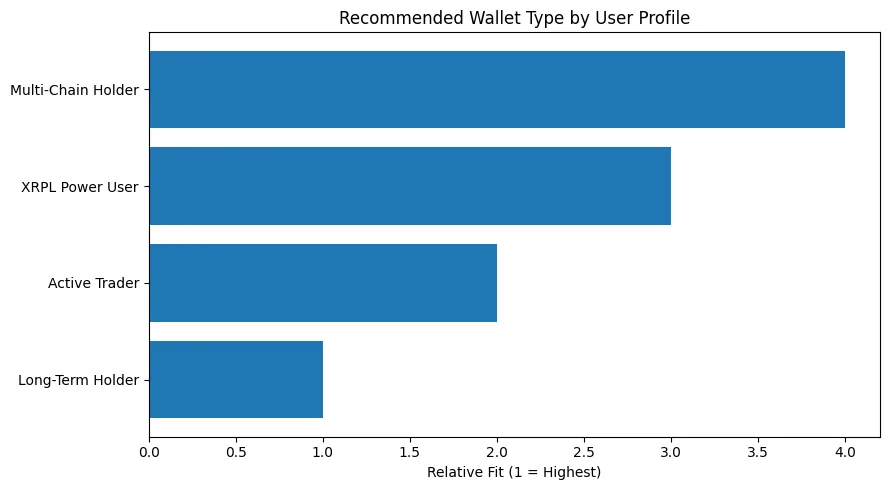
Xaman, which offers native XRPL functionality unmatched by general-purpose wallets, is often utilized by users interested in the deeper ecosystem of the XRP Ledger, such as signature requests, token interactions, or decentralized features.Meanwhile, because they provide multi-asset functionality with simple, user-friendly interfaces, Trust Wallet and Exodus are the most sensible choices for clients who handle a wide range of cryptocurrencies.