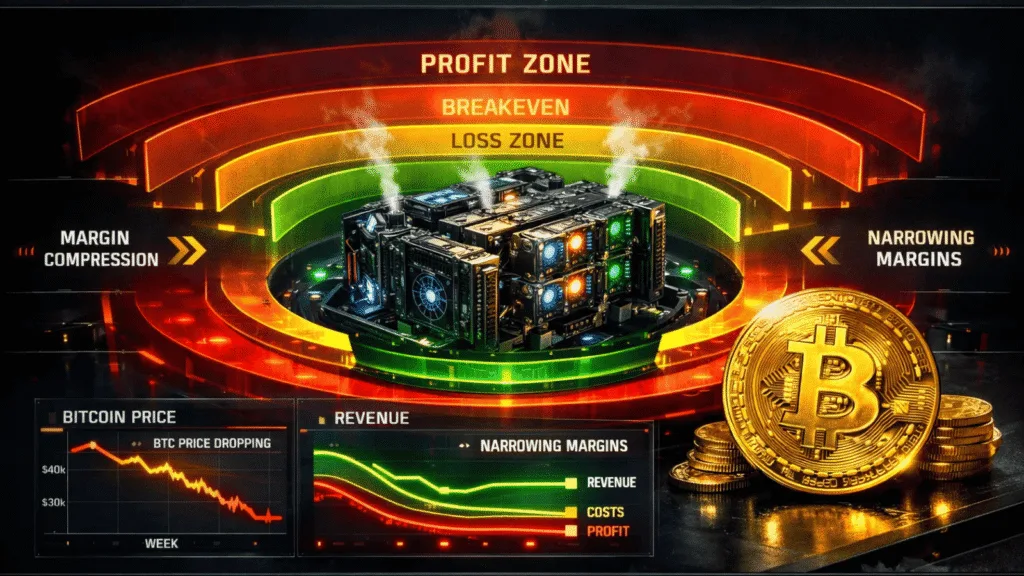



The recent downturn in crypto markets has triggered a quiet but significant structural shift beneath the surface of price action. Although Bitcoin maintains its technical integrity across extended timeframes, its mining ecosystem displays margin compression patterns that will impact upcoming months’ liquidity flows. Mining profitability exists as a market variable which affects all miners. The supply system operates according to the economic laws which control hash power. The current price environment is beginning to test that equilibrium.
Market context
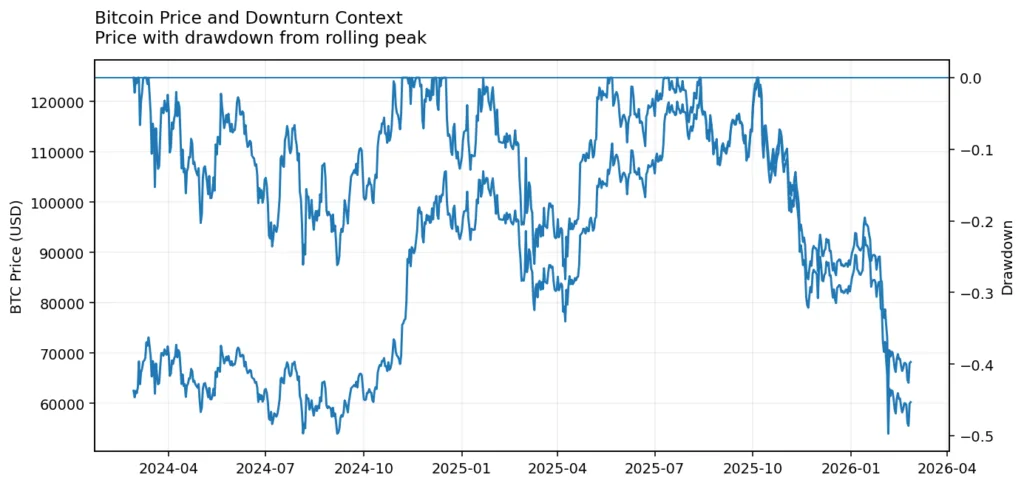
The current Bitcoin retracement phase does not show any signs of a panic attack. The current situation presents a situation which people can control through their actions. The current situation shows that market activities have decreased while traders have returned to normal activities and market prices show stable movement between two set points.
Mining operations depend on multiple factors which include their effects on operational costs and Bitcoin price movements. Mining profitability depends on three variables: Bitcoin price, network difficulty, and energy costs. The situation creates rapid margin reductions because price drops while difficulty remains at high levels.

The current situation develops into the environment which people create. The recent market downturn has caused mid-size and small mining facilities to reach their operational cost requirements. The industrial miners who operate large-scale facilities with efficient power agreements continue their operations, although their productivity has started to experience pressure. Bitcoin remains stable because this action does not create immediate danger. The system introduces delayed fundamental changes which will affect its structure.
Mining economics under pressure
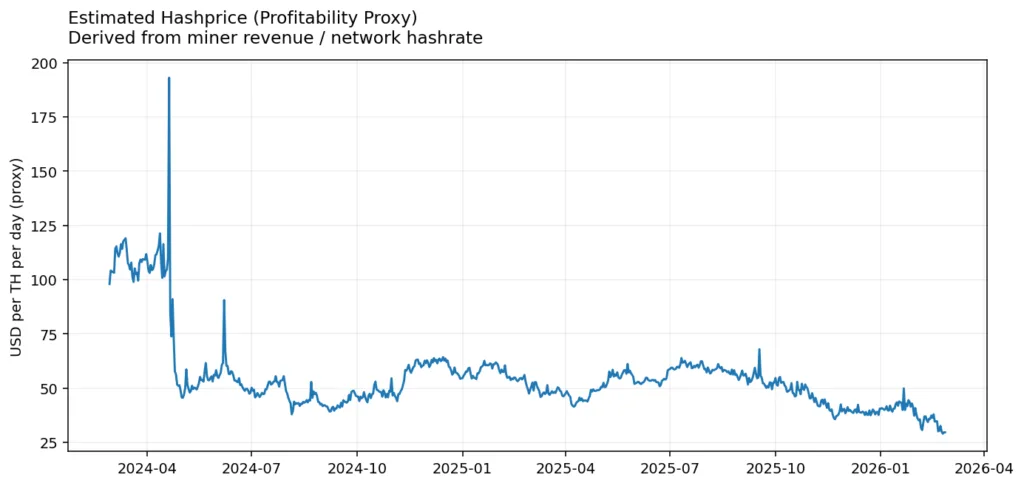
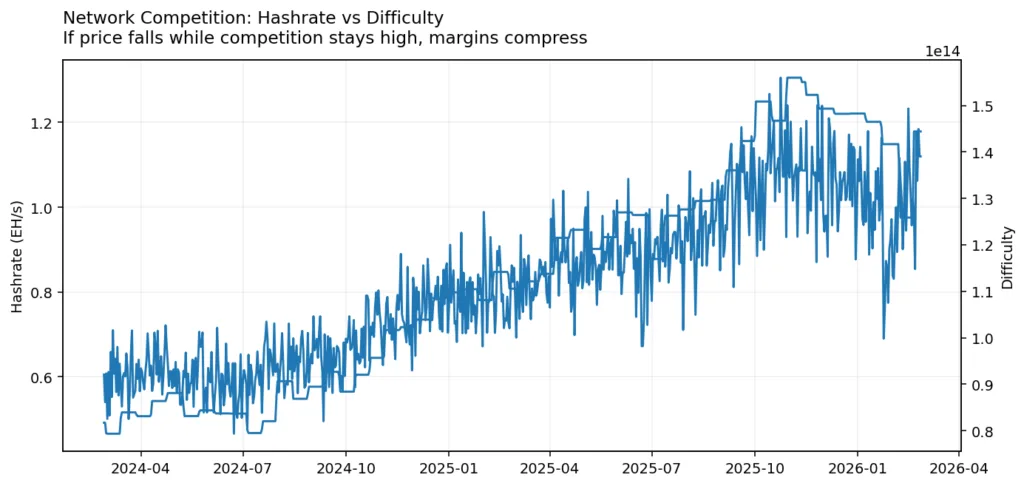
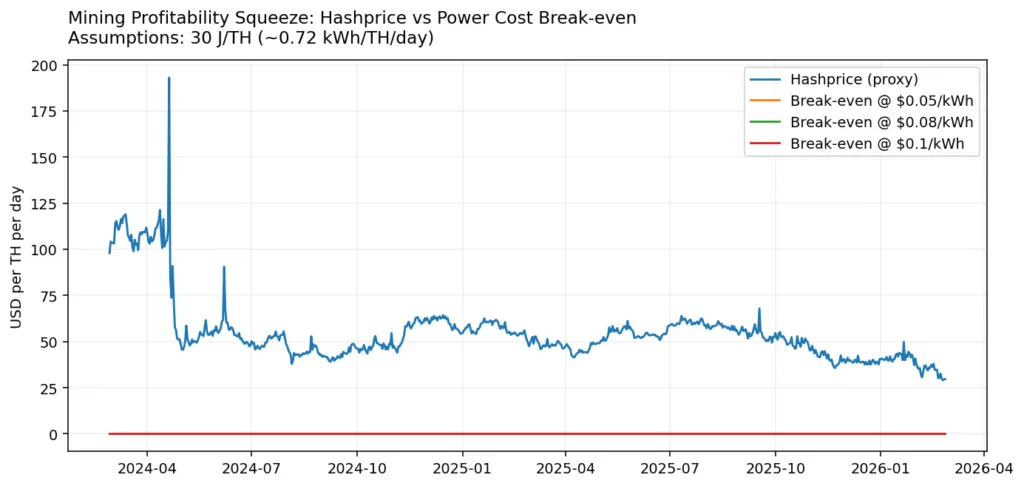
Mining profitability is measured through hash price the revenue earned per terahash per day. The hash price decreases when Bitcoin price declines except when a difficulty adjustment process begins to operate. The current situation creates complications because network difficulty has maintained its high level because the hash rate has continually increased during the last several months. The previous bullish market period created capital expenditure which resulted in the installation of hardware equipment that continues to function.
This situation generates a delayed response. The network maintains its strong competitive position despite price reductions. Mining operations with lower efficiency now function around or below their profitability limits especially in areas where electricity expenses are higher. The situation requires a choice between two possible outcomes. Miners must choose between two options they can either accept losses for a short period while waiting for prices to rise again or they can deactivate mining equipment which leads to decreased hash rates and subsequent difficulty adjustments. The historical process requires an extended duration to complete. The process normally takes time to complete.
Hash rate and difficulty dynamics
Bitcoin’s hash rate has maintained its robust performance throughout the periods when prices experienced declines. The system shows strength because industrial miners continue their operations at profitable levels while their expenditures remain under control. The financial statements face challenges during compression periods. A significant decrease in hash rate signals that miners have to stop their operations.
The pattern historically establishes local market bottoms because weaker players exit the market while miners reduce their treasury holdings. Difficulty adjustments show sustained downward movement because they represent a crucial element that determines market behavior beyond price movements. The occurrence of this event would establish that margin pressure has shifted from being a theoretical concept to actual operational reality.
Supply pressure and market impact
Mining operators face structural selling requirements which determine their mining profitability. Mining operators need to sell part of their generated rewards because they need to use these funds for their business expenses. The market experiences two different outcomes during periods of diminished profitability. Miners eliminate their digital assets from circulation when they need to maintain their cash flow which results in greater market supply. This process leads to extended periods of price decline. The first scenario sees miners who operate with insufficient resources shut down their operations which decreases mining output while creating stability in market supply.
The dominant scenario between the two options depends on two factors which include treasury strength and financing access capabilities. The stress that miners experienced during previous cycles caused their prices to stabilize instead of leading to permanent market collapse. Market bottoms occur at times closer to which investors experience serious losses than to market peaks. The present economic decline will determine whether organizations will undergo changes to their business approach or whether they will face total financial breakdown.
Institutional angle
Mining today is not retail GPU speculation. It operates as a complete industrial system. Mining companies that operate as public companies manage three types of financial obligations which include debt and long-term power agreements as well as treasury management strategies.Their response to compression affects equity markets, credit exposure, and Bitcoin liquidity simultaneously.Institutional capital monitors miner balance sheets as closely as it monitors price charts.If mining profitability remains under pressure for an extended period, we may see consolidation within the mining sector.
Distressed asset acquisition by efficient operators leads to centralization while operational efficiency across the organization improves. The network becomes more secure through the consolidation process. The process creates short-term problems but the organization achieves better outcomes through the process.
Structural interpretation
The story that “mining is no longer profitable” requires careful interpretation. Mining operations can find it hard to make money in certain situations. The first point at which profitability declines happens when operations reach their breaking point. The weakest operators exit before systemic collapse occurs.Bitcoin’s self-adjusting difficulty mechanism is designed precisely for this environment. The process compresses weaker participants while it establishes new market balance points. The current situation we are experiencing does not represent a complete breakdown. The current situation we are experiencing represents testing of operational limits. The upcoming mining performance will determine whether miners abandon their work or difficulty changes lead to relaxed conditions in the next market phase.