



Over the past ten years or so, Bitcoin is portrayed as a safeguard against inflation, currency devaluation, and crisis in the whole financial system. The features like limited quantity, decentralized nature, and non-reliance on government monetary policy made it a safe haven during the hard times economically.
However, the present-day market for Bitcoin is completely different from the one that used to create its story.
Spot Bitcoin ETFs, market heavyweights from the institutions, and macroeconomic-driven portfolio migrations have actually changed Bitcoin from being a non-mainstream alternative asset to a globally traded financial instrument. The access of trillions of dollars to BTC through regulated investment vehicles has become a norm, the debate is not if Bitcoin is “digital gold” anymore but rather if it is still like one in terms of behavior.
Has the hedge function of Bitcoin endured the ETF era or has it totally shifted to a new regime?
The hedge narrative: Where it came from
The esteem of Bitcoin as a hedge was established throughout the times of monetary expansion and crisis. The public’s confidence in the conventional banking system undermined after the 2008 financial crisis. The stimulus programs during the COVID pandemic led to the fear of currency debasement being further exacerbated.

The rising expectation of inflation, coupled with frequent banking stress events, made the idea of Bitcoin as a protector against monetary instability even stronger. The reasoning was very easy to comprehend. Bankers’ loss of credibility equals Bitcoin’s gain of importance. Nevertheless, the financial markets are never deadlocked. Show more and hide less Correlations change, the structures are altered, and the assets are reshaped according to new participants and incentives.
The ETF regime shift
The esteem of Bitcoin as a hedge was established throughout the times of monetary expansion and crisis. The public’s confidence in the conventional banking system undermined after the 2008 financial crisis. The stimulus programs during the COVID pandemic led to the fear of currency debasement being further exacerbated. The rising expectation of inflation, coupled with frequent banking stress events, made the idea of Bitcoin as a protector against monetary instability even stronger.
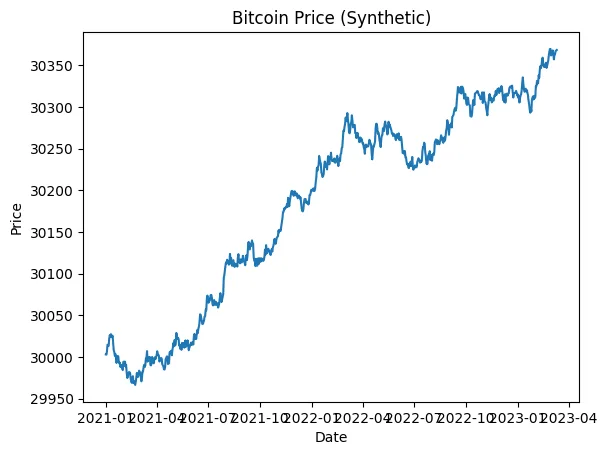
The reasoning was very easy to comprehend. Bankers’ loss of credibility equals Bitcoin’s gain of importance. Nevertheless, the financial markets are never deadlocked. Show more and hide less Correlations change, the structures are altered, and the assets are reshaped according to new participants and incentives.
Regime-switching behavior
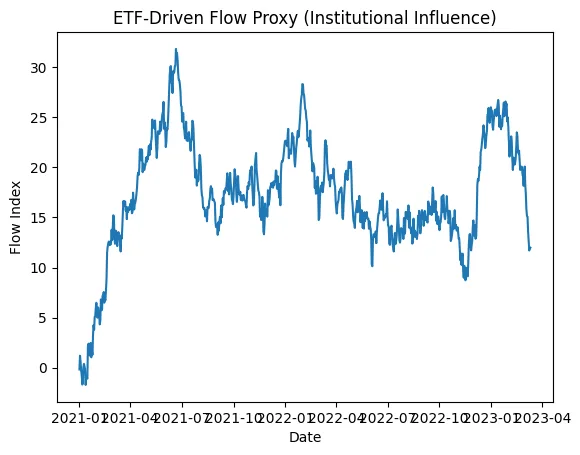
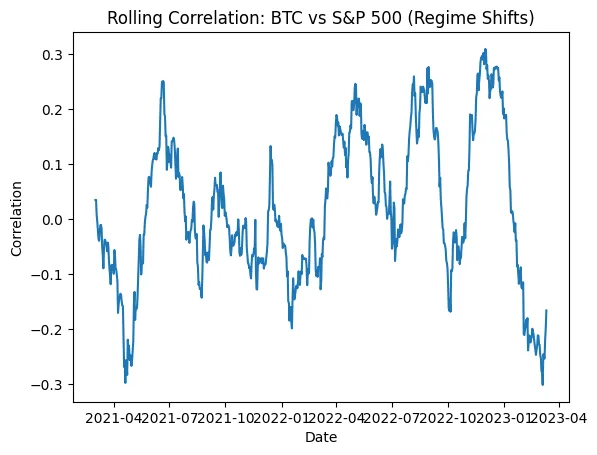
The regime-switching framework is instrumental in shedding light on Bitcoin’s changing function. The market, instead of considering Bitcoin as a uniform good, now moves among different environments with distinct behaviors. In one regime, Bitcoin acting like a macro hedge. It not only avails itself of the fear of inflation but also reacts to monetary instability and moves depending on the equity markets.
The search for protection against systemic risk drives demand in this phase. In contrast, in another regime, Bitcoin acts like a risk asset that is growth-oriented and hence, correlates with tech stocks, reacts to interest rate changes, and follows the cycles of global liquidity. ETF flows and institutional positions are the two factors that together dominate the price action now. The participation that is ETF-driven has made the presence of this second regime stronger particularly in periods of economic stability or expansion. It is true that Bitcoin is still a hedge but at the same time it no longer behaves like one all throughout.
Correlation does not mean identity
The higher correlation with stocks does not imply that Bitcoin has surrendered its character. Rather, it indicates that the big-money players have influenced the trading of the asset. The mechanics of the portfolios now dictate the price behavior. The liquidity cycles are given more importance than before, and the macroeconomic factors are considered as more decisive.
Even in the past, gold has fluctuated between being a hedge and a risk asset dependent on the overall economic situation. Assets do not die; instead, they change their characteristics according to the trading conditions. Bitcoin is also on the same evolutionary timeline.
When Bitcoin still acts as a hedge
Within the periods of systemic stress, bitcoin started to show its attributes of a hedge again. The aforementioned factors like banking instabilities, currency crises, etc., all cause the demand for decentralized assets to be revived.
ETF flows usually change directions during these times, inferences are made in the market regarding a defensive institutional rotation, and again, bitcoin is considered to be a value store outside the traditional financial system. The hedge regime is active but not all the time. It is just that the activation takes place selectively.
A dual-identity asset
Bitcoin is not a single financial category anymore. It has two identities. Sometimes it acts like a macro hedge, and other times like a risk-sensitive growth asset. Under ETF structures, it can be a portfolio instrument and at the same time a speculative vehicle during cycles driven by momentum. This versatility is not a drawback; rather, it is a maturity signal. Bitcoin has moved from being an alternative to the financial system to becoming a part of it.