



The era of reflexive speculation is ending
The crypto market has operated as a worldwide gambling establishment during multiple years. The market narratives developed at a speed which exceeded the actual market fundamentals. The use of leverage caused all traders to experience heightened emotional states. The market focused on meme coins which led to public interest. The price movements of assets followed social trends instead of responding to their economic frameworks.
The markets moved between states of extreme happiness and deep sadness because investors made short-term bets instead of investing for the long term. The current time period marks the beginning of the end for that past time period. The present moment shows that we are experiencing a transition period which will last until our next future.
The cryptocurrency market has shifted from its previous state of unpredictable market behavior to its current state of operating as a part of the international banking system. The process of transformation presents itself through a hidden mechanism. The arrival of this event does not bring celebratory displays.

The process develops through reduced market fluctuations which lead to extended asset ownership periods and increased investor involvement from institutions together with a stronger focus on processes of asset management and income generation. The cryptocurrency market has stopped pursuing new forms of excitement. The organization is developing operational infrastructure.
Bitcoin is becoming collateral, not a trade
Bitcoin has undergone a fundamental transformation which changed its primary function from being an asset that shows price momentum to its current status as macroeconomic backing. The supply chain is impacted because exchange-traded funds (ETFs) buy up existing assets. Institutional investors build their holdings during periods of price stability. Corporations and sovereign actors quietly integrate Bitcoin exposure into balance-sheet strategy.
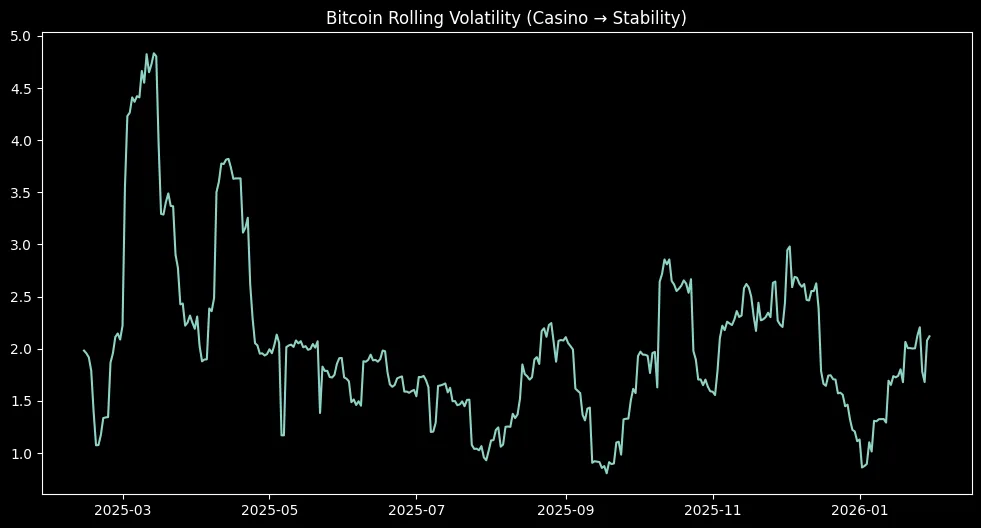
The experience of drawdowns has changed for me. The current drawdowns show less intensity which results in more gradual recovery processes. The market absorbs selling pressure without creating additional market intensity. Bitcoin now operates as a reserve asset instead of a financial betting tool. Price discovery occurs through the actions of asset allocators who control their duration and risk and exposure. Bitcoin has become the central financial force that dominates all economic activity.
Ethereum is evolving into settlement infrastructure
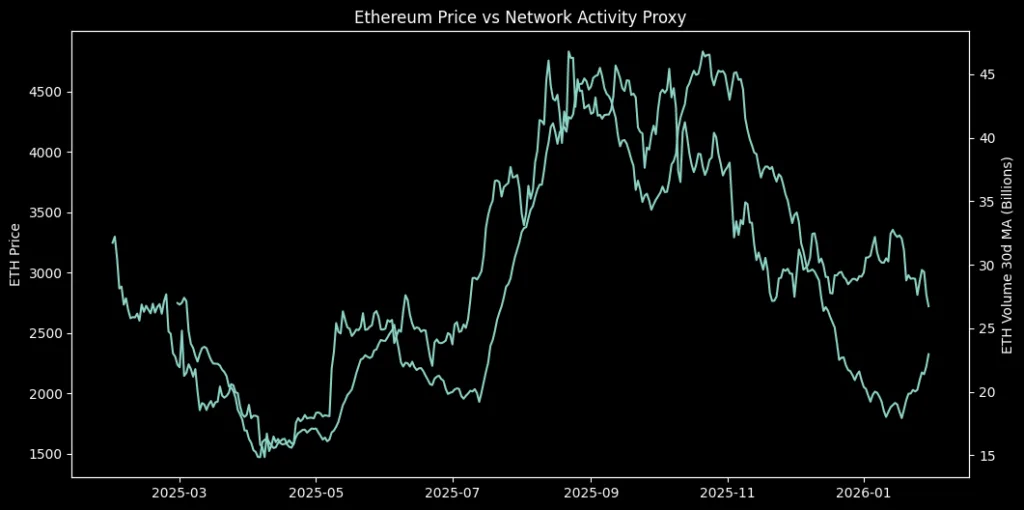
The evolution of Ethereum provides more insights into its development path. The asset now moves in market trends which reach beyond its initial high-beta trading status. The system operates as a programmable settlement infrastructure. Ethereum serves as the basic infrastructure that powers tokenized assets stablecoins and Layer 2 networks and decentralized applications. The usage of Ethereum shows actual user activity instead of market speculation.
The gas fees of transactions match the actual demand for transaction processing. The staking process creates incentives that drive network stability. Developers create systems which they intend to operate permanently instead of creating short-term trends. Ethereum functions as an investment opportunity. The platform is transforming into a system which enables financial coordination among users.
Stablecoins are quietly rewriting monetary plumbing
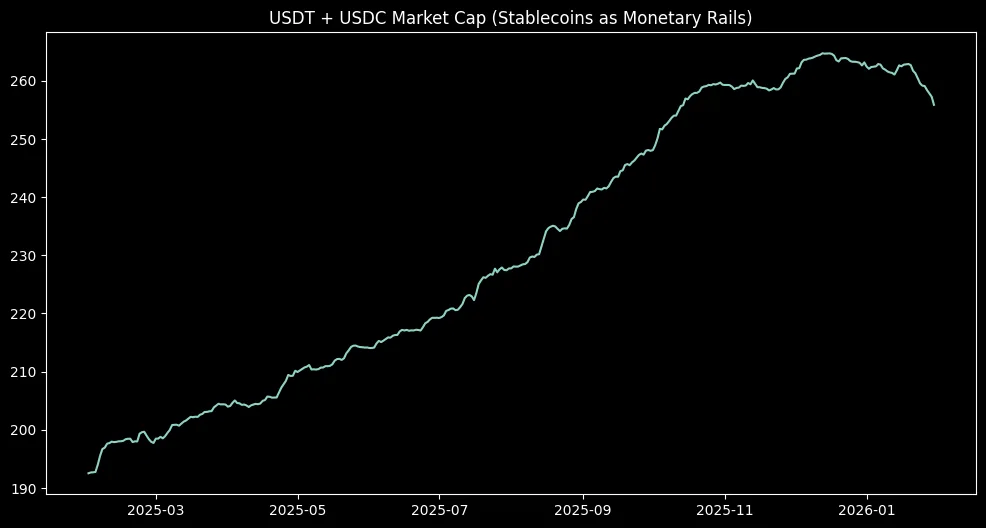
The transformation which people most frequently ignore has reached its most significant point through stablecoin development. The total annual transaction volume of stablecoins has reached trillions of dollars. The system processes payments at a speed which exceeds those of standard payment systems.
The system accomplishes cross-border transactions without using intermediary parties. In economies where banking systems face limitations digital dollars function as stablecoins which also serve as liquidity bridges between global cryptocurrency markets. Stablecoins function as assets which people use for market speculation. The system operates as essential infrastructure which supports daily business activities.
The system functions as a monetary system which exists outside traditional banking systems while its operations increasingly connect with those systems. Treasury holdings back issuance. Compliance frameworks mature. Institutional custody expands. Digital economy stablecoins function as central banks which operate in the shadows.
Capital is allocating, not gambling
The structural change results in present-day cryptocurrency operations to function differently from their previous state. The market exhibits stable price movements which do not show extreme fluctuations. The power of meme rotations has decreased as their activity slows down.
Investors maintain their assets for longer timeframes. Investors focus their resources on primary investment assets. People protect their assets through risk management instead of pursuing high-risk investments. Market participants now use asset allocation models instead of making speculative trades. Institutions now establish their presence in crypto markets without waiting for market announcements. They establish their market position through covert operations.
Developers prioritize three main aspects which are system expansion, safety measures, and component integration. The legal system now recognizes cryptocurrency as a legitimate entity which it needs to regulate. The trading activities of cryptocurrencies no longer determine their value. The cryptocurrency market now relies more on engineers and asset managers and government officials for its development.
Infrastructure markets don’t move like casinos
The infrastructure markets showcase different patterns of market behavior because their growth rate matches their growth rate. The growth rate of these markets proceeds at a slow pace. The markets deliver benefits when investors maintain their investments over extended periods. The markets of these systems demand stable performance while they distribute their components.
The market of digital currencies operates in its present state because of its current restrictions. The market is establishing its basic framework. The market is implementing measures to strengthen its operations. The Investors are establishing long term positions, which will lead to stable market conditions. The validation process for crypto has reached its conclusion. The technology is establishing itself as a core component.