


You have data training which extends until the month of October in 2023. The common evaluation of memecoins showed two main problems with these digital assets because they functioned as jokes without any actual value which would allow them to continue existing after market conditions became less favorable. The market research companies found that digital assets which suffered from celebrity endorsement, short-term price surges and sudden drops in trading activity formed an unpredictable business environment. The framework which existed in 2026 has two outdated elements because it needs new features. Memecoins are not disappearing.
They are changing into new forms. The industry has experienced a severe market correction. The CoinMarketCap analysis from this month shows that the industry lost over $150 billion of market value between late 2024 and March 2026, but short periods of market activity still caused significant price increases during times of investor confidence. The process of resetting everything creates a permanent division between temporary excitement and lasting patterns of human conduct. The process shows that what people take away from a washout becomes more essential than everything which exists during a market bubble. The existing value of memecoins consists of more than nothing.
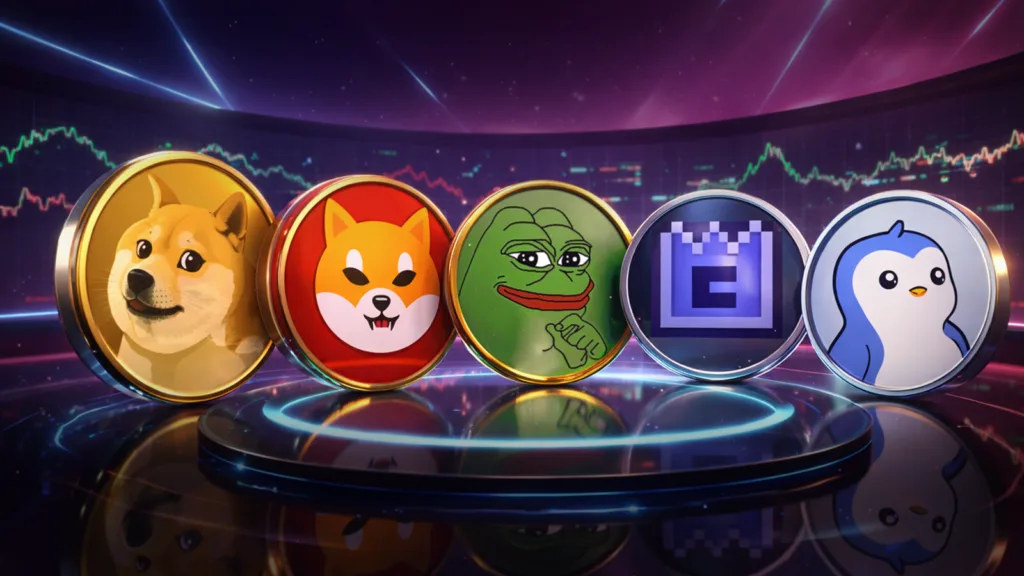
The market now operates with stricter rules which require community bonds, brand recognition and narrative strength, and ecosystem growth to determine which tokens maintain their market value and which ones vanish into blockchain obscurity. Market analysts currently identify DOGE, SHIB, FLOKI and PEPE as three different models that demonstrate how various brands succeed through their cultural strength while other brands attempt to survive through their gaming and NFT and DeFi utilities and trading systems.

The statement about memecoins becoming conventional value assets functions as incorrect information. The category has undergone a process of structural change. The meme now serves as a product which extends beyond its original purpose. The process now functions as the primary way to discover new products. Everything about the situation has changed.
Memecoins as community-driven liquidity networks
The first mistake analysts make is they believe that memecoin liquidity exists as a completely irrational force. In reality, it is often socially coordinated. The system does not possess fundamental traditional ties but its construction achieves structural importance. The real market-making mechanism for many memecoins operates through community participation.
These assets start their development without using discounted cash flow methods or protocol revenue assessment or enterprise demand calculation. Their development starts with a common identity that people share. The buyers are not just traders entering a chart. The participants establish their membership in a social group through which they enhance the main story while making themselves more visible with memes and reposts and jokes and profile pictures and repeated cultural signals. The social layer transforms into liquidity.
The importance of this statement lies in the fact that liquidity depends on where people focus their attention which itself shows predictable patterns of distribution. It clusters around symbols people recognize, communities people trust, and stories people want to repeat.
Coinbase’s memecoin overview showed that social media and community support formed the core of its system. Current 2026 commentary defines successful memecoins as those projects which can keep their community involved after initial excitement ends. In that sense, memecoins are not simply speculative assets. The system functions as an attention-coordination network. The community strength enables users to defend price boundaries while creating new discussions which bring back inactive investors and help maintain market presence during less active times.
Weak traditional fundamentals allow some tokens to outperform better-engineered projects which lack cultural presence because better-engineered projects possess stronger fundamentals. People form their price beliefs through their organized system of beliefs. Community existence does not establish permanent presence in the market. The community functions as genuine market infrastructure within the memecoin space.
Branding vs Fundamentals: The market is pricing symbolic capital
The importance of this statement lies in the fact that liquidity depends on where people focus their attention which itself shows predictable patterns of distribution. It clusters around symbols people recognize, communities people trust, and stories people want to repeat. Coinbase’s memecoin overview showed that social media and community support formed the core of its system. Current 2026 commentary defines successful memecoins as those projects which can keep their community involved after initial excitement ends. In that sense, memecoins are not simply speculative assets.
The system functions as an attention-coordination network. The community strength enables users to defend price boundaries while creating new discussions which bring back inactive investors and help maintain market presence during less active times. Weak traditional fundamentals allow some tokens to outperform better-engineered projects which lack cultural presence because better-engineered projects possess stronger fundamentals. People form their price beliefs through their organized system of beliefs. Community existence does not establish permanent presence in the market. The community functions as genuine market infrastructure within the memecoin space.
The “branding versus fundamentals” discussion reaches its advanced stage at this point. The proper inquiry now takes a different direction because we need to establish whether branding functions as a substitute for fundamental elements. The analysis needs to determine whether branding serves as fundamental element in the memecoin market.
The answer has become more affirmative for these assets which we test. Different branding strategies produce different results which they use to promote their products. Weak meme brands burn bright and die fast. The creation of market categories depends on strong meme brands. The sector in 2026 shows two distinct paths which display temporary market interest and permanent branded systems that will maintain their value through various trading periods. Binance Square commentary this year explicitly describes a split between cultural icons, ecosystem builders, and community-retention models inside the meme category. The market has developed the ability to differentiate between a joke and a franchise.
Meme to utility: The transition layer
The sector has reached a major milestone because multiple memecoins now work to shift their status from narrative asset to ecosystem asset. Not all will succeed. Many will overpromise. But the pattern itself matters.The emerging model is straightforward: launch as a meme, capture attention, build community, then use that social base to introduce products, games, NFTs, DeFi integrations, payments, or branded infrastructure. Recent 2026 sources point to FLOKI’s broader ecosystem efforts in gaming, NFTs, and DeFi, while CMC coverage of Memecoin highlights exchange reach, real-world events, NFT identity layers, and a proprietary trading platform as signs of ecosystem expansion.
The statement about utility being the first investment thesis established in the document. The typical situation does not require it to happen The situation needs to be effectively resolved because people have already started to pay attention to it. The meme establishes a starting point for emotional response in behavioral finance while users make decisions based on their personal value assessment. The transition creates a strong impact because it changes how the token functions.
A memecoin can begin as pure culture, then evolve into a distribution engine. The community transforms into users while users become platform users and speculative holders convert into ecosystem loyalists. The token has transformed from an Internet joke into an official cryptocurrency. It creates access to a complete system of products and services. The market shows valid reasons to maintain its doubtful stance.
Many meme-to-utility narratives exist as superficial transformations. The combination of a landing page and a basic roadmap does not establish lasting value. The memecoin industry has developed into a new phase because it now includes different aspects beyond its initial launch speed measurement. The system assesses performance based on user retention and business growth and community members who become permanent users. The process creates new possibilities although it has certain flaws.
Social sentiment is still the primary valuation engine
The statement about utility being the first investment thesis established in the document. The typical situation does not require it to happen The situation needs to be effectively resolved because people have already started to pay attention to it. The meme establishes a starting point for emotional response in behavioral finance while users make decisions based on their personal value assessment.
The transition creates a strong impact because it changes how the token functions. A memecoin can begin as pure culture, then evolve into a distribution engine. The community transforms into users while users become platform users and speculative holders convert into ecosystem loyalists. The token has transformed from an Internet joke into an official cryptocurrency. It creates access to a complete system of products and services. The market shows valid reasons to maintain its doubtful stance.
Many meme-to-utility narratives exist as superficial transformations. The combination of a landing page and a basic roadmap does not establish lasting value. The memecoin industry has developed into a new phase because it now includes different aspects beyond its initial launch speed measurement. The system assesses performance based on user retention and business growth and community members who become permanent users. The process creates new possibilities although it has certain flaws.
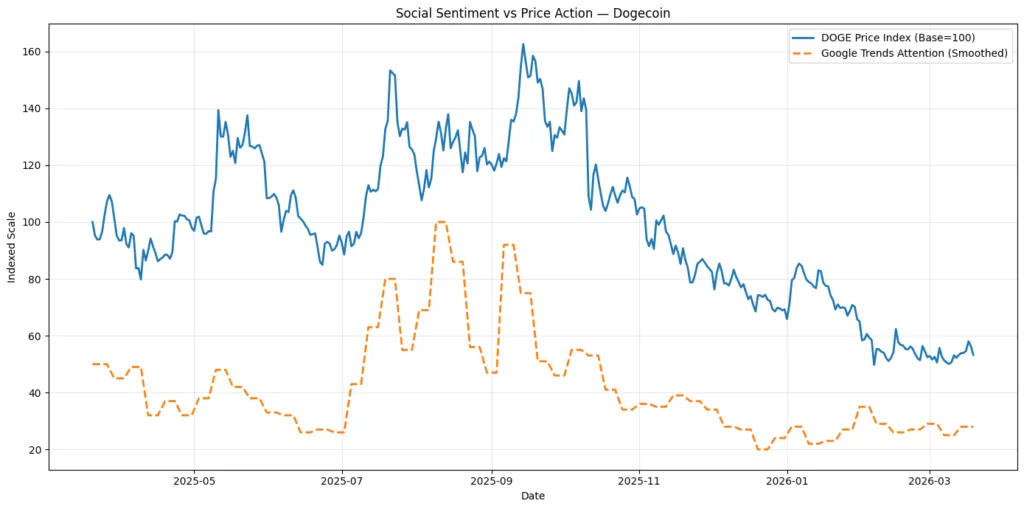
The core element of the feature requires sentiment analysis as its main component. Social momentum functions as a leading indicator in memecoins according to its nature as a non-predictive indicator. Price movement occurs when meme density and mentions and engagement ratios and narrative clustering reach their peak levels. This phenomenon occurs in particular during the times when Bitcoin experiences its stagnation and traders move towards assets that have higher market volatility.
According to CoinMarketCap their analysis shows that investors have shifted their investments back into memecoin assets during the periods when Bitcoin experienced consolidation in early 2026. The key takeaway is that sentiment is not an optional overlay for this sector. It forms an essential component of the valuation process. The current market conditions show that companies require more than just sentiment to succeed in their operations.
The projects that survive are increasingly those that can turn sentiment spikes into recurring community activity and community activity into ecosystem permanence. Memecoins still operate under the influence of public sentiment according to market trends. The tokens that succeed in the market today are those that successfully implement user sentiment into their operational processes.
The sector is becoming more selective
The feature works currently because it presents a nonblind bullish analysis. The system can detect essential reality which shows that not all memecoins will continue to exist because the memecoin market advances. The process defines itself through its mature stage which requires more specific requirements. The 2026 commentary which appeared recently reveals that survival factors depend on executive distribution patterns and market activity and management standards and organization progress and market development.
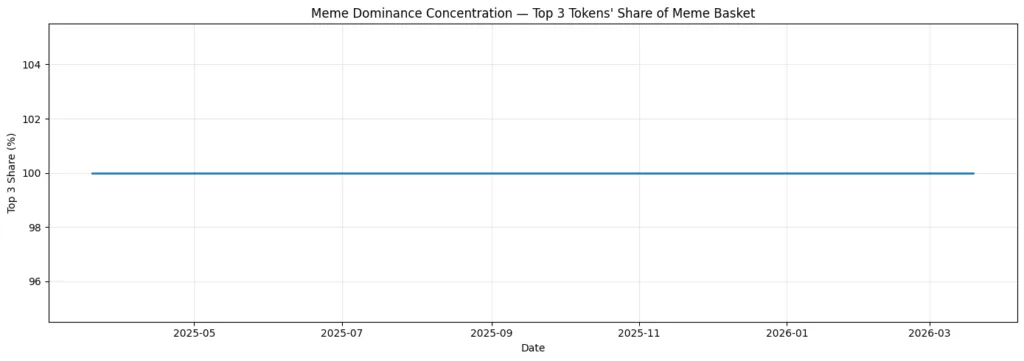
The current status of memecoins shows that they remain in speculative markets but their evaluation process has become more rigorous than before. The result created a market structure which operates with multiple levels of authority. The primary position contains major cultural brands which maintain their market value. The ecosystem builders construct products to maintain their market presence which they create through their development efforts.
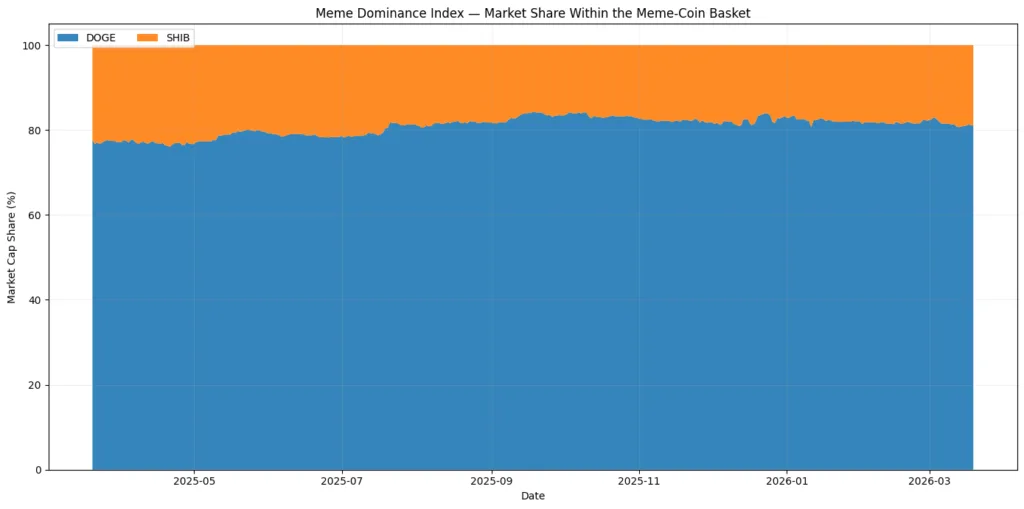
Cyclical breakout names exist at the next level because they achieve success by following specific attention patterns. The entire base contains numerous tokens which failed to convert their temporary popular status into permanent viability. The statement “memecoins are dying” results in excessive oversimplification.
A Darwinian sorting mechanism currently operates to separate the existing population. The period of easy access to liquid assets has reached its conclusion. The industry has discovered that temporary public interest differs from long-lasting meme value. The actual narrative emerges from that specific distinction.
What this means for investors and market structure
Investors need to understand that memecoins require separate evaluation because they operate across multiple distinct market segments. The current category consists of different behavioral patterns which exist as separate models. The first type of tokens exists as pure attention trades. The second type of tokens exists as long-term brand-based investment vehicles. The third type of tokens operates as transitional assets which develop practical uses through their association with a meme-based network.
The fourth type of tokens exists as community-driven promotional platforms which attract new users whenever market conditions shift toward riskier assets. The shift demands a fundamental change in existing valuation systems. Existing token evaluation methods still hold value, but they fail to provide complete assessment capabilities.
Investors must determine how well projects maintain social interest over time, how communities sustain their membership during different periods, how brands maintain visibility across multiple platforms, how projects sustain their liquidity during market declines, and how effectively they transform meme-based attention into operational businesses.
The memecoin market requires analysts to evaluate assets which exist at the crossroads of cultural influence and financial value. The existing frameworks find this practice difficult to handle, but it represents the reason why the industry still holds significance.
The environment functions as an active experimental space which demonstrates how financial markets become impacted by belief systems, personal identity, brand value, and collective action. The future described by crypto matches present-day reality according to most analysts.
Memecoins are not dying they are growing up
Memecoins continue to exist in the present day. The process of development requires them to undergo selection which leads to refinement and structural changes. The sector has moved beyond the idea that every meme token deserves infinite upside simply because it trends for a short period.
The industry now recognizes that people use memecoins only as temporary entertainment which does not cause permanent value. The existing brands function as complete operational systems which their communities control to create liquid assets that can develop into long-lasting products beyond basic market speculation.
The meme has evolved into something bigger than its original function. The process has developed into an acquisition system which creates initial attraction before users start to engage more deeply with the content. Memecoins continue to exist because they have practical value. The market currently recognizes these assets as valuable because they have redefined traditional investment standards. Attention can become liquidity. Community can become infrastructure. Branding can become a form of economic power. Memecoins are not dying. They are growing up.