



Executive context
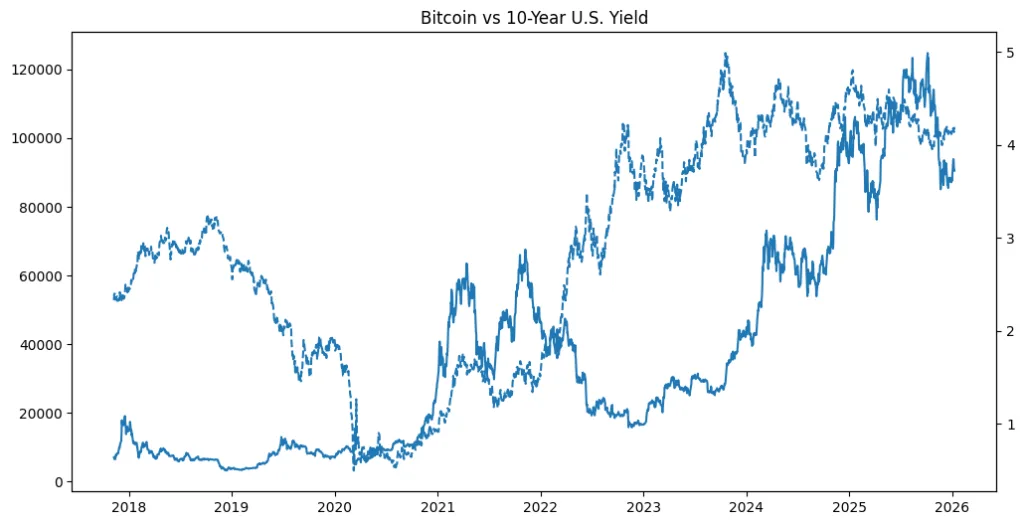
Financial markets do not react to political matters in a singular manner. They rather react to the change in perceptions regarding the stability of institutions, continuity of policies, and the overall quality of macroeconomic governance that has been drawn by those political events. The U.S. monetary authority is under political pressure that coincides with legal scrutiny at its highest level. The implications of this situation go beyond short-term news and are felt in the risk pricing across global asset classes which has been restructured. The power of the Federal Reserve is not just in its command over interest rates and liquidity conditions but also in the market’s confidence in its independence and policy consistency.
Any challenge to that impression, whether it be through direct legal battles or persistent political pressure on its management, adds a new layer of uncertainty to the monetary environment that supports global finance. Digital currencies, mostly Bitcoin and Ethereum, are most affected by these changes since their worth is not linked to cash flows or government-backed guarantees but rather to stories of monetary and institutional trust and systemic hedging. As the trust in centralized governance decreases, the decentralized financial instruments will tend to reprice even faster than the traditional assets, which is the way the market perceives them as alternative monetary systems rather than conventional risk assets.
Central bank credibility as a market variable
Financial markets do not react to political matters in a singular manner. They rather react to the change in perceptions regarding the stability of institutions, continuity of policies, and the overall quality of macroeconomic governance that has been drawn by those political events. The U.S. monetary authority is under political pressure that coincides with legal scrutiny at its highest level. The implications of this situation go beyond short-term news and are felt in the risk pricing across global asset classes which has been restructured. The power of the Federal Reserve is not just in its command over interest rates and liquidity conditions but also in the market’s confidence in its independence and policy consistency. Any challenge to that impression, whether it be through direct legal battles or persistent political pressure on its management, adds a new layer of uncertainty to the monetary environment that supports global finance.

Digital currencies, mostly Bitcoin and Ethereum, are most affected by these changes since their worth is not linked to cash flows or government-backed guarantees but rather to stories of monetary and institutional trust and systemic hedging. As the trust in centralized governance decreases, the decentralized financial instruments will tend to reprice even faster than the traditional assets, which is the way the market perceives them as alternative monetary systems rather than conventional risk assets.
Political pressure and the erosion of monetary independence
The independence of the Federal Reserve has always played the role of a buffer against the political cycles and in this way, it guaranteed that the matters of inflation control, employment stability, and financial system integrity were decided according to the data rather than by the electoral incentives.
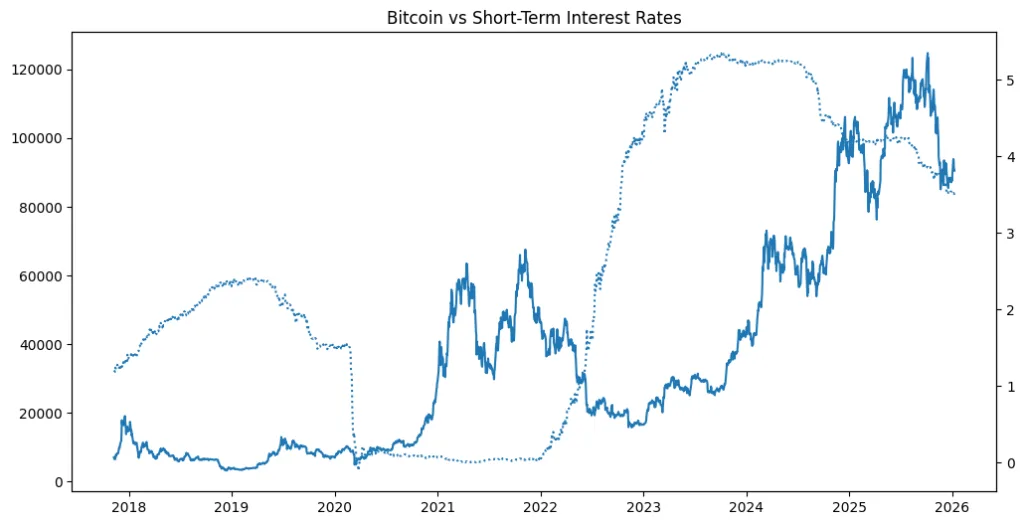
Legal or political challenges to the Fed Chair introduce a structural risk that policy decisions could become reactive rather than strategic. In a macro view, the market impact is not determined by the legal outcome itself, but rather by uncertainty surrounding the leadership continuity and policy direction. Investors start to come up with scenarios in which the future interest rate decisions are affected by political expediency, public pressure, or legal defensiveness. This leads to the widening of the distribution of possible monetary outcomes which in turn, increases the volatility of the bond markets, the currency expectations, and the inflation forecasts.
Crypto assets act as volatility absorbers in such a market. The decentralized nature of these assets frees them entirely from the jurisdictional and political constraints that are present in the fiat systems. When the political risk becomes a factor in monetary governance, decentralized assets are not only considered speculative instruments but rather as parallel monetary systems whose operational rules are completely immune from legal or political interference.
Monetary uncertainty and the repricing of hard assets
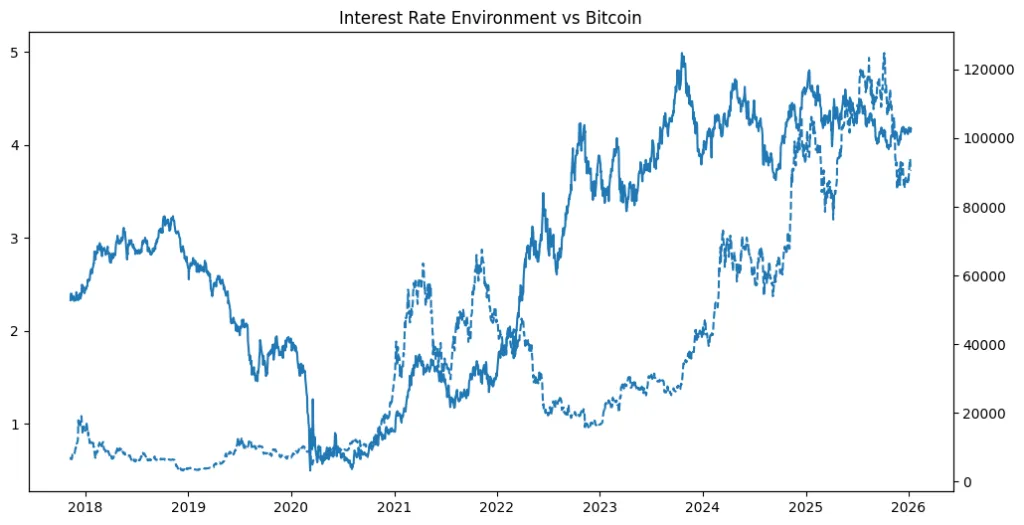
The money policy uncertainty is such that it still directly impacts the real interest rates in the future. Investors will sell those assets that have uncertain future pricing and gradually channel their money to ones that are properly issued and their supply dynamics can even be predicted. The Bitcoin’s limited supply is its brass monetary model that is set in contrast with the fiat money that is issued on the banks’ discretion.
Thus, when the central banking leadership is the one whose credibility is being doubted, the predictability becomes a kind of monetary stability. The market rates Bitcoin lower not as a risky investment but more as a non-sovereign money hedge. While the supply of Ethereum is not strictly limited, it nonetheless enjoys a good deal because of its settlement layer status for DeFi projects, stablecoins, and tokenized real-world assets. The higher the uncertainty about the central bank’s monetary policy, the larger the demand for decentralized financial infrastructure. This helps to give a higher value to the programmable monetary systems that work independently of the respective countries’ legal systems of governance.
The dollar, sovereign risk, and digital monetary alternatives
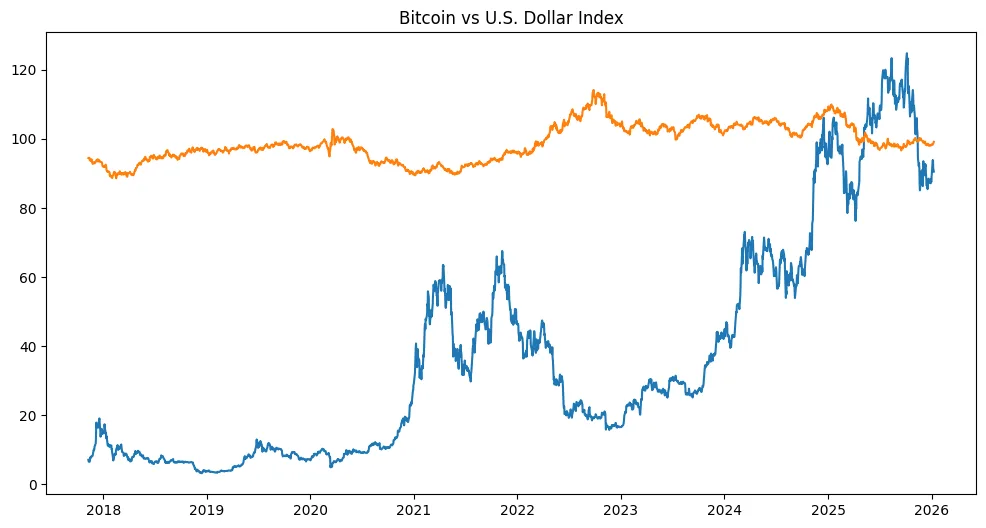
The dominance of the U.S. dollar rests on three pillars: economic scale, financial market depth, and institutional trust. Rising debt levels and persistent fiscal deficits have already introduced long-term sustainability concerns. Political and legal pressure on Federal Reserve leadership adds a governance dimension to this risk.
Markets do not abandon the dollar in response to institutional stress. They diversify. This diversification increasingly includes digital dollar instruments such as stablecoins, as well as non-dollar crypto assets that provide exposure to alternative monetary regimes. The growth of on-chain dollar liquidity reflects demand for U.S. currency exposure without reliance on traditional banking intermediaries.
Crypto therefore operates as a complementary system rather than a replacement. It provides a parallel infrastructure for liquidity, settlement, and value storage that becomes more attractive when traditional institutions face credibility challenges.
Volatility as a function of structural transition
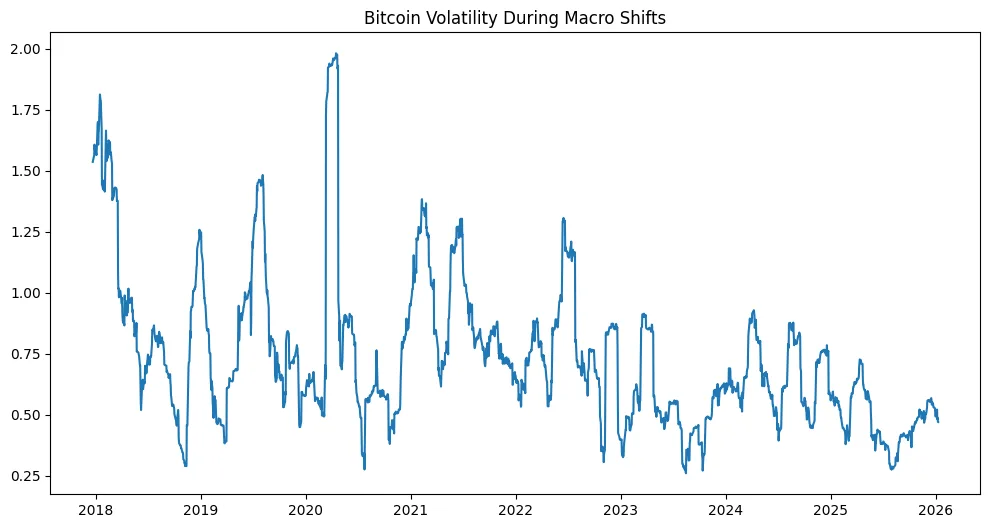
The crypto market volatility is often confused with instability. However, the opposite is true as it shows the rapid incorporation of macro information into the digital asset markets. When there is emergence of institutional credibility, political risk, or monetary leaders uncertainty, crypto transactions happen faster than through traditional markets as it is not tied down by regulations, capital controls or market closure hours.this quickness magnifies the short-term price fluctuations but at the same time fortifies the long-term importance.
As the central themes of the market evolve from inflation and rates to governance, credibility, and institutional trust, the role of crypto changes from being a speculative tool to a hedge against system risks.
Institutional positioning in a politicised monetary environment
The inclusions of crypto assets in institutional portfolios are no longer dictated only by performance metrics. Macro considerations are already a big part of the deciding process. Such institutions do not just look for different asset classes but rather across different governance regimes when monetary policies turn sensitive politically. Decentralization provides a way to invest in monetary systems that do not depend on elections, are not challenged by legal proceedings, or are not subjected to political pressure.
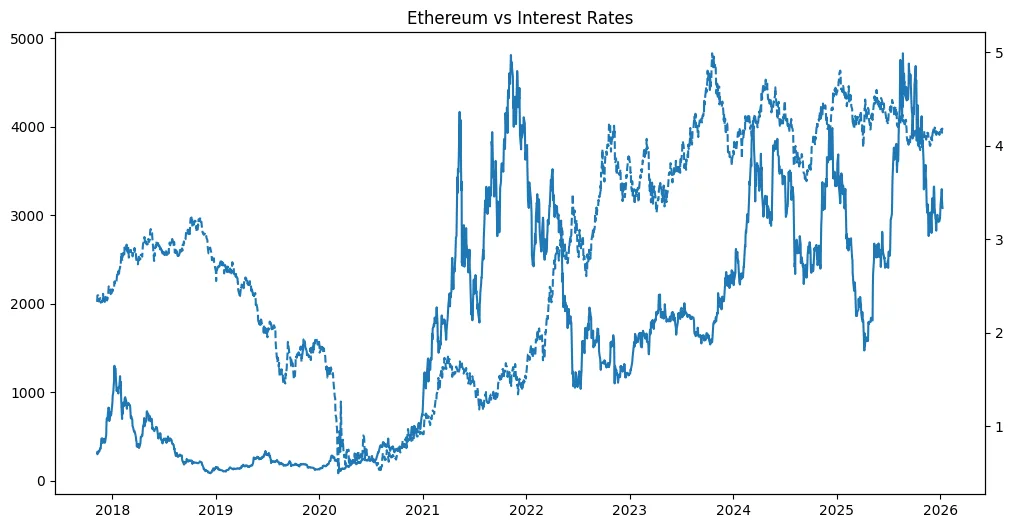
Therefore, such systems can be included in risk hedging portfolios that protect against institutional risk rather than simply market risk. Crypto’s incorporation into institutional strategies represents a fundamental change in the manner that capital reacts to governance uncertainties that comes with the loosening of regulations and the development of financial infrastructure.