



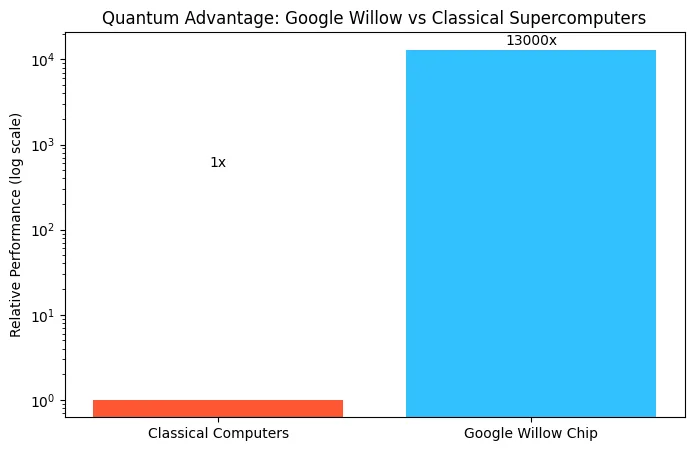
Quantum computing, previously limited to theoretical concepts and academic trials, has now reached a phase where practical demonstrations indicate its transformative possibilities. Google’s recent announcement about the Willow chip highlights this fact: the chip demonstrated the first verifiable quantum advantage by executing the Quantum Echoes algorithm 13,000 times quicker than the top classical supercomputers. This algorithm mimics atom interactions through nuclear magnetic resonance, creating opportunities in materials science and pharmaceutical exploration.
Although these applications are remarkable in isolation, their consequences for cryptography and, consequently, cryptocurrencies are significant. The cryptographic principles of Bitcoin, Ethereum, and many blockchain networks depend on mathematical challenges that traditional computers are unable to solve effectively. As quantum computing progresses rapidly, the algorithms protecting digital assets now might become outdated in the near future. The emergence of verifiable quantum advantage is not merely a scientific achievement; it serves as a caution that the security systems supporting contemporary finance must adapt in anticipation
Quantum threat to crypto security
Cryptocurrencies depend on intricate mathematical challenges to safeguard transactions and wallets, with Bitcoin and Ethereum primarily employing Elliptic Curve Cryptography (ECC). These algorithms are too complex for traditional computers to reverse-engineer, forming the foundation of digital asset security. Nonetheless, the emergence of quantum computing brings a transformative change. Algorithms like Shor’s algorithm could potentially factor large integers and solve discrete logarithms much more quickly than classical computers.

This would enable a sufficiently powerful quantum computer to deduce private keys from public addresses, thereby undermining the cryptographic security of blockchain assets. The danger is heightened by the “Harvest Now, Decrypt Later” approach, in which cybercriminals capture and save encrypted transactions presently, planning to take advantage of them when quantum technology advances enough. Although no existing quantum computer can effectively carry out these attacks, the swift advancement, highlighted by Google’s Willow chip, necessitates that the crypto ecosystem start shifting to quantum-resistant solutions now.
Quantum echoes and the pace of innovation
Google’s Quantum Echoes algorithm, run on the Willow chip, signifies a significant advancement in computational power. Through the simulation of atomic interactions with nuclear magnetic resonance, it can address issues that would require classical supercomputers thousands of times more time. Although the direct uses are in chemistry and materials science, the wider consequences echo throughout various sectors, such as finance and cybersecurity. In the realm of cryptocurrency, this milestone is simultaneously motivational and a warning. It emphasizes the speed at which quantum computing is nearing practical problem-solving limits that may ultimately threaten the encryption methods protecting digital assets.
The performance of the Willow chip shows that what was once viewed as futuristic, the capability to handle and resolve intricate cryptographic challenges might soon be attainable. This acts as an essential reminder that the crypto landscape needs to prepare for these technological changes, enhancing research into quantum-resistant algorithms before these developments jeopardize network security

Preparing for a quantum-resistant era
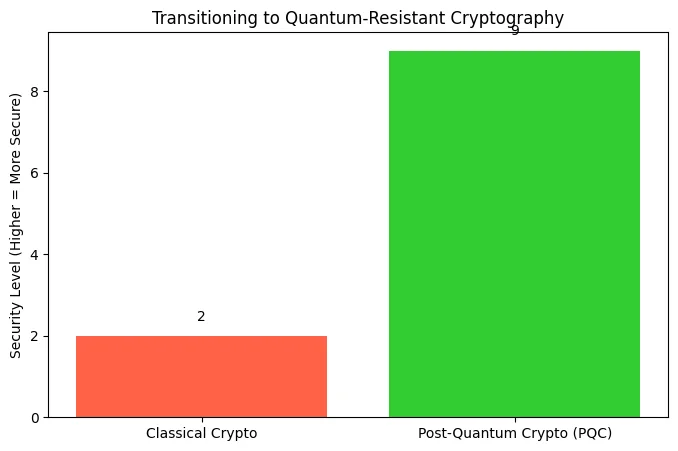
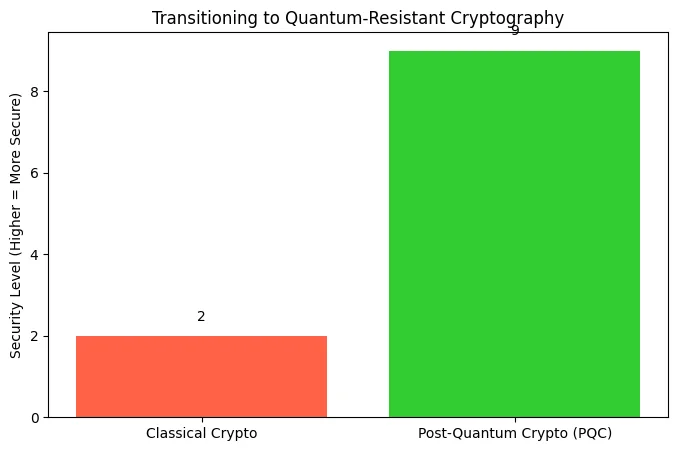
With advancements in quantum computing, the cryptocurrency sector is adapting by creating solutions that are resistant to quantum threats. Post-quantum cryptography (PQC) seeks to substitute at-risk classical algorithms with novel cryptographic techniques crafted to endure quantum assaults. Institutions like the National Institute of Standards and Technology (NIST) are spearheading initiatives to standardize PQC protocols, guaranteeing that digital communications and transactions stay secure in a future influenced by quantum technology.
Certain blockchain initiatives have already made proactive moves: the Quantum Resistant Ledger (QRL), for instance, utilizes the Extended Merkle Signature Scheme (XMSS), a protocol designed specifically to withstand quantum dangers. Shifting to quantum-resistant systems is not just a theoretical task; it is crucial to avoid the exploitation of future vulnerabilities. Although the timeline for quantum computers that can compromise ECC remains unclear, the progress of research, along with achievements such as Google’s Willow chip, highlights the need for the cryptocurrency sector to proactively adjust, incorporating these sophisticated protocols ahead of the onset of quantum threats
Balancing risk and opportunity
The rise of quantum computing offers the cryptocurrency realm a twofold scenario: it acts as a danger and a driver for advancement. Quantum machines could threaten current cryptographic protocols, putting digital assets at risk and eroding trust in blockchain networks. Conversely, the challenge drives innovation, encouraging developers and researchers to create quantum-resistant algorithms, reconsider consensus methods, and investigate new blockchain architectures.Quantum computing may also improve the very networks it poses a risk to by optimizing transaction validation, increasing mining efficiency, and facilitating intricate smart contract simulations that were not possible before.
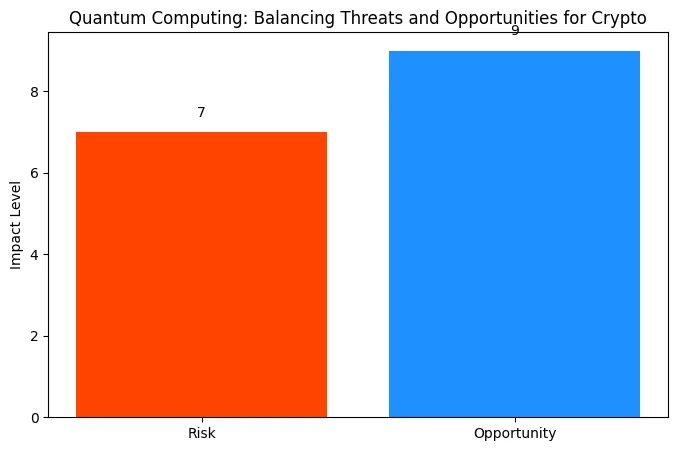
This changing environment demands active adjustment, where blockchain networks not only protect against possible quantum threats but also utilize quantum innovations to improve performance and scalability. The convergence of these technologies is not just an issue of risk management; it signifies a pivotal moment where foresight, innovation, and strategic planning will decide which digital assets prosper in the quantum age.