




The comfort that kills
The most preferred investment strategy which investors want to utilize remains the most protected investment option which investors yet to comprehend. All investors who exist between retail investors and institutional investors present the same requirement. They need a location which allows their funds to remain secure. Investors want to obtain positions which need no active supervision.
The method should endure through market fluctuations. The category which people refer to as safe. Current market systems function according to safety. They function according to how people perceive things and how they experience time and how their systems break down. The attribute which we define as safe does not exist as a permanent quality. The state exists as a passing moment of time. The situation remains true because recent stability creates a false impression which combines with existing stories and actual events which no model can completely predict.
Stability is not safety
The most preferred investment strategy which investors want to utilize remains the most protected investment option which investors yet to comprehend. All investors who exist between retail investors and institutional investors present the same requirement. They need a location which allows their funds to remain secure. Investors want to obtain positions which need no active supervision.

The method should endure through market fluctuations. The category which people refer to as safe. Current market systems function according to safety. They function according to how people perceive things and how they experience time and how their systems break down. The attribute which we define as safe does not exist as a permanent quality. The state exists as a passing moment of time. The situation remains true because recent stability creates a false impression which combines with existing stories and actual events which no model can completely predict.
The memory trap: Why investors misprice risk
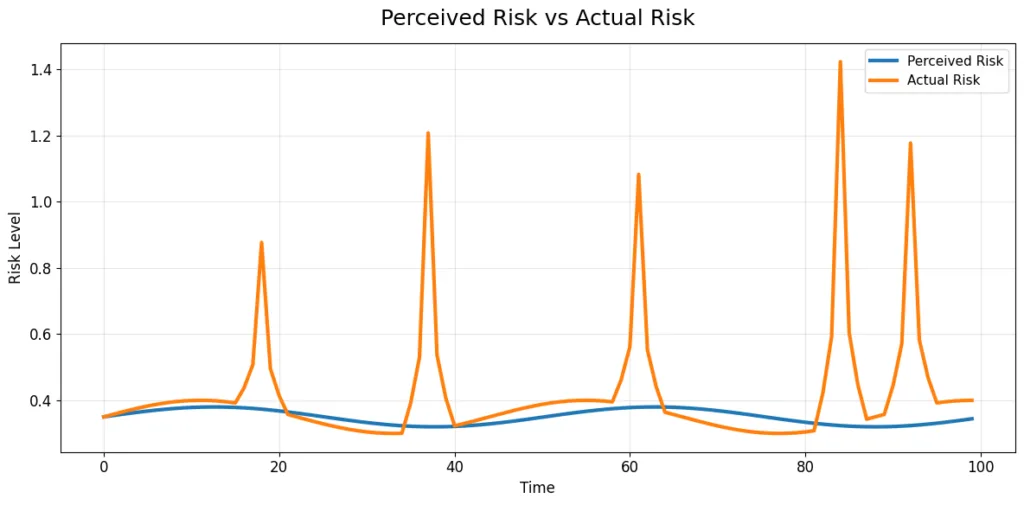
Human perception of risk is deeply flawed. People assess risk through their previous experiences rather than they assess based on actual probabilities. An asset achieves safe status after it has maintained operational function without failures during its recent history. The asset receives a dangerous rating after it has shown unstable behavior. The environment creates a systematic bias which leads people to underestimate risk during stable times and to overestimate risk during turbulent times.
Bubbles develop through public misunderstanding which people develop about markets because they think markets will remain unchanged. Investors start predicting future market conditions based on what they see happening in the present. Market stability creates a false impression that the entire system operates without any problems. The ability to handle market fluctuations efficiently gives people a false sense of control over their environment.
People begin to believe in this false concept until it becomes established as common understanding. People should not trust the collective judgment of others because it proves to be dangerous. The situation creates a point of weakness for the group.
Hidden risk: The system beneath the surface
Financial systems of today operate to manage and transfer risks among different parties. The systems create an effect which makes risks harder to identify yet maintains their full threat level. Derivatives create a stable appearance because they reduce price fluctuations and create continuous price changes.
Market participants provide liquidity to establish order book volumes which create an artificial appearance of market depth. Financial systems operate with built-in leverage dangers that remain concealed through multiple layers of complex financial structures. The system displays an appearance of stability but it develops hidden weaknesses throughout its entire structure. The system shows that risk continues to exist because it exists in a form that people find difficult to recognize. The situation erupts with sudden force whenever it becomes visible.
Inflation: The slow destruction of ‘Safe’ capital
Your research shows that evaluating investing dangers from nominal preservation risks leads to the most dangerous misconceptions. People perceive cash as a secure investment while they view low-yield instruments as responsible choices. The two positions guarantee that inflation will result in purchasing power loss at a gradual rate. The situation has no price fluctuations.
The situation shows no signs of market decline. The situation does not create any feelings of fear. The process results in ongoing undiscovered financial losses. Modern investing creates a financial paradox because The assets that feel the safest are often the ones that destroy wealth the most quietly.
Liquidity: The fragile foundation of safety
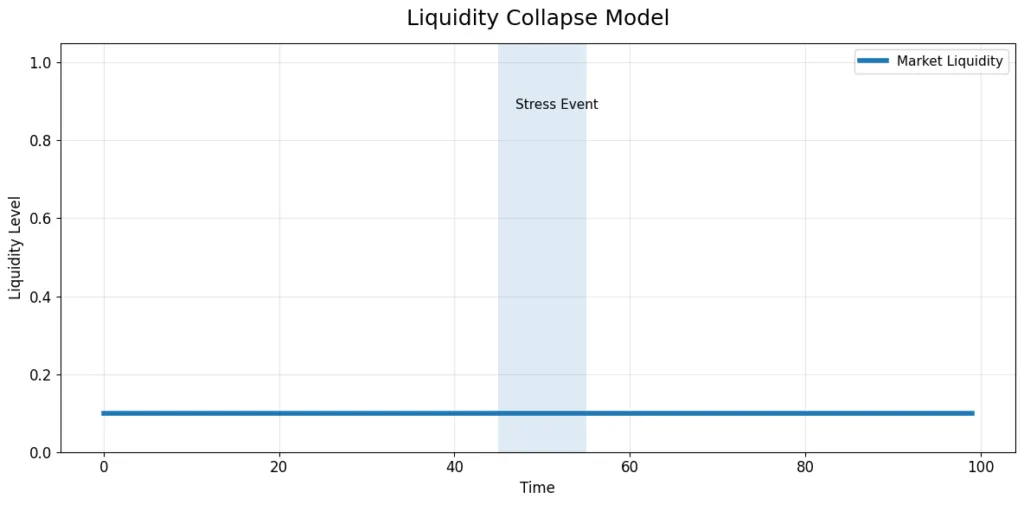
The perception of safety depends heavily on liquidity the ability to enter and exit positions without disruption.In normal conditions, liquidity appears infinite. The markets operate without any problems because all orders get executed at once while price discovery works efficiently. But liquidity is not constant. It is conditional. During stressful times, liquidity providers stop their activities. The price spreads between buying and selling assets become wider.
The process of executing trades becomes impossible when customers cannot complete their orders. The prices of assets jump between two different values. The assets which people believe to be safe now become hard to sell or completely impossible to sell. Investors learn this essential truth at the wrong time because they believe they can protect themselves. People need access to safety measures for them to become valuable.
The psychological need for safety
People maintain their belief in safe investment options because they need this belief to function. Human beings lack the ability to handle situations which remain uncertain all the time. We need to create distinct groups which we can identify through their names and which we can explain through simple explanations.
People perceive things through two distinct categories which they view as safe and risky and which they see as stable and volatile and which they consider good and bad. The categories which people use to think about things create less mental effort for them. The categories enable fast decision making. The categories create a false sense of power over situations. Market systems do not acknowledge these established classifications. All assets present inherent risks which differ only in the nature of the risk and the moment it becomes evident.
The new era: Structural instability as the baseline
The present period shows permanent instability which does not follow its previous cyclical patterns. Artificial intelligence systems help organizations make decisions faster while reducing their operational response times. Global economies experience unpredictable changes in their monetary policies.
The movement of capital between countries has been disrupted because of rising geopolitical conflicts. Financial systems experience greater interconnections which result in increasing system vulnerability. The existing situation maintains its instability because design systems create temporary conditions of stability. The present situation lacks any stable state. The present situation exists between two distinct states. The present state of the world functions through continuous changes which make the idea of safety increasingly ineffective.
The safety illusion cycle
What investors perceive as safety follows a recurring pattern.The sequence starts when stability creates confidence which leads to confidence attracting capital. Capital introduces leverage which results in greater costs for the system. The process starts with users established in right operating patterns who lose control of their systems.
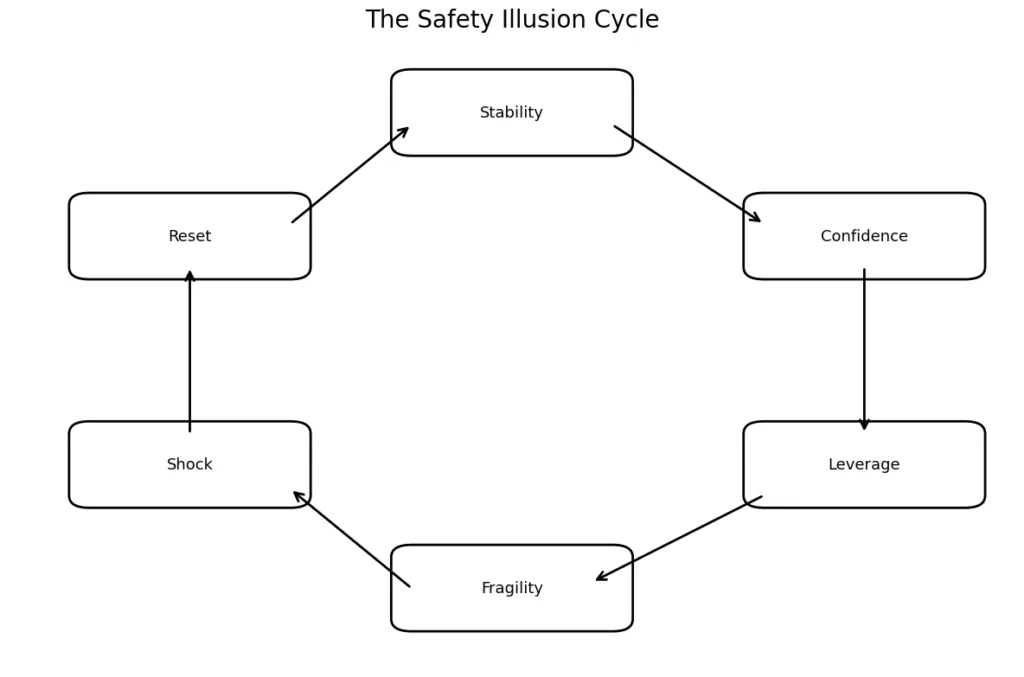
The system enters a state of shock which leads to a complete system reset. The cycle then starts its next round of operation. The process continues until all aspects of safety protection reach their highest point which lasts until the moment of total system failure.
What actually matters: Understanding risk, not avoiding it
The goal of investing exists to attain risk elimination which remains an unattainable target. The objective exists to determine which market risks receive valuation while which risks remain unvalued. The process of advanced trading in current financial markets requires traders to find mispriced risks instead of pursuing safe investment options.
The statement proves that investors need to comprehend different market risks which exist beyond the dangers of low-volatility investments. The agreement among people does not ensure that their beliefs are correct. The world establishes safe conditions through stable systems which protect against dangers. The process requires people to realize that every choice they make will result in an equal exchange of advantages and disadvantages.
The most dangerous belief in finance
The goal of investing exists to attain risk elimination which remains an unattainable target. The objective exists to determine which market risks receive valuation while which risks remain unvalued. The process of advanced trading in current financial markets requires traders to find mispriced risks instead of pursuing safe investment options.
The statement proves that investors need to comprehend different market risks which exist beyond the dangers of low-volatility investments. The agreement among people does not ensure that their beliefs are correct. The world establishes safe conditions through stable systems which protect against dangers. The process requires people to realize that every choice they make will result in an equal exchange of advantages and disadvantages.