



The macro shock: Oil, Gold, and the risk-off reflex
The geopolitical situation became worse which created a situation that followed standard macroeconomic patterns. Traders projected supply disruptions through the Strait of Hormuz which serves as a vital shipping route that handles approximately one-fifth of worldwide oil transportation. Brent crude reached nearly $80 because market participants feared that even minor conflicts would restrict energy supplies which would lead to a return of inflation.
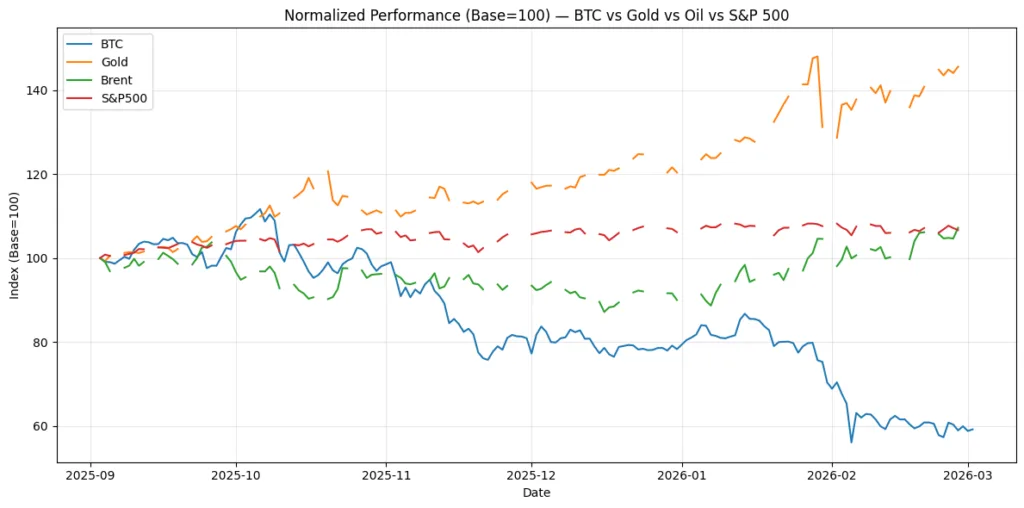
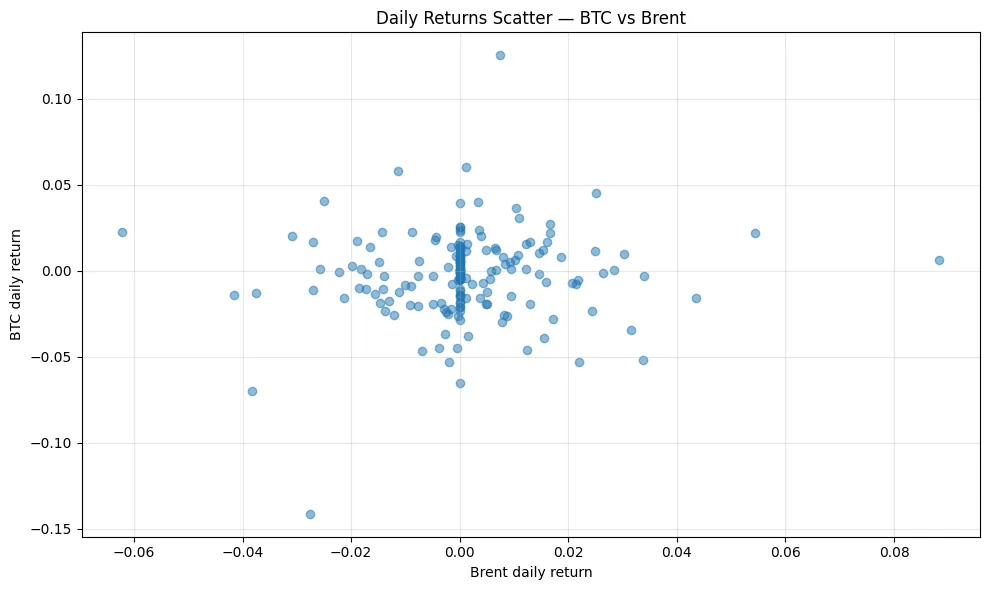
Gold price increased because investors moved their money into established safe-haven investments, which strengthened market belief about systemic economic instability. U.S. equity-index futures dropped beyond one percent across the Nasdaq, Dow, and S&P 500, which indicated that investors would begin selling their positions before the U.S. markets opened. Bitcoin experienced a decline that followed these assets, although it showed a smaller decrease in value compared to those assets. The relationship between two performs shows its significance because assets which lose value less than equities during geopolitical crises demonstrate their ability to withstand market pressures.
The derivatives tell the real story
The market showed its main signal through derivative market activity although headlines controlled the story. The funding rates for Bitcoin perpetual futures contracts reached their most extreme negative values which historical data shows leads to patterns of heavy short selling. The market shows extreme negative funding conditions which force bearish traders to pay extra costs for short position maintenance. The current market situation shows active downside hedging together with strong beliefs about ongoing price declines.

The market experience shows that panic crowding results in new trading position which creates unbalanced market conditions. The short sellers face two options when prices remain stable but funding expenses keep rising: they must either maintain their positions or they will trigger a market squeeze. The Bitcoin market showed no need for bullish drivers to recover because it required selling pressure to reach its lowest point. The derivatives market shows that most market anxiety has already been shown through leverage instead of through permanent removal of spot holdings.
The shock absorption framework
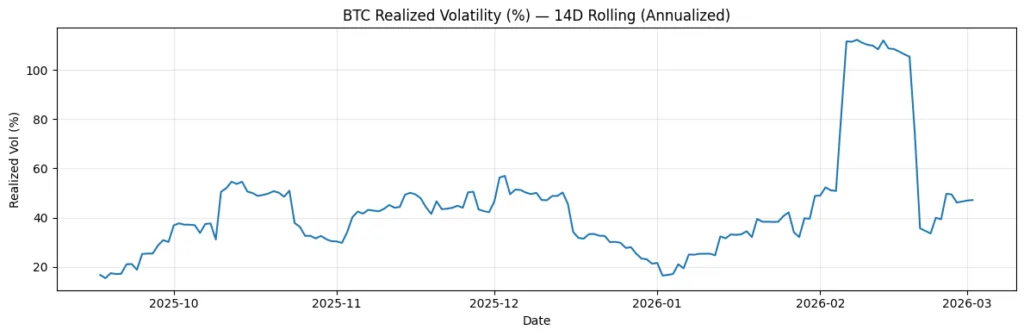
The event developed through a pattern which has been established through past major economic disruptions. The main shock caused an increase in market volatility which prompted investors to treat risk assets more like traditional investments, resulting in automatic market declines. The market entered a new phase when traders sold their positions and funding rates turned negative because traders wanted to protect themselves against potential losses.
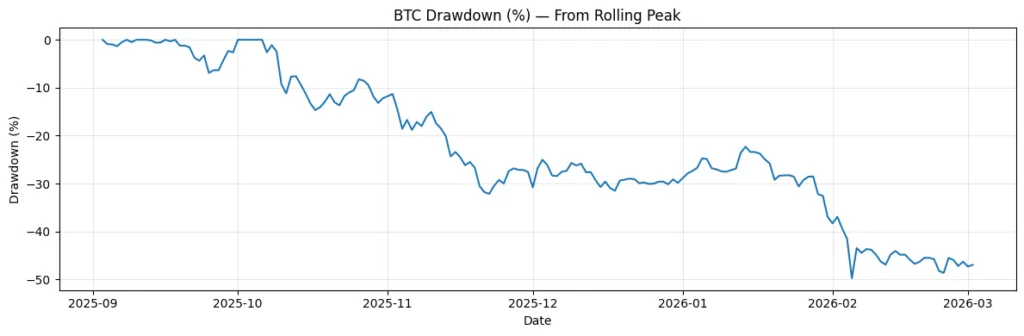
The current situation has entered the final phase which will bring about permanent market equilibrium through active demand which will stabilize prices while market uncertainty remains. Bitcoin currently exists between two distinct phases which are the positioning flush and the structural bid phases. The liquidation cascade has reached its peak while extreme derivatives skew exists but price movements no longer show any indication of additional downward movement. The transition zone determines if an event leads to a regime change or simply a temporary increase in market volatility.
Oil is the real variable
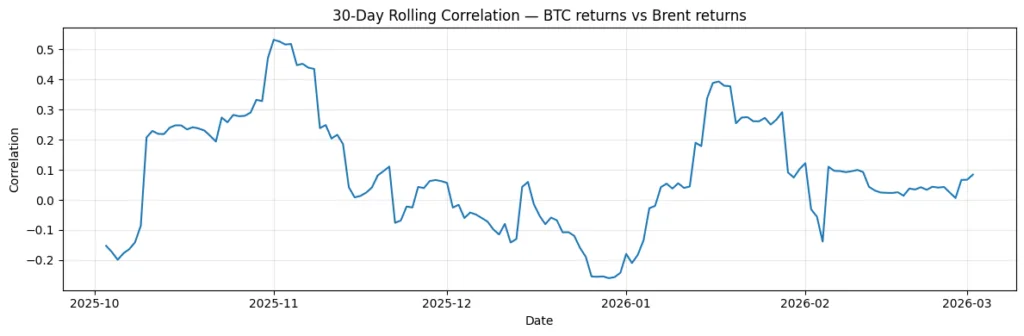
The continuation of oil price increases marks the essential factor which will decide if the current conflict brings permanent effects on the global economy. When Brent crude prices stay high and reach or exceed $90 per barrel, inflation expectations will begin to rise again, which will create challenges for central banks while negatively impacting all risk assets. Bitcoin will probably move together with high-beta technology equities because both asset classes will experience macroeconomic challenges from tighter financial conditions.
The geopolitical risk premium that exists in global markets will probably vanish when supply issues end and oil prices either stabilize or decrease. OPEC spare capacity and coordinated supply responses may reduce the likelihood of ongoing supply disruptions. Bitcoin will stop following war news to return to its normal trading pattern of liquidity cycles. The conflict creates an impact on the economy through its ability to maintain inflation pressure but without producing lasting oil price effects which lead to decreased macroeconomic effects.
Gold vs Bitcoin: A transitional identity
Gold’s price increase proved that it works as a traditional hedge through times of geopolitical instability. Bitcoin showed a more complex reaction to the situation. The digital currency maintained its value between two extremes because it did not fall with stocks and it did not rise with gold. Bitcoin develops into a combined asset that functions as both a risk indicator and an alternative investment method.
The system maintains a relationship with liquidity levels during major market disruptions yet operates as a stabilizing force because it has reached a point of advanced structural development. The conflict functions as a real-time assessment to determine whether Bitcoin can break free from speculative trading practices and develop into a more dependable macroeconomic asset.
Fear is extreme. structure is not
The extreme fear status of sentiment indicators developed after news reports spread and market volatility reached its highest point. The price direction depends on structural elements according to research but sentiment shows no predictive power. The market has already priced in most downward movement according to three indicators which include extreme short positions and negative funding and fast market recovery.
The market results change because the system creates an automatic tendency towards short positions while the market shows no signs of decreasing value. Market downturns usually occur after traders stop buying up their positions rather than after good news arrives. The present situation shows this exact situation because people experience high levels of fear while only minor structural problems exist.
Scenario matrix
Bitcoin will recover its previous value because short positions will close and market volatility will decrease if the current conflict remains controlled and oil prices achieve stability. The escalation of conflict will disrupt oil supply which leads to higher oil prices and causes macroeconomic tightening that will harm risk assets while Bitcoin will drop to lower liquidity areas.
The market would experience a sudden relief response to rapid de-escalation which would increase Bitcoin squeeze potential because of existing funding mismatches. The current price movement shows that markets are assessing high risk yet they have not established proof of a complete system change.