


Living through a financial collapse
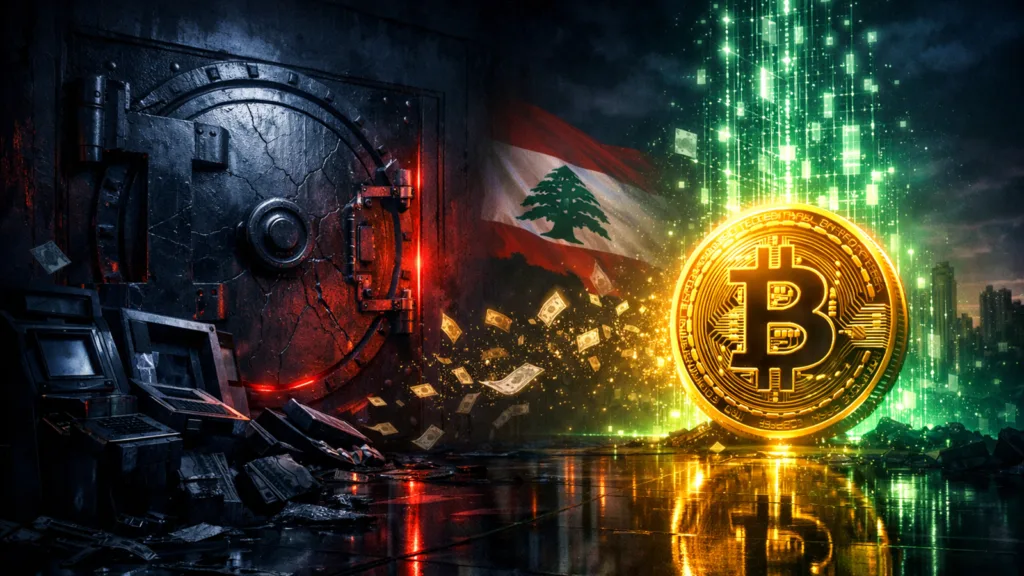
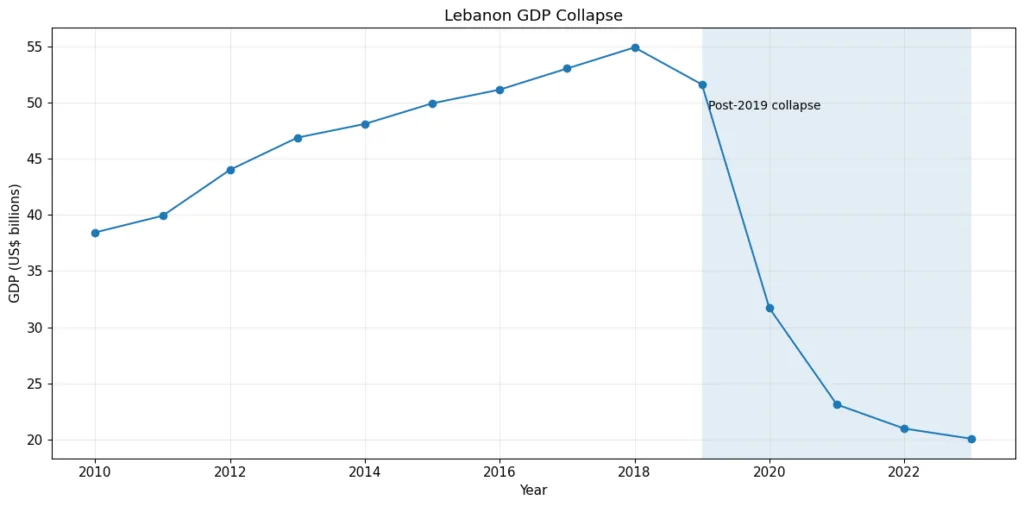
Lebanon did not collapse in a single moment. The system that people trusted started to fail when its components began to disintegrate. The banks shut down their operations. The closure of banks prevented customers from reaching their funds. The currency experienced total collapse. The market prices experienced almost daily fluctuations. The economy which had previously appeared unstable now transformed into a hazardous situation.
I witnessed the entire process of that change. The street protests together with the banking restrictions and the pandemic and the Beirut explosion and the discovery of the complete breakdown of the national financial system progressed through different phases.
The same period witnessed the rise of another system which operated without public awareness. The financial system of Lebanon began to collapse while the decentralized financial tools became recognized as a real method for transferring and storing value. The country of Lebanon functioned as a live demonstration of the effects that untrustworthy banks bring to society.

When the illusion broke
For decades, Lebanon’s banking sector proved to be the country’s most dependable financial institution. The Lebanese pound maintained its fixed exchange rate to the dollar while banks offered high interest rates to attract deposits and most people considered their savings to be protected. The system operated under a delicate balance which required continuous dollar inflows to function.
The system began to fail when the dollar inflows started to decrease. At first, most people did not realise what was happening. The crisis appeared technical, something economists debated but ordinary citizens barely noticed. Then the banks closed their operations. The illusion reached its final break point at that exact moment.
The revolution in the streets
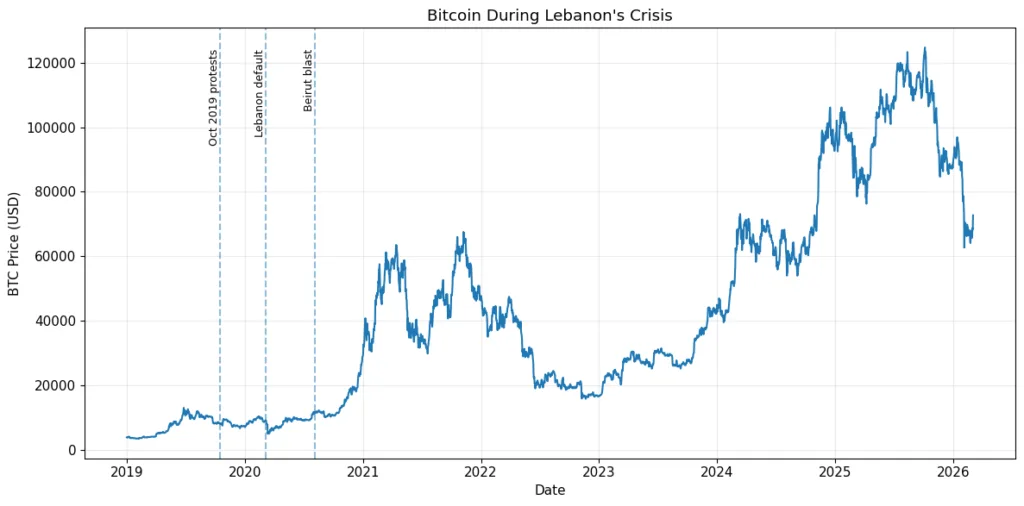
The protests which started in Lebanon during October 2019 extended throughout the entire country. The people started their protests because they were upset about economic policies but their anger developed into a nationwide revolt against corruption and political corruption.
The country experienced a complete transformation during the following day. People for the first time started to fight against the governmental system which had ruled Lebanon for its entire existence. Banks operated their services at full capacity until they closed their doors for the entire week after the protests began.
The banks returned to operation but they stopped functioning as they did before the shutdown. The bank instituted restrictions which limited the amount that customers could withdraw from their accounts. The bank made it almost impossible for customers to send money to foreign countries. The bank imposed strict limitations which made it difficult to access dollar accounts. The public gradually began to understand that an unusual event had occurred which caused the financial system to start collapsing.
When money was no longer accessible
The most unsettling part of the crisis was how quietly it unfolded. The bank did not deliver any official announcement which informed depositors that their accounts were temporarily inaccessible. The bank implemented its restrictions through undocumented policies which were established without formal announcement. The bank permitted some customers to take out limited cash withdrawals.
The bank restricted some customers from obtaining international money transfers. Customers could not access their dollar deposits because they were kept within the banking system. The slow process of recognition reached its peak when people understood their financial savings remained inaccessible to them. The financial system lost all trust for most Lebanese people at this specific point in time.
Default and economic freefall
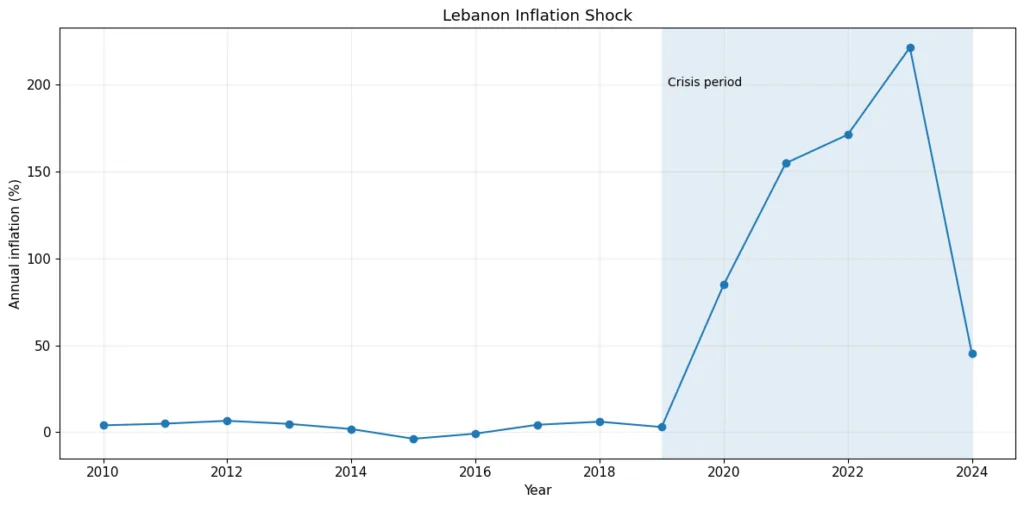
In March 2020 Lebanon became the first country to declare a sovereign debt default. The country experienced its financial crisis because of a total economic breakdown. The Lebanese pound started to lose value at a fast rate. Inflation reached extremely high levels. The prices of essential products rose by substantial amounts. People had to adapt their daily routines to handle the new economic situation. The banking sector experienced a crisis that spread beyond its initial boundaries. The situation had developed into a complete national collapse.
Beirut explodes
The Beirut port explosion on August 4 2020 caused destruction that devastated the capital city. The explosion demolished complete blocks of buildings and resulted in the deaths of numerous people while more than 1000 people sustained injuries. The explosion served as the peak moment for Lebanese people who had experienced their countrywide political system collapse over many years. The country faced two major crises because it battled an economic collapse and an ongoing pandemic. The blast created a widespread belief among Lebanese citizens that all government systems had reached total breakdown.
Currency collapse and daily survival
The Lebanese pound lost most of its value during the deepening crisis. Extreme inflation together with complete purchasing power loss created economic disaster. The value of savings that people had built up for decades dropped to almost nothing. People in society needed to find new ways to handle their daily tasks. People depended on cash dollars and remittances from overseas relatives and informal financial networks.
Lebanon developed into a fragmented financial landscape that used multiple currencies and different exchange systems. The traditional banking system had stopped functioning as a reliable intermediary. A new economic reality began to emerge.
The black-market dollar economy
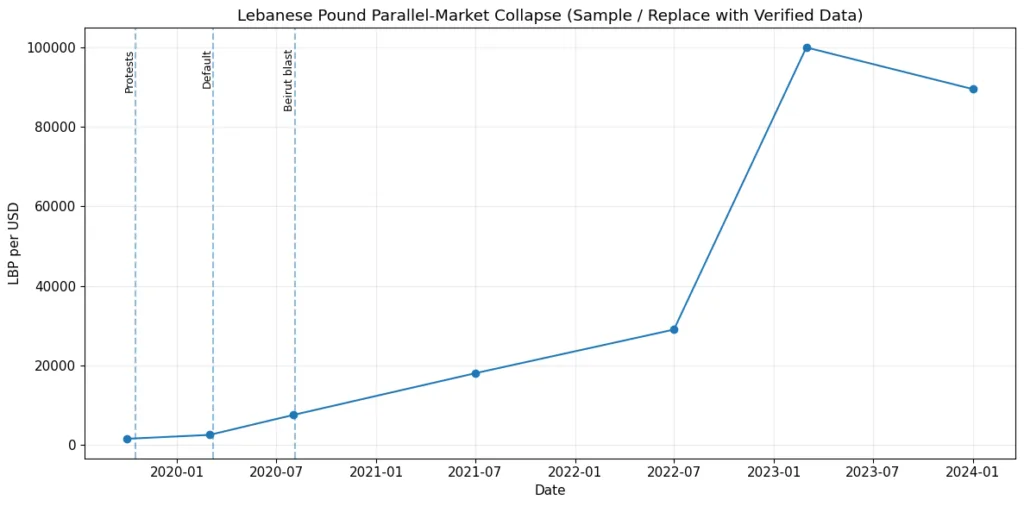
The official exchange rate in Lebanon became useless when the public lost all trust in the Lebanese pound. The official exchange rate became obsolete because a different market started to function as its replacement. The actual dollar value emerged through currency traders and informal exchange shops and mobile messaging groups. The prices of products experienced continuous fluctuations because they changed at times more than once within a single day.
The enterprise sector adopted dollar-based pricing systems for their products. Employees received their wages in Lebanese pounds which experienced rapid value depreciation. People in Beirut faced daily challenges because they needed to track their expenses for each financial transaction. The Lebanese population experienced an economic division which created two separate financial systems: one used the devalued local currency and the other maintained the dollar’s stable worth.
Diaspora lifelines
The Lebanese diaspora maintained its status as the most important financial support throughout the crisis. Abroad, millions of Lebanese people sent money back home to their relatives. The remittances became vital for their survival needs. The transfers served as the only dependable income stream for many households. The banking crisis created difficulties for transferring money between people.
People who used traditional banks to send money experienced problems when their funds became stuck in the banking system. Families started using informal methods which included cash couriers and private transfer networks and digital solutions as their primary source of money transfer. The public began using cryptocurrency for daily transactions during this particular time period.
The rise of crypto
During this period, crypto began appearing more frequently in conversations across Lebanon.For some people, it was a way to receive international payments. For others, it offered a way to hold value outside the collapsing local currency.Peer-to-peer trading networks expanded.
Stablecoins provided digital access to dollar-denominated assets. Crypto did not solve Lebanon’s crisis but it created a financial option that did not depend on local banks.In a country where the banking system had frozen that difference mattered.
Peer-to-Peer crypto networks
The people of Lebanon began using cryptocurrency because they found their traditional banking systems to be unreliable. People conducted their business through direct exchanges between themselves. One person could send Bitcoin or USDT through digital means while another person showed actual cash dollars in the area.
People used messaging groups and online platforms and personal networks to conduct their business activities. The financial system operated without complete regulation because banks were out of service yet it permitted financial transactions to take place.
Stablecoins and digital dollars
The crisis developed stablecoins into an essential financial resource. Users of USDT stablecoin maintain its value at a constant rate which differs from Bitcoin’s price fluctuations. The currency collapse in Lebanon enabled users to obtain digital dollars.
Users could store stablecoins in crypto wallets which enabled them to transfer funds internationally within minutes and complete direct payments to others. The system provided freelancers and remote workers with the ability to conduct financial transactions with international markets while their local banking options remained limited.
Living through a systemic breakdown
The financial crisis in Lebanon which people experienced began to reshape their understanding of money and institutional systems. The banking system failure made people understand capital controls and monetary policy and financial sovereignty as essential elements of their daily existence.
The experience showed me how vital alternative financial systems operate in the world. Crypto operates as one of those alternative financial systems. The system has two main sources of attraction. The system operates as a self-sufficient entity which uses technology to function without relying on institutions that failed in Lebanon.
Lebanon as a preview of the future
People consider Lebanon’s collapse to be an extraordinary occurrence which they cannot understand. The crisis creates problems which extend beyond its impact on the nation. What happens when banks lose their trustworthiness?What happens when currencies stop being valuable?What alternatives exist when traditional financial systems fail?Lebanon handles these matters as practical questions now. The nation established itself as a financial dead zone which later developed into a site for innovative monetary systems.