



Why holding forever is no longer optimal
“Diamond hands” were not merely a meme but rather a strategy throughout the majority of the short history of crypto. In a market characterized by illiquidity, asymmetric upside and radical inefficiency, the only method of getting giant repurchase was to hold during the price fluctuations. The early comers weren’t rewarded for good timing, but for endurance. That period is over now.
The crypto market is still a conviction market, but it has reevaluated the loyalty value in a completely different way. What was working because the market was immature now fails the same reason, the market has matured now. Ideology has been replaced with liquidity as the strongest factor influencing price movements, and the long-term holding has been swapped with the option to sell whenever. This change does not indicate a lack of strength, it shows the industry’s growth.
From scarcity to saturation
The early crypto cycles experienced scarcity at different levels: assets, access, and information. The number of tokens that mattered was very few and the number of venues was even lesser. The capital was very slow in its entry and even slower in its exit. In such a situation, it was not just rational but also the best to hold the asset. The markets needed time to find the value. Today’s crypto market is nothing like that one. There are thousands of assets fighting for their share of the market. Liquidity is all over the place – within spot, derivatives, ETFs, and structured products.

Capital has become globally rotating, continuously, and with even more automated processes. Information is available instantaneously, stories are shortened, and mispricings are being corrected quicker than ever. There is still upside but it will come in shorter and sharper bursts. The long and patient waiting periods that used to reward blind patience have mostly vanished.
When institutions enter, loyalty exits
The inflow of institutional capital has marked the end of this transition. The institutions do not keep their stocks because they are convinced. They hold because their rules permit it. The involvement is controlled by means of duration targets, volatility allowances, and correlation barriers. Instead of being partners, assets are treated as variables. Conviction becomes only a matter of position when flows are made to be programmatic.
Capital comes in with prior exit plans already in place. Risk is rotated, not taken on.Changing the way crypto-prices behave has been a situation that has quietly occurred. The trends take longer to change and the breakouts lose their strength sooner. Drawdowns are not bought emotionally but rather through tactical means. The markets no longer wait for the return of belief but are rather waiting for the liquidity to be rebalanced.
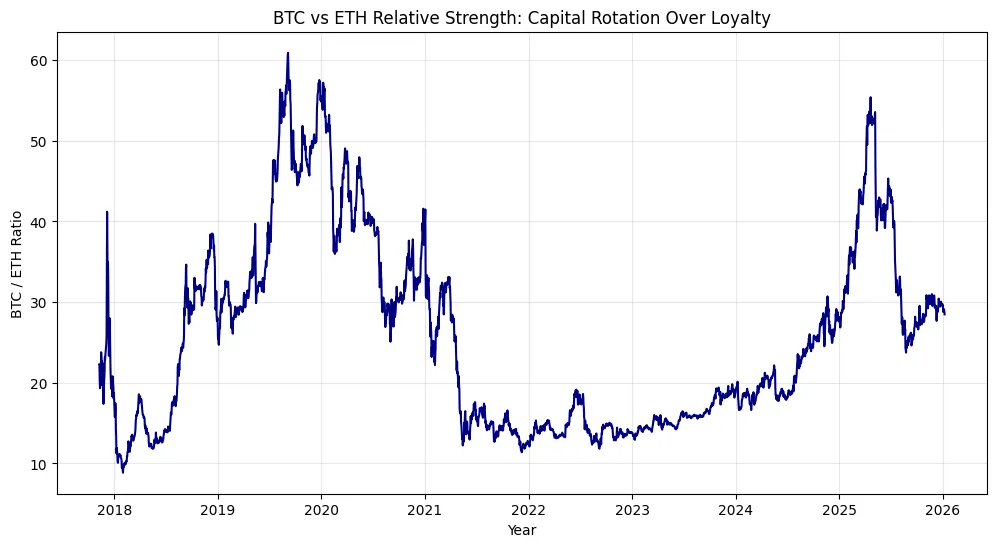
Liquidity is the new alpha
A liquid market is an environment that not only facilitates transactions but also generates revenues. The liquidity aspect itself can be regarded as the main factor for the performance of the positions. Opportunity cost is now as strong a foe as drawdown risk in conjunction with performance. Holding positions indefinitely means that only time would be able to turn the investment into a profitable one. The current-day crypto markets do not accept this as a valid premise.
The capital that does not flow with the market is bound to lose the chance to get in on the regime shifts, sector rotations, and volatility-driven opportunities that are the main source of returns nowadays. Optionality has taken over the permanence as the key advantage in the market.
Diamond hands as identity, not strategy
The psychological aspect may have been the most dangerous development of diamond hands. What started as a reasoned reaction to the initial fluctuations slowly transformed into an identity. To hold was no longer a choice; it was a moral stance. The act of selling was interpreted as giving in instead of re-evaluating.In a rapidly changing, liquidity-oriented market, this kind of thinking is an expensive one.
Assets lose their value over time. Stories die. Money shifts to the next thing. Trust without reconsideration keeps investors stuck in their trades long after the reasons for those trades have disappeared. What used to be a factor that lessened panic is now a thing that slows down change.
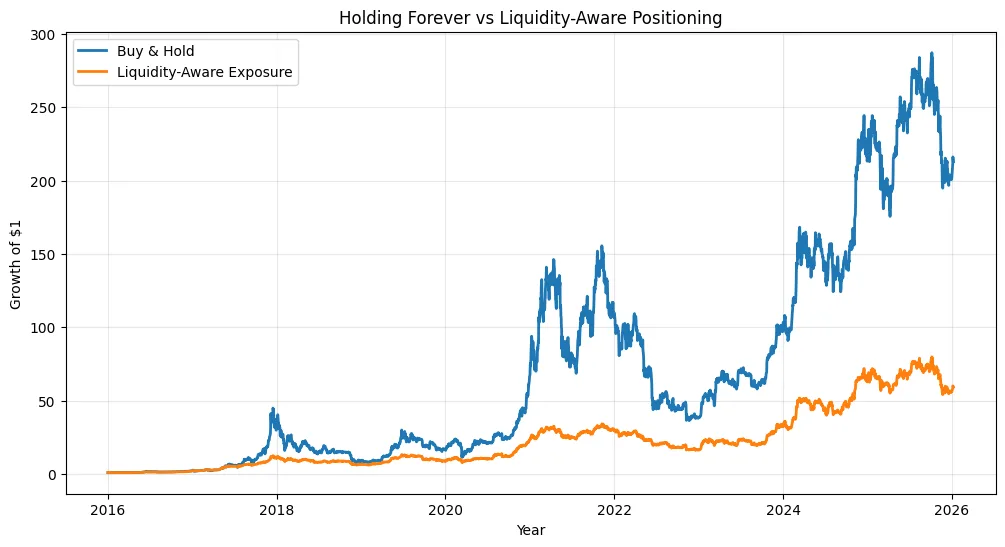
Volatility has changed its meaning
In the past, signal transformation was indicated through volatility. Large price changes were the obvious indicators of the acceptance moment, technological innovations, or macro shifts in the financial system.
Nowadays, volatility more frequently is the result of mechanics such as leverage adjustments, positioning mismatches, and lack of liquidity. These price changes enable traders and investors to profit while the opportunity is there. It becomes the case where acting is rewarded and waiting is not. The traders and investors have taken the volatility now; the paradisers are no longer in control.
What replaces diamond hands
Conviction didn’t go away it just changed the way it showed itself. Today’s conviction is not of the all-or-nothing kind, but rather a conditional one. Given its conditions, it maintains its position, but not its promise. It partly invests rather than puts in the whole capital. It discharges its positions when the market structure is broken and re-enters when the conditions are again favorable.
It is not emotional trading but rather the use of strategic flexibility. Holding is still legitimized but only if it’s through real regime change, structural adoption, or a significant liquidity expansion. Loyalty is no longer rewarded outside of these moments.
A mature market tells the truth
The diamond hands didn’t lose their existence due to the lack of faith. They simply lost their existence because the markets ceased to recognize the value in holding long positions. In the present-day scenario of cryptocurrencies, liquidity is not a sign of weakness, rather a manifestation of intellect. Faith or conviction is still a factor that counts but only if it goes along with the self-control to adjust. Devotion is to be found in the communities while money is to be found in the opportunities.