



Market overview
The year 2026 is defined by price expansion but its true foundation lies in the process of classification. The world has reached its first moment when institutions consider cryptocurrencies to be important because they will determine its actual definition. The new system establishes institutional requirements which replace previous methods of speculative assessment.
The crypto market experienced more than ten years of regulatory uncertainty which treated it as a commodity or currency or security or technological experiment. The system had built-in weaknesses which created operational problems because the system operated with unclear rules. The system provided operators with the opportunity to create new products while developing their business networks at a quick pace. The system required organizations to prove their commitment through operational procedures before they could proceed with their institutionalization processes. Because organizations need precise identification methods to succeed their operations in uncertain situations get blocked.
The 2026 events represent a worldwide initiative which aims to create unified asset classification systems that will define all digital assets. Bitcoin has gained recognition as a primary reserve asset which functions as a macro commodity between different asset classes. The system establishes Ethereum as a digital infrastructure layer which generates returns for its users through yield.

Stablecoins operate as regulated payment systems which will establish new industry standards. Current evaluations are applying securities regulations to assess a diverse range of tokens. The current time marks the change when cryptocurrency transitions from its separate existence to its complete integration into worldwide financial systems. The community not only embraces new technology. The community fully adopts technology.
The structural shift: From ambiguity to taxonomy
Markets operate through their classification system. The financial markets contain four asset types which include equities bonds commodities and derivatives which operate under specific legal and financial rules. Crypto existing outside that system until now prevented institutional investors from using it in their portfolio management and risk evaluation and compliance with regulations. The “Great Classification” project established a new taxonomy system which organizes digital assets into their own unique classification structure. The taxonomy system requires implementation because it functions as the fundamental basis of the system.
The system determines all aspects of asset management which includes trading processes and tax obligations and custody methods and risk assessment procedures. Bitcoin functions as a digital commodity which enables it to serve as an inflation hedge when included in macroeconomic investment portfolios. Ethereum has begun to establish itself as a programmable yield layer which creates a new financial instrument that combines elements of infrastructure and financial assets.
Stablecoins that receive backing from sovereign debt are becoming integrated into worldwide payment systems which creates a hybrid system that combines private currency with public monetary systems. The most important development for the time being relates to how tokens get classified which determines whether they belong to the “security” category.
The security classification process requires a token to follow specific needs for disclosure and needs for investor safety and needs for compliance with legal obligations. The new system changes all processes related to how these assets get issued and their trading methods and their valuation procedures. The market creates a financial system which starts to resemble conventional finance markets through its core operational framework.
Institutional capital and the need for clarity
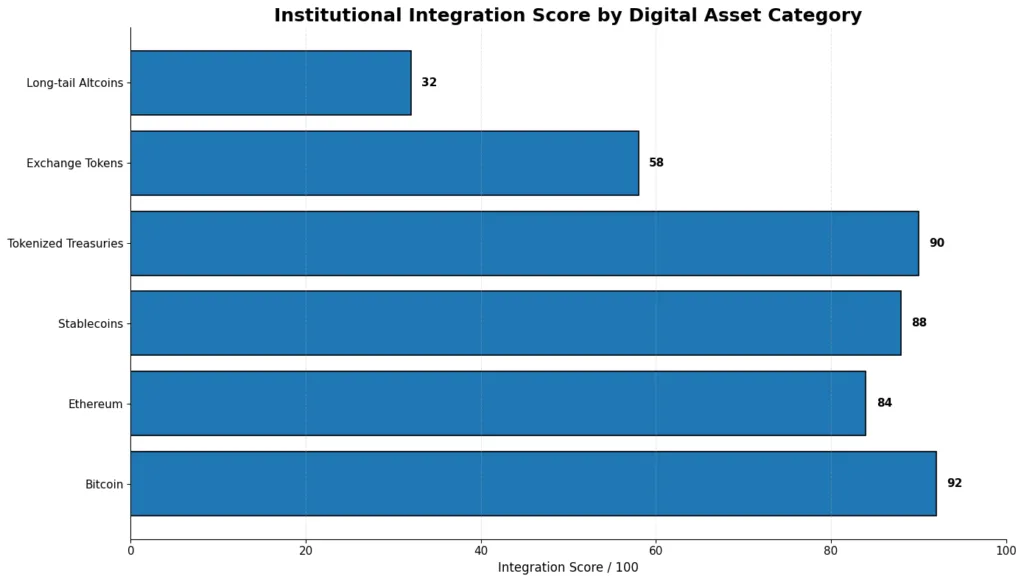
The movement of institutional capital depends on established operational systems instead of base institutional narratives. Pension funds and sovereign wealth funds together with asset managers must follow their mandated framework which requires them to define their assets within approved regulatory boundaries.The absence of classification has historically acted as a barrier to entry.
Compliance risk and custody challenges together with vague legal status prevented institutions from pursuing crypto, despite their recognition of its potential. The classification wave of 2026 removes these barriers. It transforms crypto from an unstructured opportunity into a portfolio-eligible asset class. The current market development shows that crypto ETFs and structured products and institutional custody solutions are showing new patterns of growth.
The new crypto yield curve system uses Ethereum staking yields together with tokenized treasury instruments to create a digital asset framework that financial systems can use. Crypto has developed beyond its initial abstract definition of yield which now exists as a quantity that people can compare and trade. Crypto has reached its critical point which marks the shift from its use as speculative investment to its development as strategic investment.
Derivatives, risk, and the repricing of volatility
The effects of classification extend beyond spot markets because it fundamentally changes both derivatives markets and their associated risk management systems. The process of asset definition enables better modeling and hedging and pricing of assets. The derivatives market has reached a dominant position in crypto yet is now undergoing fundamental changes.
Risk engines need better asset classification to handle regulatory constraints and margin requirements and specific asset volatility patterns. The system achieves better pricing outcomes while becoming less vulnerable to unexpected events.
The process of classification creates separate market segments. Different regulatory approaches will apply to various crypto assets. The risk patterns and liquidity conditions and regulatory demands of commodities and securities and payment tokens differ from one another. The segmentation process results in a new assessment of volatility. Institutional-backed assets experience less price movement because their trading volume increases and more investors enter the market.
The restrictive asset categories create conditions that lead to market fragmentation and price instability. The market environment has transformed into a situation where different risk profiles now exist. The market is in the process of dividing into different segments.
Macro alignment: Crypto within the global financial system
The Great Classification is not happening in isolation. The Great Classification which currently operates as a separate event. It is part of a broader macro alignment where digital assets are being integrated into the global financial system.Central banks and regulators together with governments seek to control cryptocurrency rather than eliminate it from existence.
This process requires digital assets to comply with existing monetary systems and financial regulations and geopolitical requirements. The dollar achieves digital ecosystem expansion through stablecoins which obtain their value from U.S. Treasuries. Bitcoin achieves classification as a commodity which establishes its status as a global reserve asset.
Ethereum enables new developments in tokenized finance through its function as a settlement layer. The alignment creates a situation which contains two contradictory elements. Crypto was created to function independently of traditional systems yet its primary potential for growth exists through its connection to these systems. The Rubicon is being crossed not by rebellion, but by convergence.
Investor psychology: From narrative to legitimacy
The way investors think about their investments is currently changing. The early phases of crypto were driven by narrative decentralization, disruption, and exponential upside. The existing narratives of the project attracted speculative capital which resulted in fast project expansion. The primary factor driving market behavior in 2026 will be market legitimacy.
The current investor question about crypto viability has shifted to portfolio assessment of different cryptocurrencies. The existing hype cycles now have diminished power while basic business elements have gained greater value.
The classification system operates as a communication tool. Institutional investors trust assets that receive positive classification while non-classified assets remain in the zone of speculative investments. The market has shifted from narrative chasing to structured framework positioning. The field of cryptocurrency research has reached its advanced stage of development.
Forward-looking outlook
The Great Classification is not a single event because it functions as a continuous process which will shape cryptocurrency markets for the next ten years. The upcoming period will see market fluctuations start because of upcoming classification decisions. Market prices will change because of three main factors which include regulatory announcements and legal rulings and policy changes. Markets will respond to asset movements together with the particular definitions which assets receive.
The period between now and the next few years will see institutional frameworks adopt cryptocurrency which will lead to higher capital investment and new product development and improved market stability.
The development of standardized categories will establish benchmarks and indices and structured products. The long-term future will see traditional finance and crypto assets develop into a common financial system. Digital assets will not replace existing systems they will augment and reshape them. The Rubicon, once crossed, cannot be uncrossed.