




The crypto community embraces freedom as its core linguistic expression. It provides users with distributed authority which enables them to operate without needing to trust others while establishing systems that protect against complete control by any individual. Most networks that advertise themselves as decentralized systems actually maintain control through centralized mechanisms which operate behind their surface-level decentralized operations.
Actual power distribution occurs through established channels which main validators governing insiders and major token holders and liquid staking companies and infrastructure providers maintain. The fundamental paradox which exists within cryptocurrency design creates this situation. A system can appear to be open yet maintain actual power within a single entity. Anyone can run a validator, submit a proposal, or buy the governance token.
Distribution of influence among people does not occur in an equal manner. The system provides open access without needing any specific authorization. Power exists as a completely different concept. The actual degree of decentralization which exists in a protocol depends on its implementation.

Control over outcomes exists as the main factor which determines who can create changes and establish operational rules and hold particular advantages. The complete evaluation of those questions leads to a situation which reveals a less appealing truth.
Decentralization is a spectrum, not a label
The industry often treats decentralization as a binary condition. A project exists in two states because it can either achieve full decentralization or maintain complete centralized control. The basic structure of decentralization needs more complexity because it exists at six different levels.
The chain achieves high wallet distribution through thousands of wallet holders yet maintains control through a small group of wealthy individuals. A protocol contains multiple validators yet its small group of validators maintains power over liveness and censorship resistance. A DAO can boast community governance while turnout remains so low that a concentrated minority decides everything.
People maintain actual authority through reputation systems and delegated power and insider connections and treasury resources. This is why the decentralization conversation becomes distorted through its presentation. People count addresses, nodes, or voters, then assume the system is healthy. The distribution of quantities matters more than their actual quantities. The critical factor for assessment lies in how much power concentrates within the system.
Validator count does not equal validator power
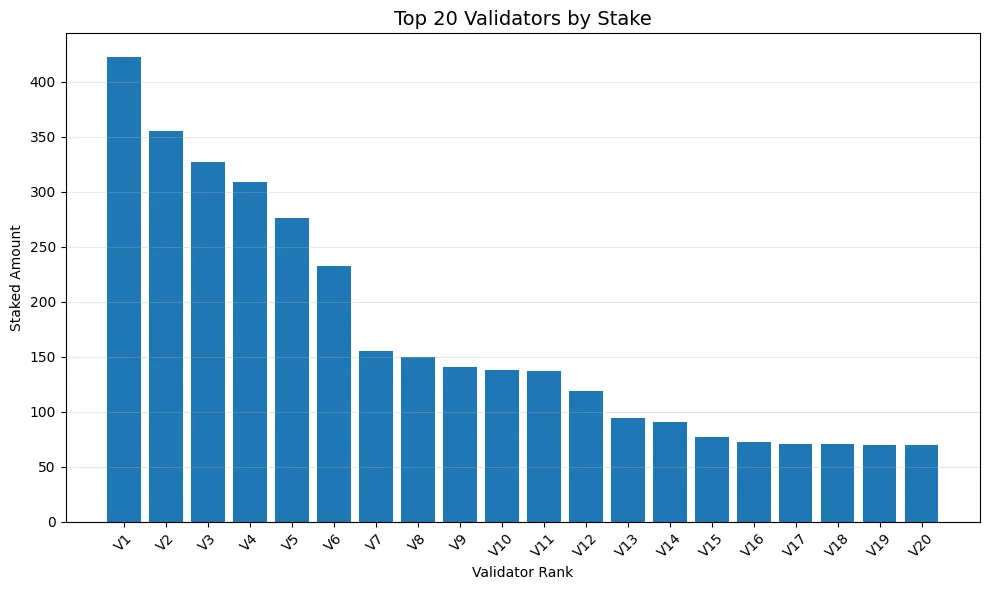
People believe that bigger validator groups create decentralized systems because this belief represents one of crypto’s main deceptive beliefs. The statement seems convincing because people believe that networks with hundreds or thousands of validators must operate without centralized control. The true network situation shows itself through more than just assessing validator numbers.
The distribution of stake across validators determines their actual operational capacity. Proof-of-stake systems link voting power directly to stake ownership instead of counting users as valid voters. The system allows organizations to build their power base because their existing wealth creates a competitive advantage. The process leads to rich-get-richer effects because large staking providers and well-known validators and liquid staking protocols create a system which attracts additional delegation.
Ethereum allows solo staking through its staking model while creating official support for pooled options which exist for users who have less than 32 ETH because this feature establishes fundamental value for the network’s staking system. Lido’s materials show that its latest system design enables users to choose their node operators while they develop individualized staking arrangements because these features demonstrate both new technological progress and how big financial institutions now control user access to network participation. Solana’s validator documents show that more than 1,000 independent validators support the network which creates an important signal about network decentralization.
The earlier reports which Solana Foundation submitted showed why validator count needed improvement because here they used Nakamoto Coefficient to measure the number of validators who would need to work together to block or censor the network. The actual value which needs assessment shows the number of validators who have enough voting power to make important decisions about network operation. The first major evidence against decentralization appears through this disturbance. The network appears to have a wide structure from a distance but its actual spread shows different results.
Governance capture is the quiet form of centralization
The governance system determines the future of the blockchain after validators complete their tasks of securing the network. The second illusion emerges at this location. The community exists to supervise the governance system which various protocols establish. The token holders participate in the voting process. The proposals which people submit become accessible to all. The system allows users to choose their representatives.
The democratic appearance of the system exists throughout all its elements. The governance system based on token weights produces outcomes which match the existing patterns of capital market inequalities. The holders who possess the greatest number of tokens achieve the highest level of decision-making authority. The people who possess knowledge about the system combined with time and access to resources obtain an extra benefit.
Voters who choose not to participate in elections lose their ability to influence decisions which electoral participants make. Research on DAO governance has repeatedly noted the risks of voter apathy and concentrated voting power. Messari’s Synthetix governance study found that token-weighted systems with delegation rights created unnecessary voting power accumulation which led to testing different governance models.
The system achieves open access which fails to create true equal opportunity for all users. The system grants every holder an opportunity to express their opinion. The decision process gets dominated by a small group of delegates and early insiders and funds and treasury-aligned actors.
The governance process starts to resemble a boardroom meeting which allows public remarks to be made whereas it loses its original town hall character. The primary statement shows that organizations which get captured by others do not show their intentions to commit malicious acts.
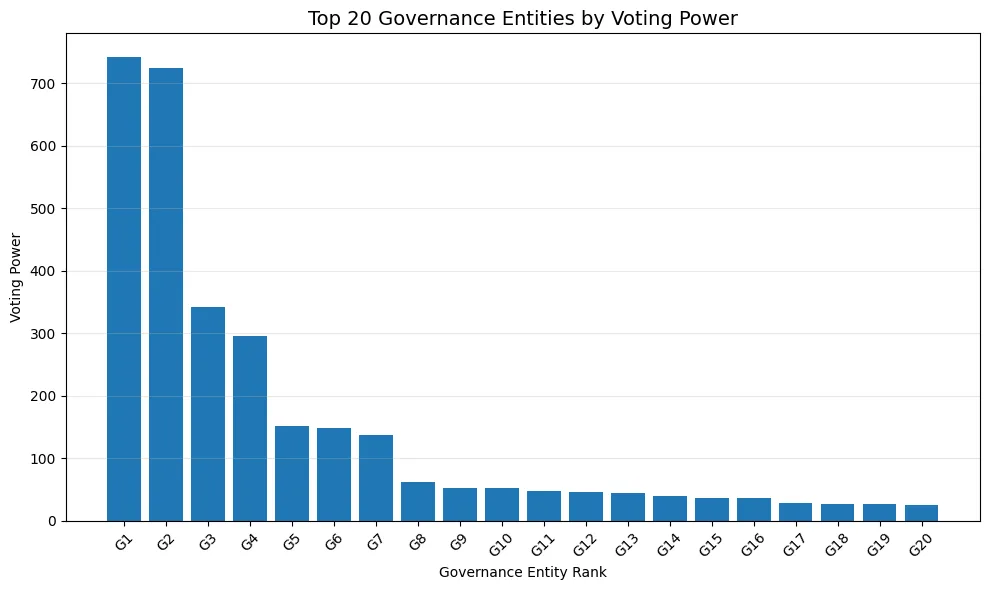
The situation develops from three factors which include low attendance rates and system complexities and the need for people to concentrate. The average holder does not read governance forums, model parameter changes, or monitor treasury decisions. The most motivated individuals to establish organization will take over the empty position. Decentralized systems maintain power structures which enable active participants with strong financial resources to acquire dominance.
Whales do not need a majority to control the story
The dramatic sound and technical nature of 51% attacks use appears to attract crypto users according to their common practice. Actual control needs less than fifty percent ownership to operate. The majority of systems permit people to begin their influence before they achieve complete control. A whale can shape governance without controlling half the supply.
Validators in a cluster can influence network operation through their behavior without needing to reach full consensus control. A staking intermediary can become systemically important without formally “owning” the chain.Proposals can be passed or blocked by a small group in thin governance systems while they control the public view of what the protocol wants to achieve.
The token distribution process reaches its critical point at this juncture. The issue extends beyond the question of token tradability and public ownership because it encompasses the actual extent of token ownership distribution. The existence of decentralized ownership depends on whether any group holds more than half the voting rights.
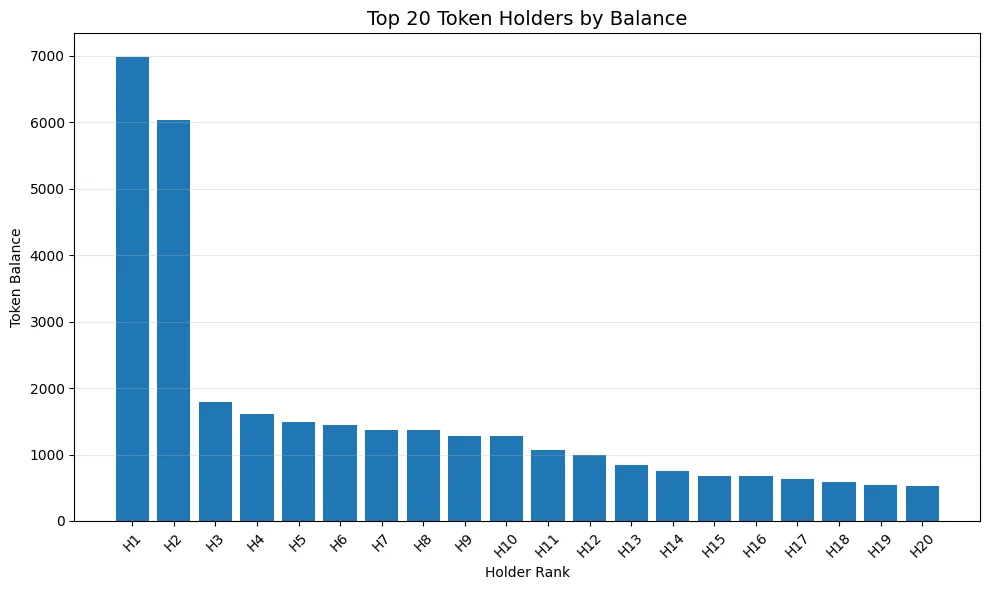
The crowd may be present, but the center still exists. The center exists in multiple overlapping segments which create its existence. Token concentration leads to governance concentration. The concentration of governance power establishes the economic system design. The system design for economic purposes creates rewards which benefit already established dominant entities. An ownership imbalance establishes itself as a political system which develops into a self-sustaining structure.
The Gini coefficient reveals the hidden center
The Gini coefficient serves as the standard measure for assessing income and wealth distribution inequality. The same principle applies to determining ownership rights over tokens. A low Gini value indicates that people distribute their assets more equally. A high Gini value indicates that most assets remain under the control of a small number of individuals.
The metric provides a precise method to measure the distance between actual decentralization and the decentralization claims made by the protocol. Decentralization debates become crucial because they involve both passionate human emotions and fundamental ideological principles. Projects make claims. Communities defend identities.
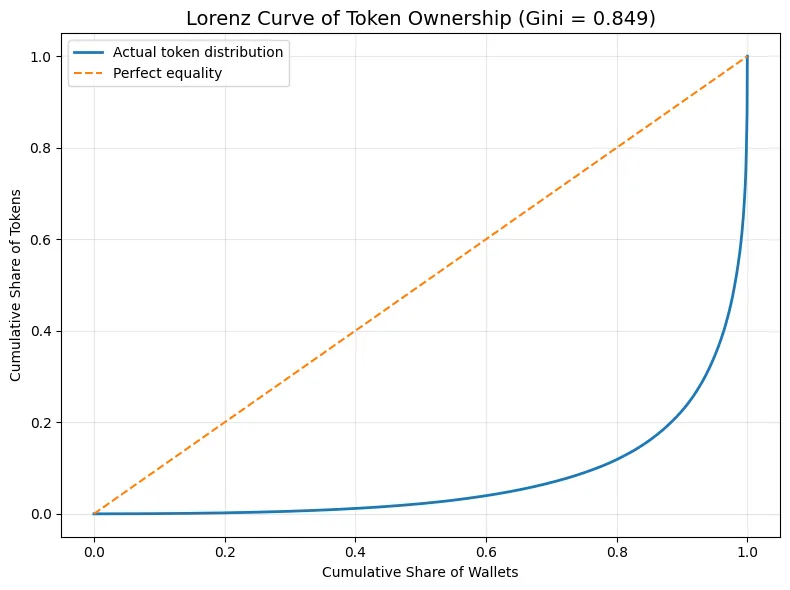
Critics make accusations. The Gini coefficient cuts through some of that noise by turning distribution into something measurable. The system delivers an answer to its central question about how power exists within it. The strongest version of this feature should not limit its analysis to one visual representation. The three concentration levels should be examined simultaneously.
The Gini coefficient of token distribution establishes the first concentration level. The second concentration level refers to how voting power gets distributed among validators and operators. The third concentration level measures how governance power gets distributed through delegated voting groups.
The three-part framework determines whether a system operates with widespread decentralization or maintains partial centralization or hides its centralized control behind a decentralized user interface. The most disturbing finding shows that users maintain decentralized control while their central control systems remain intact.
Why this matters more in 2026
The current situation requires Bitcoin to fulfill its potential as a digital currency which functions as a store of value through efficient power consumption. The system needs more experienced operators who operate advanced skills while the system requires infrastructure providers who can maintain their systems under peak capacity. The established network value increases organizational power because organizations with solid trust and operational strength and financial capacity can control the network.
The process of decentralization continues to function as a present-day system. The process requires high costs. The system needs active protection through incentive systems delegation requirement implementation stake distribution governance structure development and multiple client systems plus public monitoring systems.
The system will always gravitate towards its most centralized point since people tend to work together which leads to power concentration. The decentralization brand remains one of crypto’s greatest selling points. The brand will lose its value because the industry fails to operate its power systems with proper transparency.