



The death of FOMO
Once every rally felt historic, and history was made almost every day. The markets reacted to minor movements in Bitcoin, sometimes a mere ten percent, by going viral. The birth of a new altcoin narrative would see the overnight creation of millionaires. Even the mere talking about the positive government intervention in the sector could lead to an explosive price increase. In 2026, the price action is felt as a procedure. Bitcoin might sky-high without causing any cultural excitement. Ethereum may be lacking, yet there will be no philosophical debates about its future.
The market of altcoins may still be turning but it will be like shifting gears in a car, i.e. mechanical rather than ecstatic. It is not the market that reacts emotionally anymore, it is the market that reacts strategically. FOMO was not eliminated because consumers lost interest. It was eliminated because consumers became educated. The narrative has turned, and it is not a thrilling ups and downs of the market, it is a ride through the jungle. That was the end of the line for speculation, it now outgrew its initial phase.
Institutional gravity and emotional compression
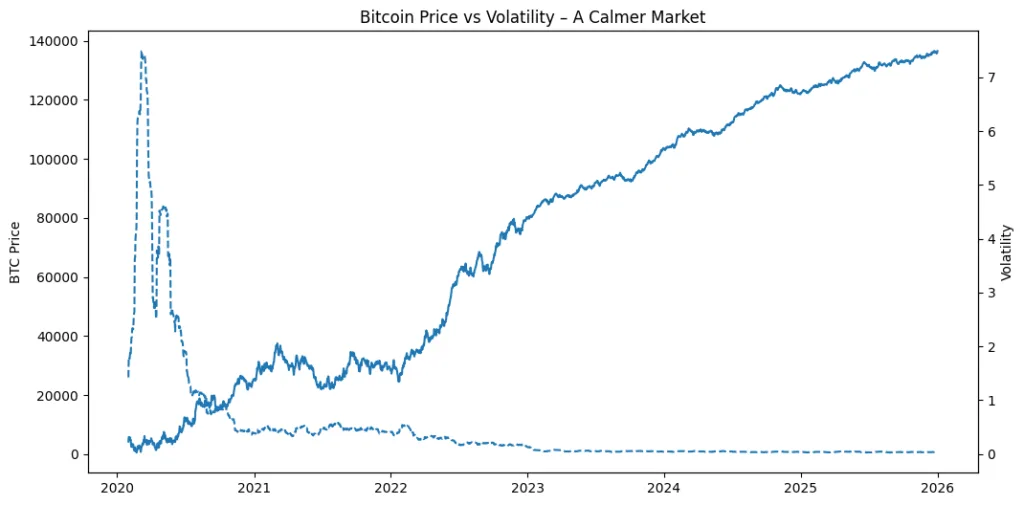
The most significant transformation in the crypto world was not of a technical nature but rather a change in people’s minds. Institutions that came in through ETFs, structured products, and regulated custody did not only supply money but also introduced a new way of operating based on rules and guidelines. The institutions were not driven by emotions but traded on the basis of frameworks. They were bounded by risk budgets, allocation models, and macroconstraints and did not bother to fix their market expectations. As the institutional inflow dominated the market, the volatility became structured. The price movements became less erratic.

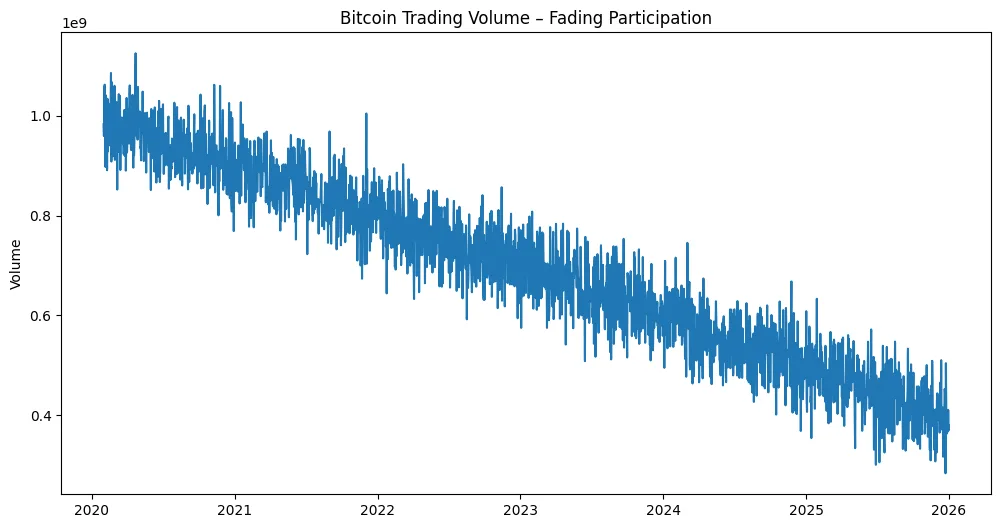
The extremes became less frequent. The market went through a change where the emotional reactions were replaced with systematic positioning. Retail had been the indispensable part of the crypto world, but now it was only the background noise. However, this does not imply that retail has become completely insignificant. It simply means that retail has lost its power to determine the market’s tempo.
Crypto without chaos
The disorderly environment characterized the early years of Crypto. The landscape was full of risk and reward which were by the way inseparable through exchange failures, regulatory battles, protocol defects, and viral manias. The disorder was the catalyst and the 2026 scenario is completely different. The institutions are stable.
The custody is under regulation. The compliance frameworks are clear. The crises still happen, but they are perceived as procedural rather than existential.Market movements are existing, but they are not shocking anymore.Shock has been replaced by fatigue and that is not bearish but structural.
The retail evolution
Retail traders did not go away; rather, they changed and upgraded their trading strategies. So rather than following breakouts, they are looking for the signal first. They are no longer believing in stories but are wanting proof instead. Gone are the days of following the crowd, now it’s all about looking at the larger picture. The bullish and bearish moods that were once synonymous with crypto have now been replaced by discerning participation and prudent positioning.
The market has been matured through the process of excitement turning into experience. This is not being indifferent. It is actually being smart. Crypto investors have gone through too many downfalls, frauds, and cycles to just act on their emotions. The new defense mechanism of the market is emotional immunity.
Macro absorbed crypto
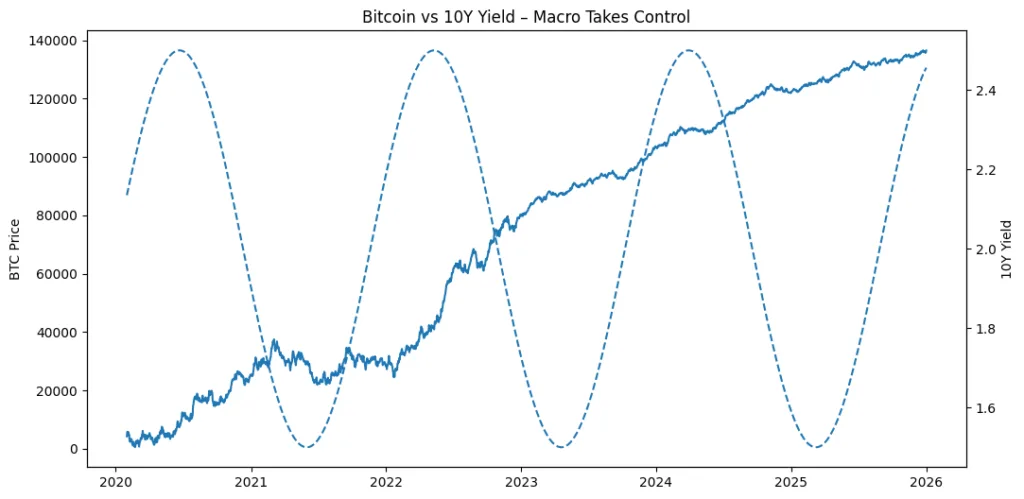
Not so long ago, it was all about crypto. The tech, however, has become a part of the whole situation. Inflation, interest rates, liquidity, geopolitical risks, and fiscal policies are the main factors that influence digital assets just like they do with stocks, bonds, and commodities.
For instance, Bitcoin is sensitive to real yields, Ethereum is related to risk appetite while altcoins are liquidity based. Identity-wise, crypto has not changed. Rather it has been placed in context. However, context is not something that appeals to the audience. It is rather a matter of analysis. Markets that are influenced by macro factors do not create memes. They create models instead.
The narrative saturation problem
Storytelling is an essential part of every asset class. What crypto is facing is not a shortage of narratives but rather narrative exhaustion.Btc is like gold but in digital form. Eth is money that can be programmed or coded. The so-called altcoins are investments in future technology. Stablecoins are tools for providing liquidity. DeFi, which stands for decentralized finance, is financial disturbance. These tales were very effective at the time of their revelation.
By 2026, however, they are very much known and simultaneously boring to the market.Everywhere the stories are the same and so is the response.reduced emotional reaction. The market has become insensitive to the familiar and no longer reacts to what it has already understood. Uncertainty stimulates the demand for excitement. Crypto has been predictable for a long time now.
Why volatility feels “Different”
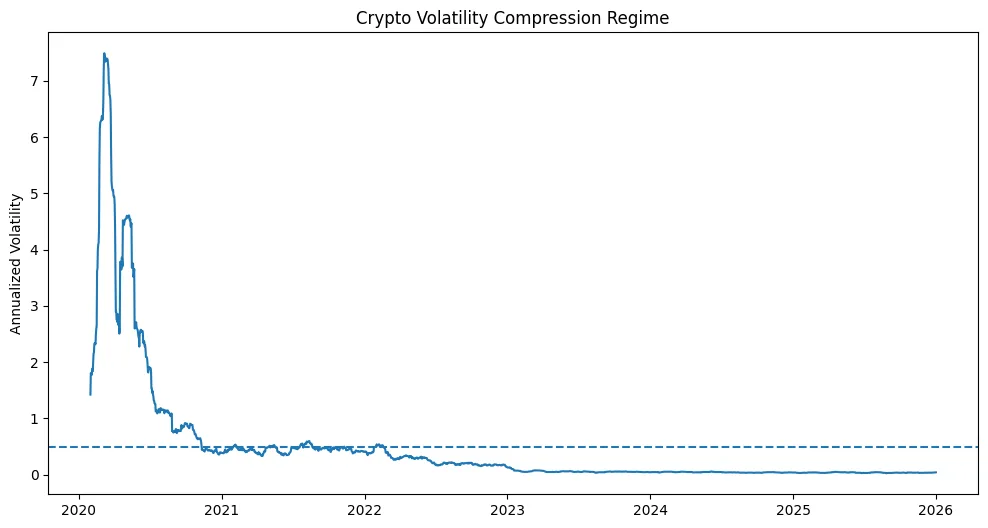
Volatility is still present but has undergone a transformation. The options markets are now the ones that reflect the sentiment the most. Structured products manage the risk while ETFs balance out the inflows and outflows. Algorithmic trading has been successful in lessening the emotional highs and lows. Although the price continues to change, the manner of change has been altered.
The previous days of sharp price movements caused by the accumulation of buying or selling orders are over. The new situation is that there are price movements caused by allocation of capital which are slow but steady. Traders do not feel the excitement of the dramatic situation but rather the boredom of a calm one.
The psychology of a tired market
Market fatigue is not caused by the level of prices but rather by the emotional saturation of the market. When investors go through a cycle of euphoria and destruction repeatedly, their nervous systems adapt. The original stimulus will now cause only a smaller response. The market will then be both emotionally strong and inexpressive.
The main transformation in the Crypto world is not in technology, but in people’s minds. The whole class of assets reached maturity.
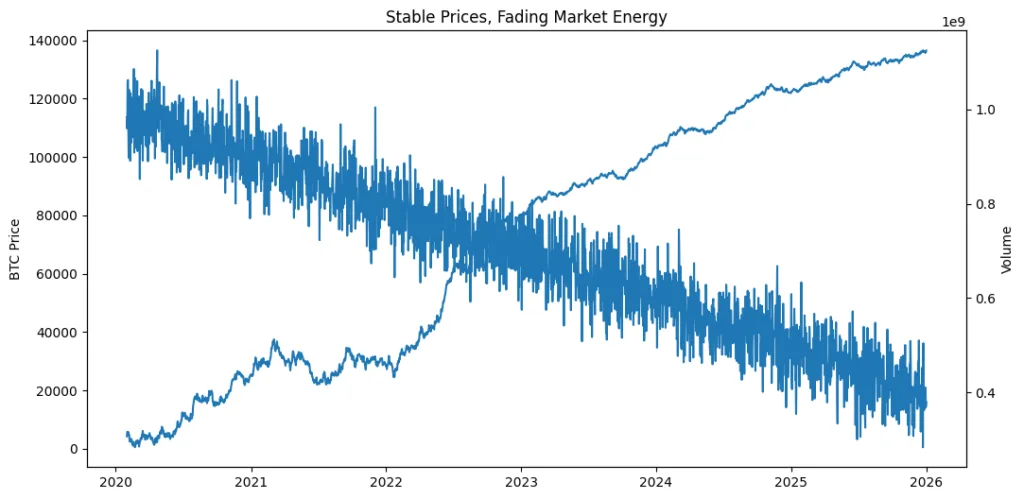
Why fatigue isn’t bearish
Early stages were very disorderly. Later stages were speculative. Present stages are strict. Excitement is gone, thus, capital is choosy. When stories are not attractive anymore, then, basics are strong. When chaos is over, order comes. This is the time when real value is created and not promoted.
The calm before the structural shift
Quiet markets aren’t dead markets. They’re preparing.Every major transition in finance happens during periods of emotional neutrality. Innovation doesn’t emerge from mania it emerges from reflection.Crypto’s fatigue phase isn’t the end of growth. It’s the foundation of the next transformation.
The market didn’t fail it evolved
Crypto market was not drained of its energy because of its downfall.
On the contrary, it was the prolonged existence that used up the energy.The power was not lost.
It was just that the market was stable and in the financial markets, stability is usually the sign of the impending change in the structure.