



Why the old playbook broke
No longer are crypto markets rewarding people with blind belief. The times when “buy and hold forever” outran active decision-making were due to the market being structurally immature: think liquidity, self-reinforcing narratives, and one-way monetary expansion. That scenario is no longer present. The present market is deeper, quicker, and much more competitive. Capital can change hands quickly, people get information instantly, and the cost of missing out on one investment opportunity over another is no longer only theoretical but can be calculated in real time. This has brought about an almost silent change in strategy.
Not resorting to frequent trading, but rather to keeping the market conditions in mind while positioning. The ability of the trader to discern when to hold, when to rotate, and when to step back has become the leading skill that determines whether the capital is preserved or it decays.
When holding still works
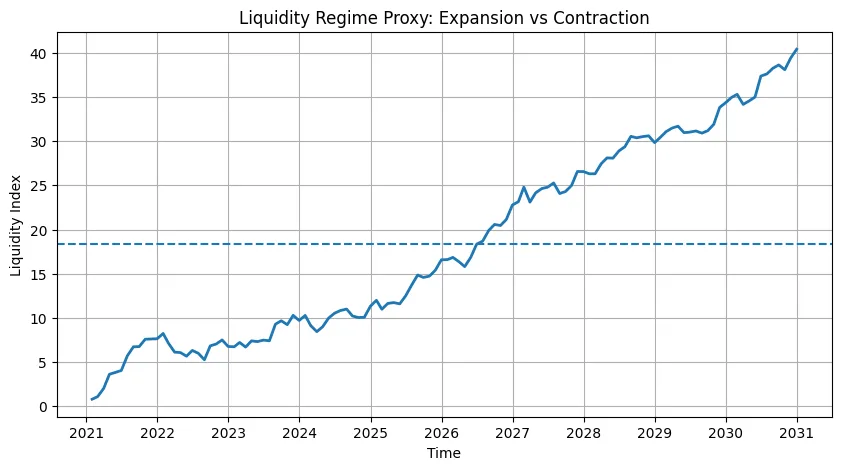
Inholding now means no more than the structural aspect. The long exposure of the assets is justified only in the case where all three conditions are present at the same time: macro liquidity is friendly, the asset is still very early in its growth phase, and the positioning is still under-owned in relation to the asset’s narrative potential. In such cases, the volatility is treated as constructive rather than disruptive. The dips are taken in and calm continues to prevail in the market as demand for the asset in cash leads the activity in the derivative market instead of being driven by it.

The best holding period is when the market is in the process of valuing the asset, not when the value is already unanimously agreed upon. Most traders make the error of continuing to “hold” their positions after the consensus has become stronger. Once the price is going up, the holding that was done quietly turns into a passive risk, even if the price is going up. The change in the rules is slight but significant: support the strong hands, not the familiar ones.
Rotation as capital preservation, not speculation
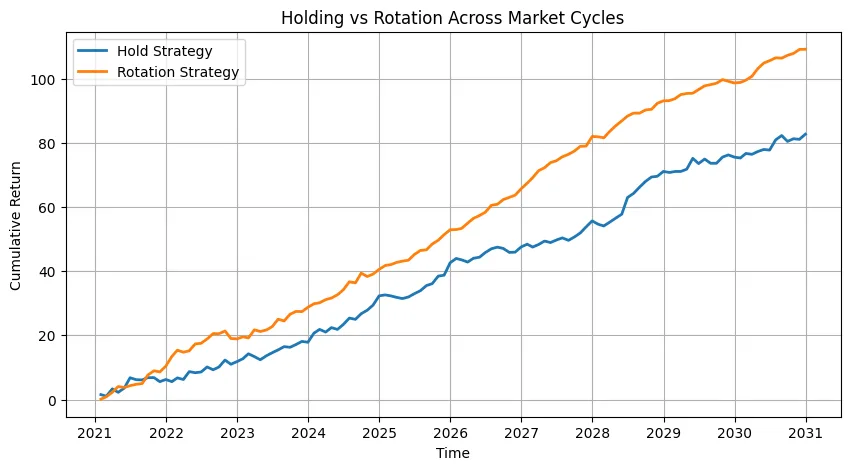
Rotation is frequently confused with impatience. However, it is a carefully planned defensive maneuver that is not easily noticed. Capital rotates not due to the weakness of one asset, but because the other one provides higher asymmetric gain under the present circumstances.Rotation is considered to be the best strategy when the leadership becomes more restricted, the volatility lessens, and the small gain that the existing stocks have relies on leverage rather than on the organic demand.
This is usually accompanied by a rise in correlations and concentration of returns in a smaller number of investors.Effective rotation is not about following the next big story. It is about moving out from the assets where the potential is crowded into the assets where the option value is still cheap. The strongest rotations usually feel uncomfortable exactly because they happen before the narratives reach their peak, not after. The new rulebook regards rotation as risk redistribution and not as directional conviction.
The discipline of stepping aside
Taking a step back is the most overlooked advantage in cryptocurrencies. To a market that is constantly needing to show its presence, neutrality is like a sign of defeat. Still, the capital allocators with the best performance realize that not incurring losses during the bad times is a faster way to earn than to chase the marginal gains.
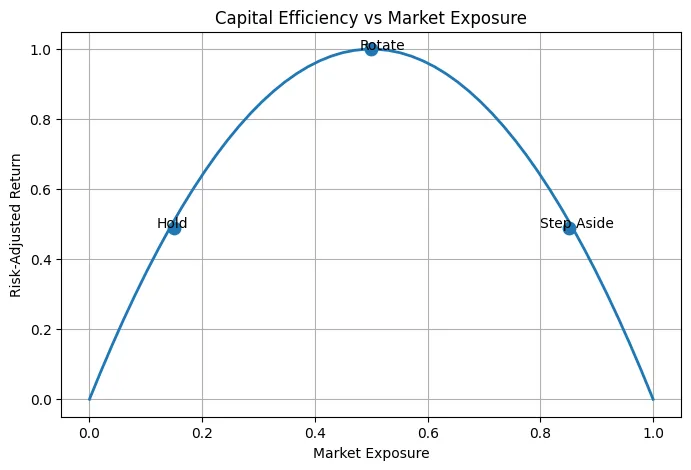
Stepping aside becomes logical when there is not much liquidity in the market, when the stories that are being told about the assets are no longer the same and the price movements are more based on reactions rather than on the inititatives of the buyers and sellers. In these periods, the market turns so volatile that no one is willing to pay the prices and efficiency of capital disappears.
Cash, in this sense, is not a sign of being bearish. It means having a strategic option. It keeps the market participants who have cash in hand flexible while the others get tired of making reactions to the noise. The rulebook now considers the absence not as indecisiveness but as future positioning in the market when the fog clears.
Reading the regime, not the chart
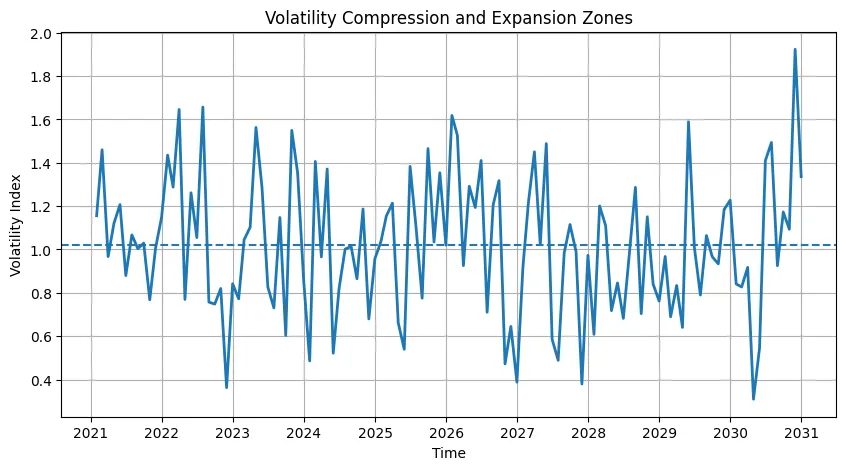
The main issue regarding holding, rotating, and stepping aside is the awareness of the regime. Markets do not merely use price to communicate their condition, but rather through liquidity flows, positioning behavior, and volatility structure. When liquidity is abundant, the patient ones get the reward.
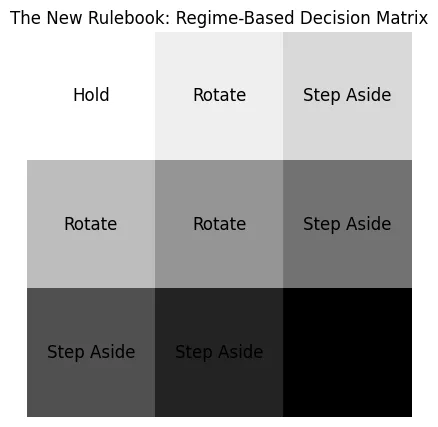
When liquidity is moved, the quick ones are the winners. When liquidity is scarce, the ones used to it are the a’s. The inability to tell apart these regimes is the reason why similar strategies get totally different results in different cycles. This is the unspoken fact of today’s crypto world: no stance is permanent–only alignment that lasts temporarily.