



A market that feels too calm
The current market situation shows high levels of stability. The market shows reduced price fluctuations which create narrow price movement limits and restrain market losses. Risk assessment shows that all potential dangers remain under control. The current peaceful state does not show any ability to withstand pressure. The current situation shows that all elements of the system remain unstable because they have not been allowed to move freely. The current market situation presents a danger because it shows which things traders should watch.
The market situation has lost its ability to respond to actual events that take place. When market prices show small movements, traders experience increased levels of uncertainty. Traders use market information to develop their understanding of the market until they reach a point of full knowledge before they start to process new information. The current situation creates a state of calm that prevents people from finding true security. The current situation creates a state of calm that leads to future events.
Volatility suppression and deferred risk
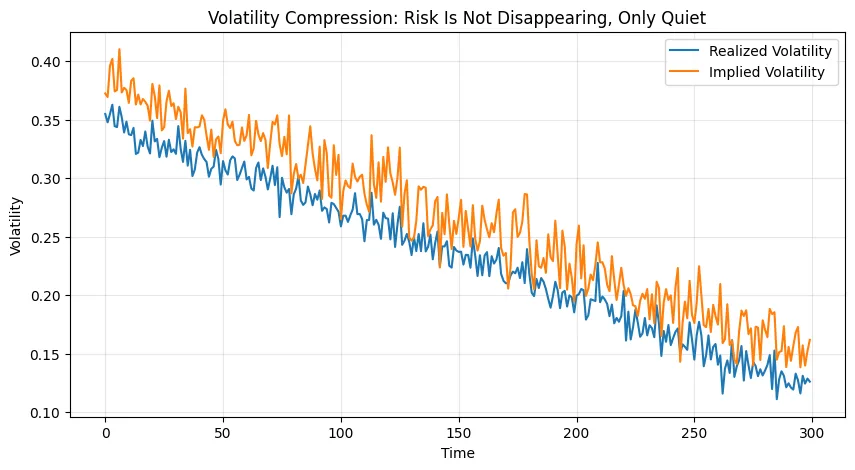
People usually consider low volatility situations to be signs of good health. The truth is these situations create periods which result in postponed risk assessment instead of risk declaration. The price stability creates an illusion of complete market stability which enables unaddressed market risks to build up without any immediate effects. The market starts to show its normal risk patterns when volatility decreases.

People start to think they can predict movements because they have better confidence and cheaper hedging options. Market confidence has developed from two reasons. The first reason is that market movements built confidence. The second reason is that market movements developed better stability. Historical patterns show that extended periods of calmness will conclude through sudden shifts. The process ends with an immediate stop.
Liquidity that exists only until it doesn’t
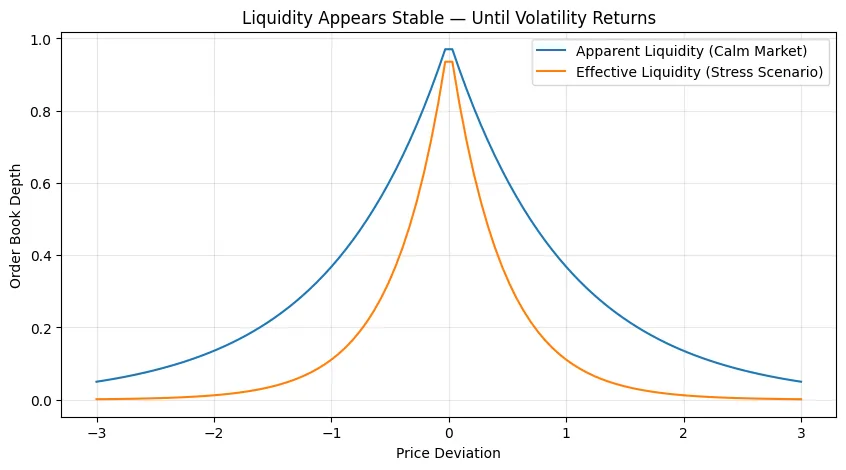
The primary market risk during tranquil periods stems from inadequate liquidity. Financial institutions require ongoing liquidity support because their operational models depend on this essential resource, which they need to use in specific circumstances. The system depends on algorithms and passive vehicles and leveraged intermediaries that disable their operations during stressful periods. Market participants perceive liquidity as plentiful when price movements maintain their stable pattern.
The market depth provides adequate resources because traders experience tight spread conditions and seamless trade execution. The market liquidity pattern operates according to a reflexive process. The market maintains its existence because current market conditions permit low volatility to exist. The market begins to lose its available liquidity resources when volatility levels increase. The price system experiences a break because the market needs to establish new price points without available market depth, leading to small disturbances creating major price movements. The current situation does not present a market valuation issue. The current situation presents a market valuation issue.
Compression, crowding, and non-linear losses
The absence of market activity during extended time frames leads traders to implement strategies which achieve optimal performance during periods of market inactivity. The market sees a silent expansion of carry trades short-volatility positions and embedded leverage. Investors rush to identical investment positions because they believe recent market stability validates their choices.
The process of investing in these assets creates an imbalance between two potential outcomes. Investors face slow and continuous increases in value while they encounter sudden and extreme declines. The size of the trigger does not affect the outcome while the specific positioning determines the actual results.
Why tail risk feels invisible
The detection of tail risk requires methods that exist outside standard measurement techniques. The majority of risk assessment models use past data to determine current danger by analyzing actual market volatility and historical correlation patterns and recent market declines. Structural fragility reveals itself through upcoming events while it remains hidden at present.
The system operates under three hidden dangers which include rising correlations and embedded leverage in secure-looking methods and the belief that markets will keep functioning normally during high-stress events. The market shows tail risk only after the costs of hedging have risen and the pricing of options has changed. The absence of volatility is not reassurance. It is the warning.
Crypto as an early stress indicator
The crypto markets show extreme risk events before traditional financial markets display them. The market operates with immediate liquidity capabilities which allows investors to change their investment positions through quick leverage adjustments while market stress spreads through the system. The crypto market reacts to the development of market imbalance instead of responding to specific events.
When crypto markets experience reduced volatility while macroeconomic conditions remain uncertain, this behavior indicates that market participants are hiding risks instead of solving them. The low activity in cryptocurrency markets does not create a state of equilibrium between buying and selling. The situation leads to the formation of mounting pressure. The crypto system does not remove extreme risk events from the market. The system makes these risks more visible.
The real risk is structural, not directional
The concept of tail risk involves predicting market downturns and determining market peak time. The purpose of this research is to establish the point at which financial markets stop functioning as shock-absorbing systems. The structure of a system needs to be analyzed more than its directional component.
Market stability exists in different price ranges which depend on three main factors: liquidity and market positioning and ability to respond. The most hazardous situations occur when markets experience low volatility together with high market confidence and people believe that all financial assets will always be available. The present situation does not eliminate any potential dangers. The dangers which exist now will take time to become visible.