



The financial sector has historically taken pride in measuring all aspects, including risk, volatility, sentiment, and carbon. Yet a novel frontier is arising that challenges the fundamental boundaries of what finance can quantify: trust.
What if the upcoming generation of ETFs not only followed companies but also measured credibility?
This is the transformative concept underlying the Reputation ETF, a fund that combines authenticated, on-chain indicators of trustworthiness, influence, and public trust into one cohesive investment option. In the era of tokenized identity, with digital reputation now as precious as capital, the concept of exchanging “trust” might transition from a metaphor into a marketplace.

The Reputation ETF would not focus solely on yield. It would be a wager on reality, a fresh gauge for a realm where genuineness is rare, information is plentiful, and the most trustworthy asset is reputation itself.
The financialization of credibility
In cryptocurrency, reputation is inherently a fluid idea. Wallet addresses with a long history of active governance involvement, prudent lending practices, and clear voting records enjoy unofficial premiums in DeFi communities. These reputations are exchanged not directly as tokens, but as indicators of trust that foster collaboration, access, and liquidity.
Initiatives such as Lens Protocol, Farcaster Frames, and ENS are subtly creating a social structure for decentralized identity, as reputation oracles evaluate wallets based on behavioral consistency.
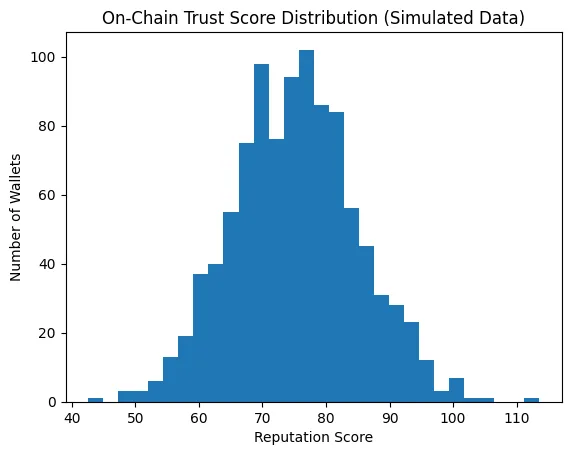
A Reputation ETF would combine these authenticated on-chain identities into a “Credibility Index Fund,” employing machine learning to evaluate entities based on their past transparency, network influence, and overall trust.
From an analytical perspective, this represents a logical progression of TradFi’s transition from value-focused investing to sentiment-driven and ESG-influenced products. The ETF transforms into a tool that encapsulates reputation as a security; what was once unmeasurable is now regarded as quantifiable worth.
On-chain data as proof of character
For many years, analysts have depended on financial statements to assess integrity. However, in the blockchain age, actions speak volumes.
Each on-chain vote, transaction, or staking action creates a clear record, a testament to integrity encoded in software. This enables what no conventional audit could offer: immediate confirmation of integrity, consistency, and alignment.
This information allows for a trust-weighted portfolio, where allocations increase not due to market capitalization but from measurable transparency indicators. An ETF based on this principle would prioritize enduring trust over fleeting excitement, serving as a stabilizing force during turbulent periods.
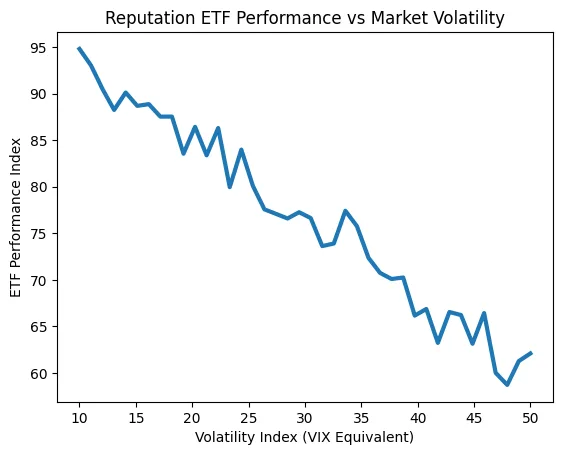
The key analytical insight is that this ETF may act counter-cyclically, showing the best performance when markets are inundated with misinformation. When fear takes over, reality becomes paramount.
Wall street’s dilemma: Packaging the intangible
If reputation can be assessed and valued, then Wall Street will inevitably bundle it. The challenge is philosophical: can something as intangible as trust endure financialization without sacrificing its authenticity?
The reasoning is appealing: Traditional finance already operates on sentiment. Volatility ETFs transform anxiety into a stock symbol. Sentiment funds gauge societal feelings using NLP data. Carbon markets value ethical considerations. The Reputation ETF would merely measure integrity.
However, the analytical risk is evident data alteration. If reputation scores are centralized or can be manipulated, the ETF fails due to its own contradiction: offering trust via a system that lacks merit. The transparency of blockchain provides the sole effective protection. Immutable ledgers can stop fabricated reputation information and allow for cross-checking among independent oracles.
In this manner, the ETF transcends being merely a financial product. It turns into a governing market indication that punishes dishonesty and promotes openness.
The meta layer: Focusing on people, not projects
This is the point at which the idea goes beyond finance and enters into culture. The Reputation ETF redefines the market as a shared human experiment focusing on investing in individuals rather than initiatives.
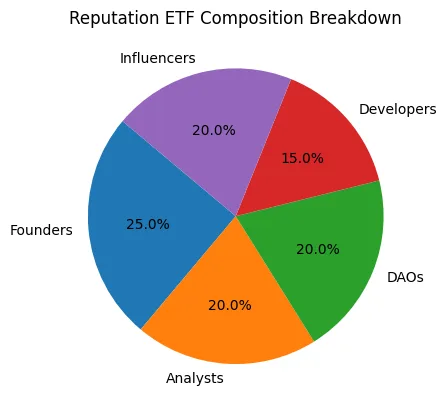
Influencers, entrepreneurs, and developers contribute to an extensive credibility portfolio. Their behavior, honest or misleading, directly influences the ETF’s performance. Trust serves as both a factor and a result: the more dependable your track record, the higher your acceptance.
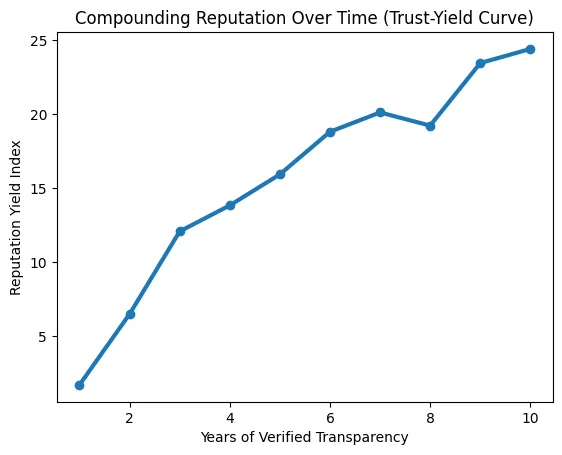
In a time filled with AI identities and artificial interactions, reputation emerges as the final precious resource. Blockchain not only logs currency it logs history. Memory serves as the basis for trust.A Reputation ETF is not merely a novel concept; it’s a moral adjustment of the market an environment where truth accumulates.