


The entire internet era has seen centralized corporations control physical infrastructure which exists through their ownership. Telecommunication companies possess their communication towers, cloud computing providers operate extensive data centers, and utility companies handle their electricity distribution networks. The modern digital world depends on these systems which enable basic functionality yet only a few major companies possess control over their accessibility. The blockchain technology ecosystem is currently developing a new system which will create new possibilities for operation.
The Decentralized Physical Infrastructure Networks system uses crypto tokens to manage infrastructure development through its network of decentralized operations. The DePIN system enables users to build their networks through public participation while independent operators contribute their hardware assets which include wireless nodes and data storage and computing power and sensors and energy generation equipment. Participants who support the network receive digital tokens which show their network contribution.
The network uses tokens to motivate users while they use the tokens to make decisions about network development. DePIN projects operate worldwide despite their initial abstract appearance. Organizations create wireless coverage networks and decentralized GPU computing marketplaces and sensor networks to demonstrate how blockchain incentives can improve real-world infrastructure systems.

The crypto industry has developed into a new financial system, while DePIN functions as a major project which connects digital and physical environments. The model creates a decentralized network for infrastructure ownership which enables participants to own their network, which will transform the way global systems get developed and sustained.
What DePIN is
Decentralized Physical Infrastructure Networks combine blockchain technology with real-world infrastructure implementation to create their network system. DePIN enables decentralized networks through its simple approach which allows community members to build the network by providing essential hardware components. The system uses blockchain technology to establish its main operational framework. Smart contracts manage resource tracking, network verification processes and distribution of rewards to resource-providing participants.
The construction of traditional infrastructure systems requires substantial financial resources for network development. Telecom networks require billions of dollars in upfront investment, cloud computing requires massive data centers, and energy grids demand large-scale infrastructure deployment. The DePIN framework enables independent operators to share investment costs through its system which distributes financial responsibilities to multiple users. Each participant installs hardware that contributes to the network’s functionality.
The devices included in this category function as wireless hotspots, storage servers, GPUs, sensors, and renewable energy systems.The blockchain system maintains records of their operations which it uses to deliver token rewards as payment to them. The system creates a marketplace which uses tokens to reward users who provide infrastructure to the platform. Individuals purchase hardware because they believe that token rewards will provide them with profitable returns instead of their companies funding system deployment.
The network grows continuously because new users keep joining the system. Decentralized wireless networks and distributed storage systems and GPU marketplaces which support artificial intelligence applications represent the main early experiments of DePIN technology.
The basic networks demonstrate how blockchain systems can manage extensive infrastructure projects through decentralized systems although they have not reached their complete development stage. The model implementation success will create an infrastructure development framework which enables network expansion through economic incentives instead of requiring organizations to spend on capital assets.
Decentralized energy networks
DePIN demonstrates its strongest use case through implementation in energy industry operations. Energy infrastructure has traditionally been highly centralized. The utility companies maintain control over the complete system which includes power generation plants and transmission lines and electricity distribution networks. The electricity market operates through consumer purchases of electricity whereas consumers have no role in either electricity production or grid management. DePIN enables decentralized energy markets through its system which allows users to share their renewable energy assets via a distributed network structure.
Households equipped with solar panels in that system would produce electricity which they could sell to the electrical grid through their surplus power. Smart meters together with blockchain technology will track energy production and confirm energy contributions while distributing token-based incentives. The model transforms traditional energy production systems which use large corporations as producers into a system that enables multiple users to participate in energy creation.
The economic incentives could accelerate renewable energy adoption. People who set up solar panels and battery systems will receive tokens which they can use to provide clean energy to the network which creates them an additional income source besides their normal energy efficiency savings. Some experimental platforms are already exploring this concept through blockchain-enabled energy trading systems. DePIN energy systems provide benefits beyond renewable energy generation because they can enhance grid performance.
Decentralized networks allow sensors and smart devices to track electricity usage patterns which enables energy markets to adjust their power supply and demand in real time. The establishment of such networks will lead to an energy system that provides better resilience and adaptability throughout areas where existing grid infrastructure is insufficient or nonfunctional.
The existing regulatory obstacles still create major challenges for the sector, however decentralized energy markets demonstrate how DePIN technology will transform business operations for companies which depend on centralized control.
Decentralized data and compute
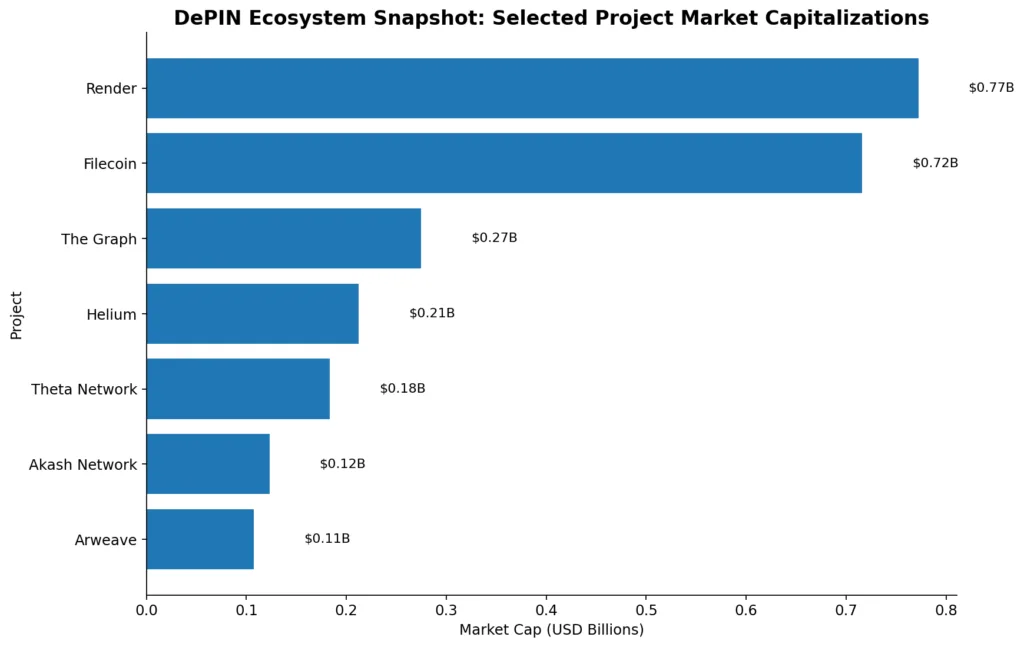
The DePIN sector develops through its decentralized computing infrastructure which is its second fast-developing field. Modern artificial intelligence systems require massive computational resources. Machine learning model training needs extensive GPU resources which only a few cloud providers such as Amazon Web Services and Microsoft Azure and Google Cloud possess. The existing system concentrates computing resources which results in restricted access and increased costs. Decentralized compute networks create marketplaces that enable users to share their unused computing resources as a solution to this issue.
The networks enable users to connect their GPUs and CPUs and storage servers to build a system that distributes computational tasks. The network distributes tasks to its nodes when users ask for computing resources. The contributors receive tokens as payment for their computing services. The model attracts AI developers because of its high demand for GPU resources which has increased significantly in recent years.
Decentralized compute networks can lower machine learning model training expenses while providing worldwide access to computing resources. Decentralized storage networks compete against traditional cloud providers in their efforts to establish themselves as viable storage alternatives. The system enables users to share their hard drive space for saving encrypted data fragments which will be stored throughout the network.
Blockchain protocols enable storage verification while they provide rewards to operators who keep their storage systems operational. The systems operate as cloud storage providers who do not use any centralized data centers. Decentralized storage networks face two fundamental problems which they need to solve while they show how blockchain-based incentives enable organizations to manage extensive data systems. The DePIN ecosystem experiences its fastest growth through the combined development of decentralized computing and storage networks.
Token incentives for infrastructure
Every DePIN network operates through a foundational system which uses tokens to create its incentive structure. The network operates through token-based economic systems which drive users to install hardware and keep the network operational. The network needs these incentives because people would not want to spend money to build infrastructure which helps the entire network.
The systems of DePIN distribute tokens through established methods which assess user achievements. Wireless hotspot operators may earn tokens for providing network coverage storage providers may earn rewards for hosting data and computing providers may receive tokens for processing workloads. The mechanism of blockchain verification functions to authenticate user contributions while ensuring that reward distribution occurs in an equitable manner.
The system successfully transforms infrastructure deployment into an economic competition which involves participants who compete to deliver essential resources because the network rewards their efforts. The network uses token incentives to assist network development during its initial phase.
The network reaches its self-sustaining state when its adoption rate increases and its service demand rises. DePIN projects face their main challenge because they must create token economic systems which can maintain sustainability. Infrastructure providers will leave the network if token rewards start to decrease at excessive rates. The system will develop a dependency on speculative token demand if rewards continue to stay above realistic levels. DePIN networks need to establish their economic equilibrium because this process will help them develop into permanent infrastructure networks which operate beyond their testing phase.
The future of physical networks
The growing use of DePIN technology signals a complete transformation of future infrastructure development methods. Decentralized networks enable communities to create and operate essential systems without needing to depend on major corporations or governmental financial support. The model has potential to transform multiple industries which include telecommunications and cloud services and energy generation and transportation. DePIN offers emerging markets and underserved regions an alternative way to develop their infrastructure systems. The financial requirements of traditional infrastructure projects create barriers which prevent multiple regions from developing their infrastructure systems.
Decentralized networks enable users to make tiny financial contributions which together develop massive systems. The model establishes critical requirements which need examination from both regulatory and technical perspectives. Infrastructure systems need to uphold three critical standards which include reliability and security and safety requirements. Governments have the authority to impose regulations on decentralized networks which function between different national territories.
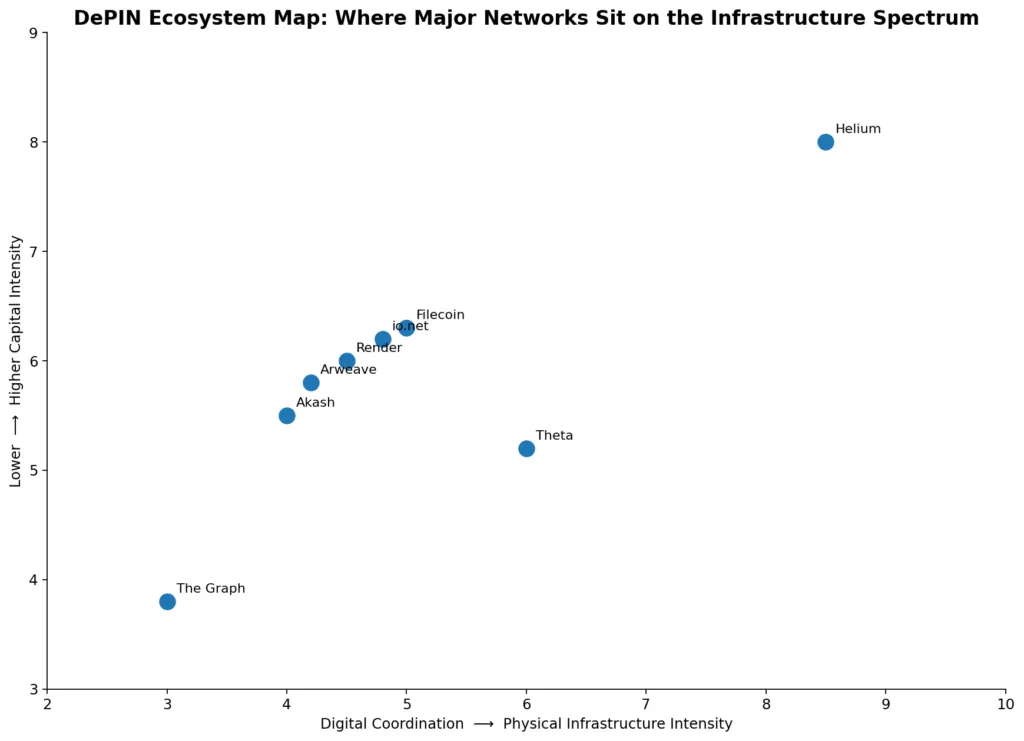
DePIN has gained strong interest from the crypto industry because it proves blockchain technology through its real-world usage. The industry has started to study decentralized systems for practical use after spending years on financial experiments and trading activities. It remains uncertain what result this experiment will produce. DePIN will emerge as a crucial milestone in blockchain development if token-incentivized networks achieve successful real-world infrastructure deployment. The concept of Decentralized Physical Infrastructure Networks represents one of the most ambitious attempts to merge blockchain technology with real-world systems.
DePIN has established itself as a complete innovation which transforms infrastructure development through its system that converts physical assets into participant-owned tokenized networks. All types of infrastructure including wireless networks and computing infrastructure and storage systems and energy grids have the potential to develop into decentralized ecosystems which operate through economic incentives. The model still exists in its experimental stage but its quick expansion shows that both investors and developers find the concept appealing because it presents new methods for infrastructure implementation. The upcoming years will show whether DePIN stays a minor part of crypto or develops into an essential element of the worldwide digital economy.