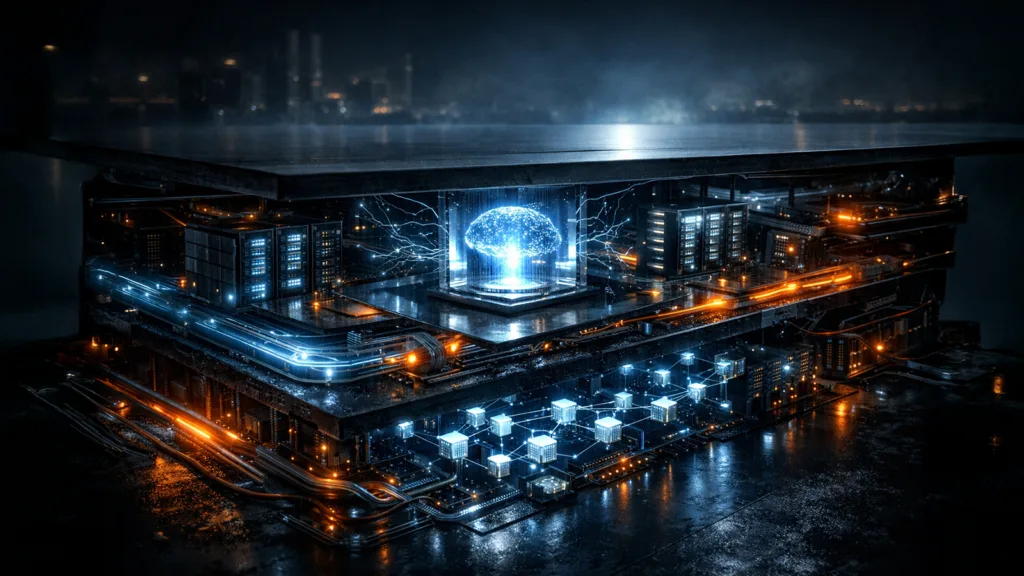



When markets depend on what they can’t see
Contemporary financial systems operate through hidden software infrastructures which include routing systems and cloud computing and application programming interfaces and automatic risk management systems that control access rights and liquidity distribution and initial volatility exposure.
The infrastructure does not execute trades The infrastructure does not engage in market speculation The infrastructure does not appear on financial charts Yet it shapes outcomes more than any individual asset ever could. Crypto is the initial market which demonstrates this hidden property.
From physical pipes to abstract control layers
Traditional finance was built on tangible constraints: exchanges, clearing houses, settlement windows, and physical intermediaries. Risk moved slowly because the system moved slowly.Today, infrastructure has dematerialized.Liquidity routing is algorithmic. Collateral checks are automated. Risk is assessed continuously.

Execution is abstracted away from venues and embedded into software layers that sit above markets, not inside them.What matters is no longer where liquidity is, but how systems decide to access it.
Why crypto feels this first
Crypto markets operate closer to infrastructure limits than traditional finance.The financial system does not possess a central liquidity backstop. There is no discretionary intervention window. The system operates without any human-created waiting periods. The system functions with all its dependencies active and available for real-time use.
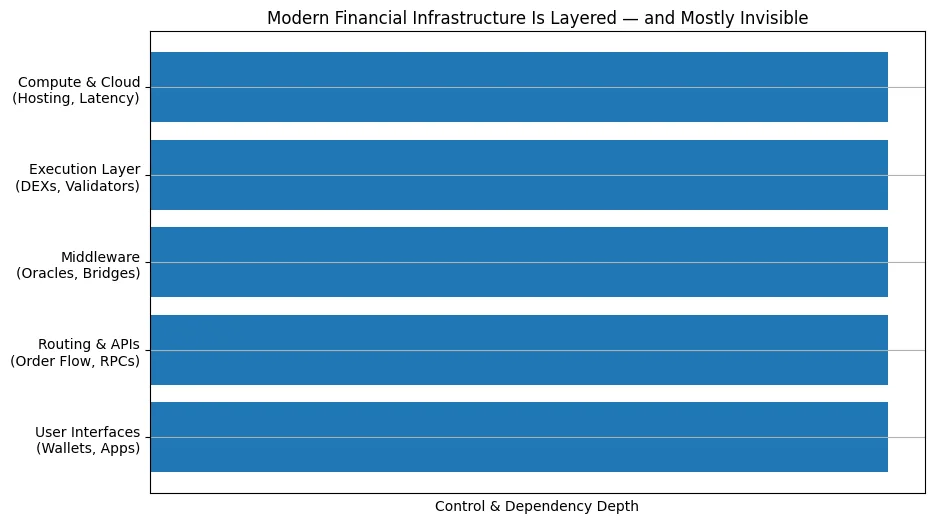
The hidden foundation of the system consists of bridges oracles and RPC providers and sequencers and custodial APIs and cloud services. Price movements occur before market participants comprehend the reasons for layer degradation. The cryptocurrency market experiences volatility because price changes result from infrastructure strain rather than reactions to narrative developments.

Infrastructure as the new source of systemic risk
Invisible infrastructure creates hidden power centers which operate without notice. The routing layers select the locations which will receive network traffic. Cloud providers establish their service availability. The middleware system determines which latency benefits it will provide.
Access to the system gets determined through API functions. The decisions made here establish fundamental system components which function without bias. The current market operates through a few major providers who control most of the trading activities. Amazon Web Services and Cloudflare provide essential services which their customers use throughout various exchanges and data feeds and trading systems. The primary source of systemic risk has shifted from leveraging to today. The current situation arises from existing dependence on hidden connections between multiple elements.

The illusion of decentralization
The assessment of decentralization reaches its conclusion through the examination of protocol layer validators and governance tokens and on-chain rules of operation. The infrastructure centralizes its operations through a hidden layer that exists beneath the main system.
The system becomes only visually decentralized when essential functions depend on a restricted group of hidden service providers. The system permits unrestricted access to its resources which makes it open to all users but its actual operation proves to be fragile. True resilience is not an ideological concept. The term describes physical systems which maintain continuous operation.
What this means going forward
All markets will establish their infrastructure value assessment through evaluation of infrastructure quality instead of basic asset characteristics. The multiple factors of latency and redundancy and routing efficiency and failure tolerance will create new competitive advantages.
The most effective systems will achieve their best performance through silent operation and controlled decentralization which enables them to handle system difficulties. Crypto systems experience price instability because they are new to the market yet their value changes because the cryptocurrency system reveals fundamental financial links which traditional financial systems keep hidden from view.