



ETF flows signal a shift in capital
Data on cryptocurrency fund flows demonstrates a considerable shift in funds from Ethereum and Bitcoin to Solana. When the first Solana ETFs were introduced in the United States in late October 2025, Bitcoin and Ether funds experienced a decline in inflows while Solana investment products witnessed significant inflows. For instance, during a single week, net outflows from Bitcoin-based funds totaled nearly $946 million, while the second-largest weekly inflow on record, $421 million, was received by Solana funds. Multi-day flow trends further highlight this glaring divergence:In their first six trading days (post-launch), Solana ETFs attracted over $280 million in new capital, despite the fact that during the same time period, a total of $2.6 billion was removed from Bitcoin and Ethereum ETFs. These figures demonstrate that institutions are significantly reallocating capital toward Solana rather than completely abandoning cryptocurrency.
Daily net inflows into spot ETFs with a Solana concentration from late October to early November 2025 (one trading day is represented by each bar). Solana ETFs saw inflows of almost $280 million over the course of about six days, indicating robust institutional demand despite a general decline in the cryptocurrency market.
The opposing ETF flow charts clearly show this rotation. Late October saw a wave of withdrawals from Bitcoin spot ETFs, with hundreds of millions of dollars being withdrawn from U.S. fund issuers such as Fidelity’s FBTC. As can be seen above, Solana’s recently introduced ETFs rapidly accumulated close to $500 million in assets under management by bringing in tens of millions of dollars per day. To put it another way, money that was leaving Bitcoin and Ethereum products seems to be moving to Solana. This cross-asset shift is supported by CoinShares data: A recent week was dominated by Bitcoin ETP outflows, but SOL product inflows of $156M were driven by “buzz for the Solana… ETP launches.” Ahead of the expected U.S. ETF debuts, Solana inflows persisted the next week, albeit at a lower $29M. The general pattern is evident: as Solana’s investment vehicles go live, money is moving from the major cryptocurrency players to Solana.

Bitcoin spot ETFs’ daily net flows in late October 2025. Large outflows (more than $1.3 billion over four trading days) are indicated by negative numbers, which show how capital was being taken out of Bitcoin funds. At the same time, Solana ETFs had inflows, which indicates that investors are shifting their exposure to alternative cryptocurrencies.
Institutions reallocating rather than exiting crypto
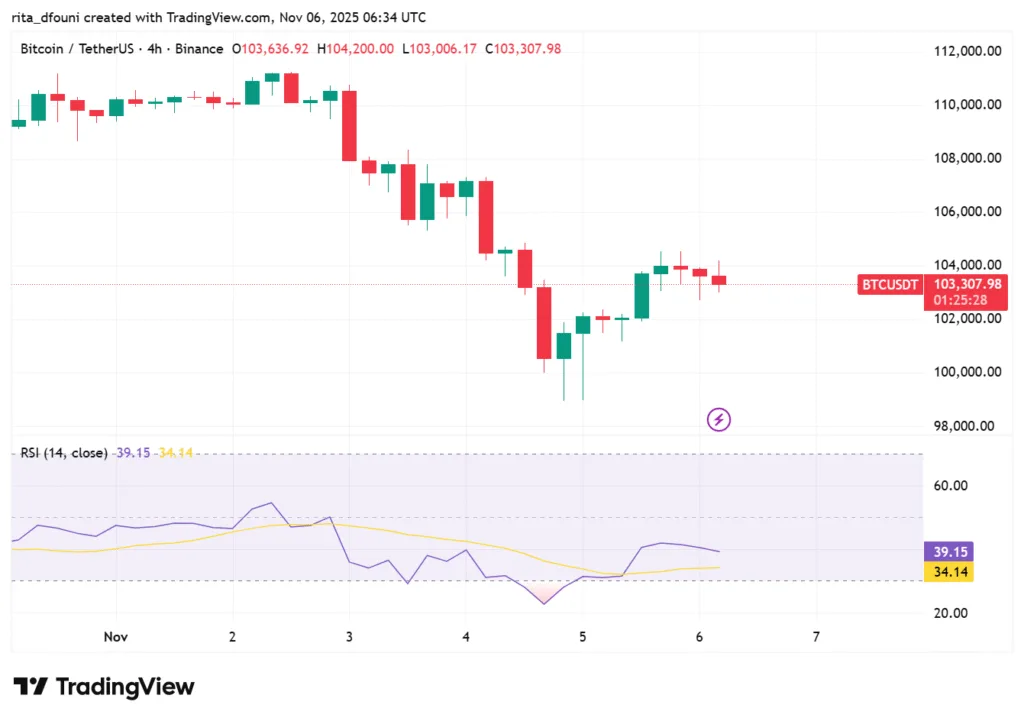
Instead of a complete withdrawal from cryptocurrency, these ETF flow patterns point to a strategic realignment by institutional investors. According to fund managers and analysts, investors are “changing horses” rather than giving up on the race, despite news about Bitcoin fund outflows.During one turbulent week, the industry saw over $360 million in net outflows, according to weekly ETP statistics. Crucially, this included hundreds of millions of dollars entering Solana funds at the same time as nearly $1 billion exiting Bitcoin products.According to CryptoSlate, “it seems that investor interest shifted to other ETPs,” highlighting that the bias was a rotation (BTC out / SOL in) linked to economic worries rather than a decline in demand for cryptocurrencies as a whole. Institutions are essentially reallocating within the cryptocurrency space, shifting from more established assets to what they see to be the next opportunity, rather than running away from it.
This rotation is explained by a number of causes.Some de-risking has been prompted by macroeconomic uncertainties (such as a hawkish stance from the Fed), which initially hurt Bitcoin ETFs the most. However, many investors reinvested their money into Solana and other altcoin products instead of cashing out completely, suggesting a persistent desire for crypto exposure in a different way. Although the money frequently cycles into other crypto assets rather than leaving the ecosystem, one expert pointed out that the multi-day Bitcoin outflows probably reflect risk reduction and profit-taking amid tightening liquidity. “Until liquidity conditions stabilize, capital rotation will continue to support ETF outflows,” he said. In fact, dispersion and rotation have defined the crypto fund flows in late 2025, with the majors’ downturn being mitigated by the rise of some altcoin funds. CoinShares and K33 Research analysts emphasize that this is a story of repositioning rather than surrender.According to one assessment, “the current theme is dispersion and rotation, with no inevitable capitulation yet.” All of this supports the idea that institutional actors are still involved in cryptocurrency; they are just refocusing their attention on areas where they believe there are more opportunities for growth.
Solana: The “growth equity” of the crypto market
Why Solana?While Bitcoin is seen by investors as a steady blue-chip or digital gold, Solana is being treated as the high-growth upstart in the cryptocurrency market, comparable to a “growth equity” in a stock portfolio. Solana is now the top destination for rotational inflows due to a number of reasons. First, Solana’s standing has improved due to its ecosystem advancements and network foundations. Developers and users in fields ranging from DeFi to payments have been drawn to Solana because it is a high-performance Layer-1 blockchain with quick, inexpensive transactions. Institutions have taken note of this: the current influx of capital indicates that investors believe Solana’s technical architecture offers competitive advantages (such as fast throughput without requiring layer-2 scaling), which gives it significant growth potential in tandem with Ethereum. According to the research director at Coinbase, Solana is now a strong candidate for institutional adoption, just behind Ethereum, due to its growing use cases and high transaction volumes.
Second, the introduction of ETFs with a Solana concentration opened up a new, simple way for institutions to have exposure, and the timing and features of these products increased demand.Notably, Bitwise’s BSOL ETF debuted with a charge of just 0.20% and even includes staking dividends, which are then passed on to investorsforklog.com.coindesk.co. Solana ETFs were particularly appealing as a total return play because of this yield augmentation, which essentially provided “yield-bearing” crypto exposure in a manner that Bitcoin spot ETFs are unable to. Despite general market downturn, the Solana ETF debut was hailed as a “clear success” because of aggressive pricing and a first-mover.
In actuality, BSOL made $199 million in its debut week (on top of $223 million in seed cash), surpassing even BlackRock’s massive Bitcoin trustcoindesk.com to become the week’s best-performing crypto ETF. This demonstrates how many institutional allocators have made Solana their go-to growth option: they quickly poured money into the company when offered a handy offering.
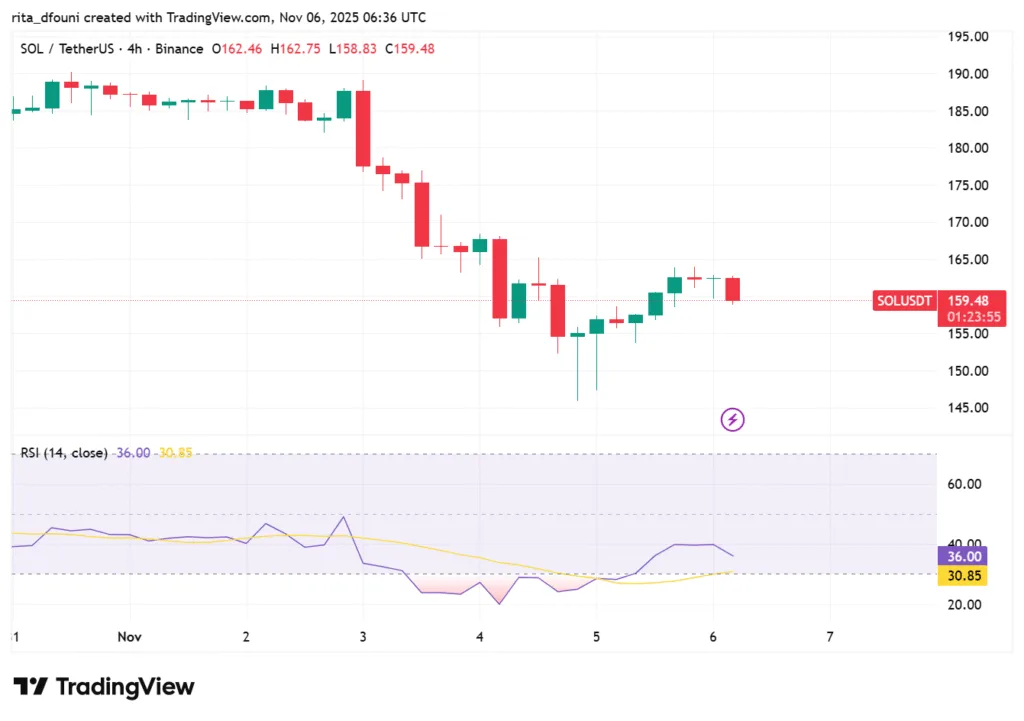
Ultimately, Solana’s position as the crypto growth play has been strengthened by its performance and market narrative. The rotation approach was validated by Solana’s notable outperformance of Bitcoin at different periods throughout 2025. For example, Solana more than quadrupled from its April lows during the spring-summer surge, significantly outperforming Bitcoin’s sluggish performance over that time. By July 2025, SOL had dropped 50% from its January peak to be close to $200, a multi-month high, while Bitcoin remained relatively stable at $117k. Solana’s strength “stands out notably in Bitcoin terms.” When market conditions favor cryptocurrencies, these experiences demonstrated to institutions that Solana can yield high-beta profits. SOL easily outperformed the majority of other majors for the whole quarter, rising as high as $205 before a decline even during the most recent ETF launch timeframe.In contrast to Bitcoin’s more value-like character, institutions seem to be shifting into Solana in anticipation of its next phase of expansion, treating it like a tech stock with upside potential. Institutional inflows into Solana over the first quarter of Q4 surpassed those into all other cryptocurrencies combined, according to one report, indicating a strong vote of confidence that Solana might be “a dominant force” among Layer-1s.
In conclusion, from an institutional standpoint, Solana has taken on the role of the growth engine for the cryptocurrency industry. In contrast to withdrawals from Bitcoin/Ethereum goods, the strong bid under Solana indicates a rotation rather than a retreat. Investors are switching from the recognized leaders to a rapidly emerging rival, but they are not abandoning the contest. This rotation trade implies that institutions are actively looking for the next significant opportunity in cryptocurrency rather than abandoning it. Solana’s rise to prominence as that top objective is indicative of its increasing legitimacy and allure as the “growth equity” of cryptocurrency. Market observers will be keeping an eye on if this tendency continues in the future. If Bitcoin stabilizes and new capital continues to chase Solana, it will be confirmed that this was a strategic reallocation to faster growth rather than a decline in confidence in the asset class. The argument that institutions are still involved in the game, albeit with a different wager, is supported thus far by the ETF flow statistics and relative performance dynamics.