



Market overview
The stablecoin market has entered a phase of growth which now establishes it as a crucial element for worldwide financial systems. A liquidity tool that originated within the cryptocurrency space has developed into a banking system which operates without government oversight and controls assets worth hundreds of billions of dollars, which primarily consists of U.S. Treasury assets.
Tether and Circle lead this industry change because their business operations now function as extremely effective digital banking services which operate outside official banking regulations. Their model operates through a basic exchange system. Users exchange dollars for stablecoins, and those dollars are deployed into short-duration U.S. Treasuries.
The yield generated belongs to the issuer while the user receives a stable unit of account which does not allow them to participate in that return. This business model achieves its highest level of success during times when interest rates reach their peak. The business operation which exists at this level of success becomes obvious to others who work in the field when it connects to government bond markets.

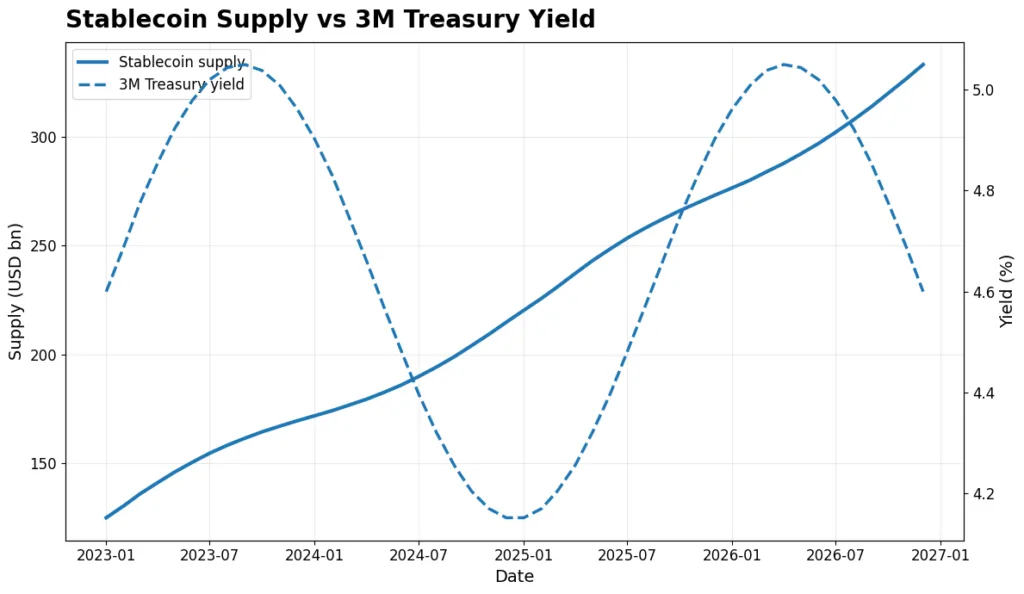
Structural shift: From payments rail to yield engine
Stablecoins have evolved beyond their original purpose as payment tools. They have turned into automatic revenue generators which generate profits through worldwide demand for US dollar cash. The system functions through its capacity to operate between two different operational frameworks. It offers digital dollars without charging fees which users can spend in cryptocurrency markets.
The system directs financial resources toward US government debt which serves as a crucial worldwide financial asset. The system operates with two different functions which create financial instability. Stablecoin issuers are effectively performing core banking functions. They handle customer funds while handling reserve assets which they use to create returns through government securities.
The financial institution functions without any of the restrictions which protect traditional banks including requirements for maintaining capital and providing deposit protection and handling customer credit needs. This development represents more than just a new technological solution. It creates a system for financial transactions which removes the need for traditional banking services.
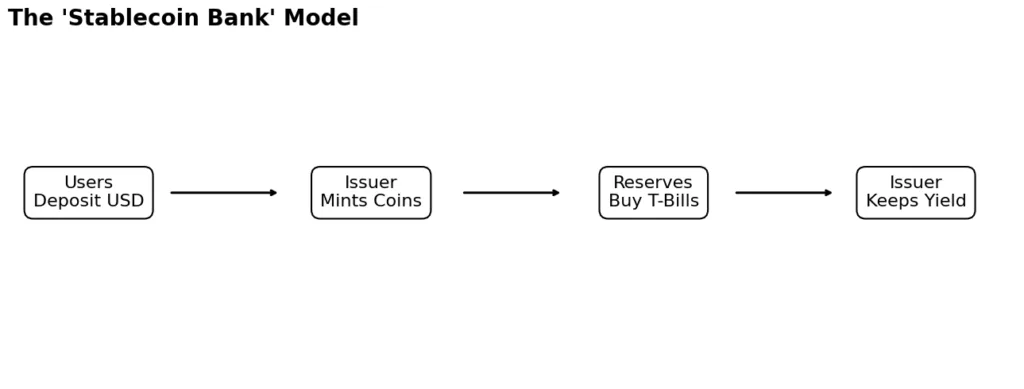
The policy response: Washington enters the arena
The U.S. government now operates its defense activities by standing guard at all times. Stablecoins function as essential crypto products which impact market liquidity and treasury operations and customer banking behavior. Washington’s response develops according to established patterns. The first layer of the process establishes yield extraction rights under controlled conditions.
The U.S. Treasury market operates as an active financial system component which supports the country’s economic infrastructure. Private companies which operate with minimal regulation should not be permitted to generate billion-dollar profits through yield investments. The second layer of the process establishes ways for organizations to connect with each other. Stablecoin issuers face increasing demands to establish banking relationships through three methods which are formal charters and enhanced disclosure systems and direct regulatory oversight.
The underlying message is consistent: if someone works like a bank employee, the banking system will consider them a bank worker. The third layer serves a protective function. Customers are transferring their bank deposits to stablecoins because traditional banks now provide lower interest rates than stablecoins. Banks face challenges with their credit creation process because customers withdraw their money from their accounts. From a policy perspective, this situation develops into a non-neutral position.
The core conflict: Who owns the risk-free rate?
The current conflict situation contains a major financial power conflict which needs resolution. The risk-free rate has historically been embedded within institutional frameworks controlled by banks and sovereign entities. The system was built to prevent non-bank international digital issuers from acquiring its full operational capacity. Stablecoins have changed that situation because they entered the market. The company has established a system which enables them to obtain financial returns through direct Treasury reserve investments.
The process requires no lending activities because it eliminates the need for credit risk assessment and complex financial framework systems. The process enables direct sovereign yield extraction for the user.
The disruptive nature of the model arises from its operational efficiency. The system creates new financial profit centers which it uses to bypass existing financial systems. The dual problems which arise from this situation present policymakers with challenges because they need to create rules and maintain control over how money moves through the economy.
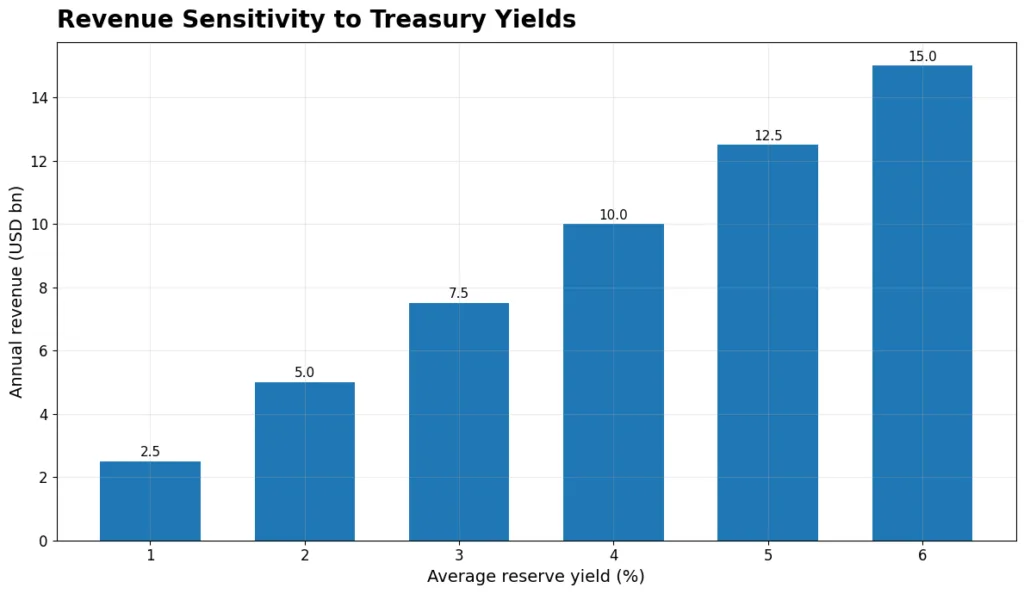
Market implications: Compression, migration, and fragmentation
The new regulatory framework will change how stablecoin issuers conduct their business operations. The business will experience reduced profit margins which existed as permanent fixtures because of rising compliance needs and changing yield patterns. The issue involves people moving to different locations. Offshore jurisdictions will become the new destination for capital and issuance activities if regulatory pressure increases in the United States.
The system creates different stablecoin ecosystems which function with different degrees of transparency and regulatory control. Financial innovation will continue its progress without any interruptions. The existing system which functions at present will create an urgent need for new financial products to be developed.
The market now offers yield-bearing stablecoins and tokenized Treasury products and hybrid structures which connect DeFi with traditional finance. The products aim to create new methods which will enable them to use the same underlying yield while following regulatory requirements.
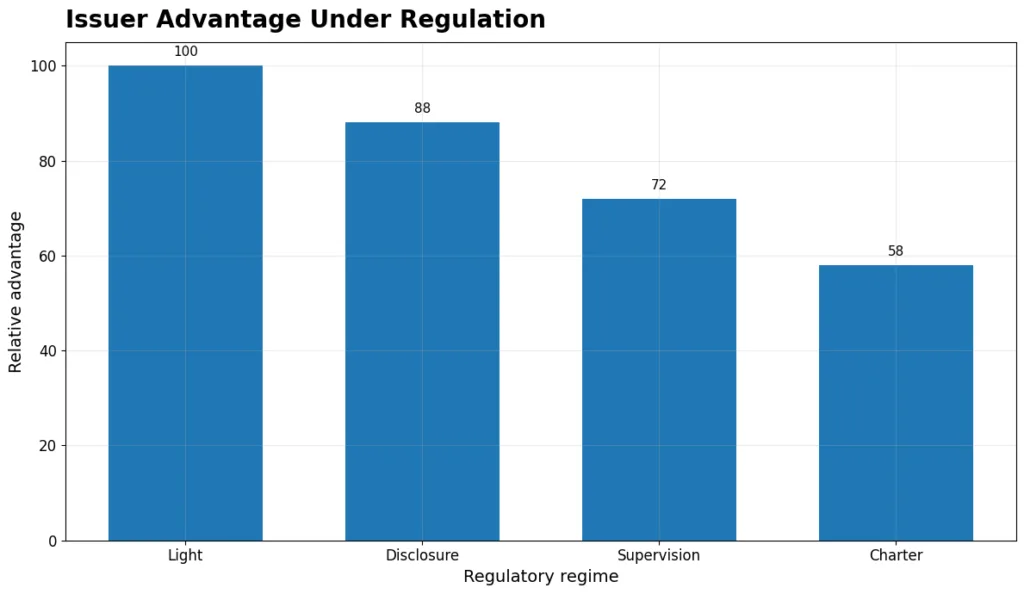
Derivatives & positioning: The hidden layer
The yield war affects both spot markets and derivative markets together with their leverage structures. The entire crypto derivatives market depends on stablecoins as its main collateral system because their availability and distribution determine how markets function. The update of Treasury yields creates an indirect effect on the opportunity cost associated with stablecoin ownership.
The system establishes funding rates which determine how traders use leverage and conduct basis trades on multiple exchanges. The system starts to display a feedback mechanism which connects macroeconomic variables to on-chain activities that subsequently impact digital asset liquidity and market prices.
This event marks a structural unity between two different systems. The crypto market now operates under the influence of macroeconomic factors. The crypto market now operates through macroeconomic factors which have become its dominant force.
Macro alignment: The state strikes back
The present conflict experiences escalation because of existing circumstances that exist beyond its current time period. The United States government maintains a financial system which requires ongoing public interest in Treasury bonds for its current operations.
The situation demands that organizations must develop methods to manage both their liquidity resources and their investment distribution systems. Stablecoins began their existence as financial instruments which helped US bonds by directing international demand toward US government debt.
The system transformed when they reached larger operational capacities because they stopped being passive players and became active capital distribution drivers. The process creates a funding mechanism which enables states to obtain funds in a method that establishes some autonomy from governmental control. The policy direction indicates that stablecoins will be permitted to operate in the market but their activities will remain under government control.
Investor psychology: From neutral infrastructure to political asset
The market perception has begun to change. People used to consider stablecoins as neutral market infrastructure which functioned as basic tools for handling liquidity and conducting transactions. The existing perception has developed into a more intricate understanding. The entities now function as profit centers which operate within larger financial systems and government systems.
The situation creates additional risks for businesses. People now trust systems based on their ability to secure technologies and show reserve details. The way people trust systems now depends on their ability to maintain technological integrity and reveal reserve details and on their regulatory stance and geopolitical status. The market has begun to reflect this transition through its pricing although it happens in an indirect way.
Forward-looking outlook: The endgame
The yield war leads toward a restructuring process instead of a complete system shutdown. Stablecoins have become essential components of the digital asset ecosystem which they exist in but their structure and operational needs will undergo future changes. The complete integration scenario requires issuers to function within established regulatory systems while they share their yield revenues with financial institutions.
The second option leads to different regulatory systems which enable offshore businesses to gain increased access to international funds. The third possibility creates a separate system that includes both legal and illegal market operations which target specific market audiences. The most realistic outcome combines these three pathways to create an ecosystem with multiple stablecoin levels.