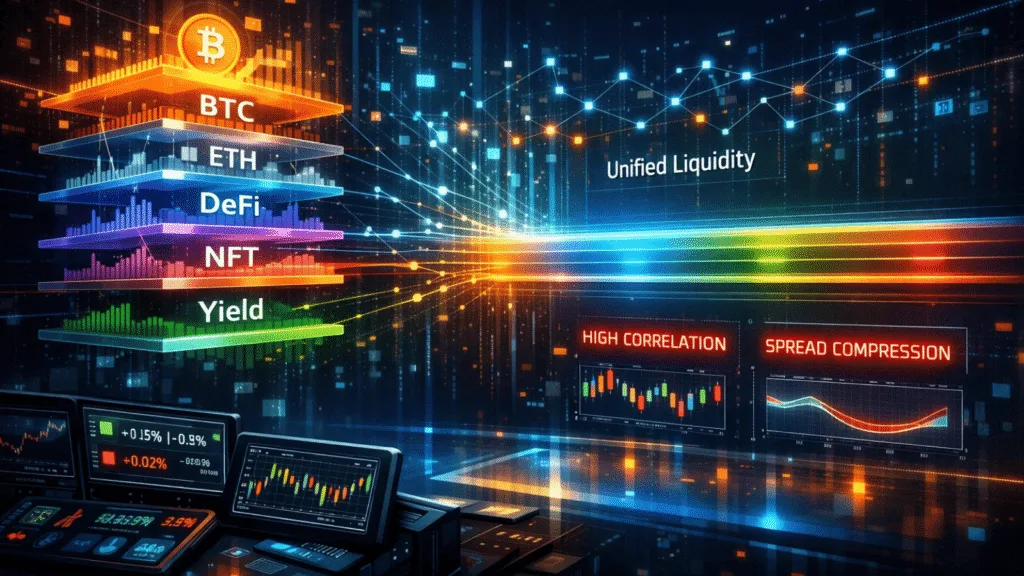



The authorities now communicate their intent to treat most digital assets as commodities because most digital assets lack proper issuer identification. The current situation extends beyond a regulatory explanation because it represents a fundamental change to market operations.
The financial system uses security and commodity classifications to determine all aspects of asset trading which includes market accessibility and leverage restrictions and liquidity creation and capital movement processes.
The silent transition of digital assets into the commodity category goes beyond altering compliance regulations. It creates a new foundational system that controls all aspects of cryptocurrency markets.

The core structural difference
Securities and commodities operate under different financial systems. Securities represent future cash flow rights. Investors value securities based on expected future earnings and dividend payments and their rights to control the issuing company. The pricing system uses future cash flow predictions which undergo discounting for their present value determination. Commodities function as non-producing assets which derive their worth from market requirements and available resources and product value.
The market treats these assets as tradable and hedged instruments and storage resources and speculative tools but not as ownership rights to the issuing company. The market transition from viewing digital assets as securities to treating them as commodities leads to a new question about digital assets.
The market transforms from asking about cash flow through digital tokens to inquiring about how digital tokens function within the liquidity framework. The complete transformation brings about fundamental change. The system changes from using valuation techniques to establish worth to using flow-based models for price determination.
Why regulators are leaning toward commodities
The regulatory logic is simple, but its consequences are not. Most crypto assets lack a centralized issuer who guarantees returns to investors. The token operates independently from its contractual profit rights even when teams exist. The traditional security classification system experiences a decline in effectiveness because of this development.
The assets display characteristics of commodities because of their mining and staking and emission processes. The assets function as commodities because they continue to be mined and staked and traded in open markets. The assets act as essential components within financial systems which include DeFi and collateral and liquidity pools.
The regulatory definition of these assets as commodities decreases the requirements needed to establish issuer responsibility. The market perspective provides access to a critical element which enables the expansion of derivative instruments.
Derivatives: The real endgame
Commodity classification shifts regulatory oversight toward frameworks historically managed by bodies like the CFTC.And in those markets, derivatives dominate.In commodities, spot markets are only the surface. The real price discovery happens in:
futures curves
options volatility surfaces
perpetual funding markets
structured products
If digital assets are treated as commodities, the natural evolution is clear:
crypto becomes a derivatives-first market, not a spot-driven one.This is already visible.Bitcoin and Ethereum trade increasingly through futures and options positioning rather than spot accumulation. Liquidity is migrating toward instruments that express views on volatility, direction, and time not just ownership.The classification accelerates this trend.
Liquidity transformation
Institutional allocation together with earnings expectations and long-term positioning determines equity market liquidity.
The liquidity of commodity markets depends on:
hedging flows
speculation cycles
inventory dynamics
macro positioning
This creates a new type of instability. The liquidity of commodities stays strong during normal times but becomes unstable when there is market pressure. The market collapses during periods of high volatility because traders who participate in short-term price movements do not hold assets for extended periods.Current marketplace conditions show this exact behavior in cryptocurrency.
The order books of the market show deep liquidity while,spreads stay narrow, yet the market loses all its liquidity during periods of stress.The commodity framework explains why.
Valuation is being rewritten
The transition from securities to commodities eliminates established methods which investors use to determine financial worth. Investors use three fundamental methods for valuation analysis which include discounted cash flow valuation and earnings multiple valuation and dividend discount valuation.
The valuation process uses four main factors which include relative asset positioning and narrative value and market capital movement and economic conditions. The traditional finance system shows irrationality in crypto markets because they operate with their own pricing system. The assets maintain their correct value according to their specific pricing system which uses a pricing model that applies to gold instead of stocks.
Trading implications
The new development requires traders to change their approach because it helps them create better trading strategies. Directional trading requires traders to focus on:liquidity cycles and volatility regimes and macro catalysts and derivatives positioning, which decreases its need for fundamental market analysis.
Mean reversion shows different characteristics than its traditional behavior. Market participants use liquidity acceptance as their main factor for deciding whether to consider a news event as a breakout. Traders now treat volatility as a separate financial asset that they can buy and sell.
The most important implication is this:edge moves away from information and toward structure.Understanding funding rates, open interest, liquidity zones, and positioning information is more crucial than understanding the underlying “project.”
Institutional capital and access
Commodity classification also changes who can participate.It simplifies access for:
hedge funds
macro traders
commodity desks
derivatives specialists These participants do not treat assets like investments.
They treat them like instruments.
This introduces more capital but also more reflexivity.Markets become faster, more technical, and more sensitive to global macro conditions.Crypto stops behaving like a venture market and starts behaving like a global trading layer.
The hidden risk
The commodity markets show a historical pattern of two specific events which include liquidity shocks and leverage cascades and reflexive crashes. The financial system depends on derivatives so even minor market disturbances can lead to major asset sales. The market already displays the described market behavior. The reclassification creates formal recognition of this risk instead of decreasing it.