



When headlines move markets
Military movements in geopolitical conflicts extend beyond their primary purpose. They also affect the flow of financial resources. The instant news reports about a conflict the price of oil increases and the price of gold rises and stock markets experience instability and cryptocurrencies show immediate changes. Retail traders typically react to market changes by using their feelings as their guide. Some people buy Bitcoin because they think it functions like digital gold. Others sell their assets during market fluctuations because they fear losing money.
The market does not move in one direction because of war. War introduces new policies which change existing power structures. The assessment of crypto assets as either protective investments or volatile assets depends on four factors which include liquidity levels and dollar value and oil market disruption and the status of derivatives market positions. Retail traders who fail to differentiate these regimes often confuse short-term volatility with long-term structural narrative. The guide explains how geopolitical events affect cryptocurrency markets and shows retail investors the correct methods for assessing risk.
Macro regime shift inflation shock vs liquidity shock
War affects markets through two primary channels.The first is inflation pressure. When conflict threatens oil supply routes or energy infrastructure, crude prices spike. Higher oil prices lead to increased inflation expectations which result in bond yield adjustments and central banks implementing tighter financial conditions. The current situation results in decreased liquidity.

Risk assets suffer. Systemic fear functions as the second channel. If investors begin fearing sovereign instability, currency debasement, or capital controls, Bitcoin may benefit as an alternative store of value. This is when the “digital gold” narrative activates. Retail investors often misread the difference.
Bitcoin behaves like a high-beta tech stock when the Federal Reserve maintains restrictive policies and dollar liquidity remains tight. Bitcoin’s hedge narrative becomes stronger when the crisis endangers fiat stability and sanctions lead to currency fragmentation. The macro backdrop determines the reaction.
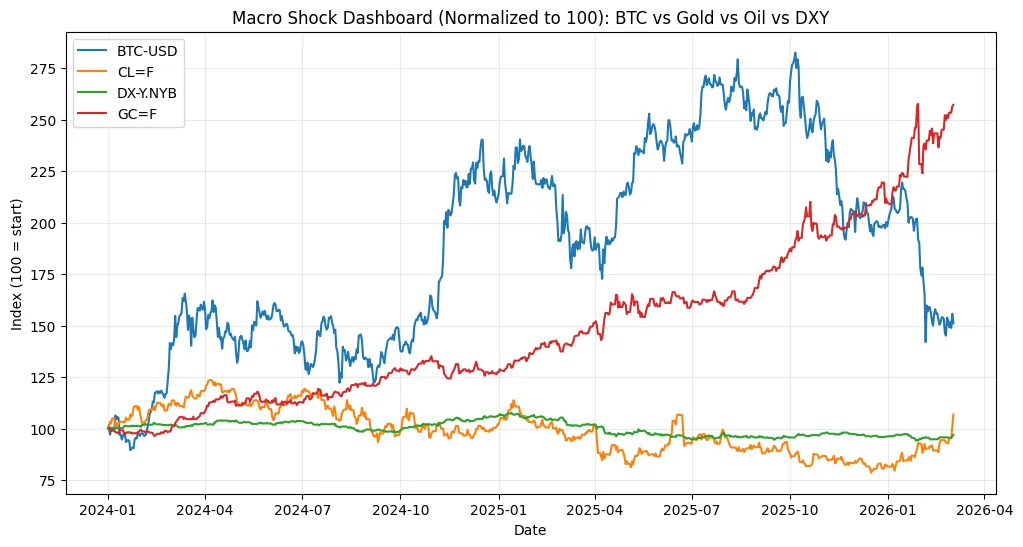
Safe haven or risk asset? The correlation test
The price of Bitcoin during minor regional tensions moves together with Nasdaq futures. The asset maintains its connection to assets which depend on market liquidity for their valuation. The price of Bitcoin remains independent from gold price increases which normally make Bitcoin stronger. Bitcoin demonstrates a temporary loss of connection with market trends during periods of extreme capital flight which occur when sanctions are implemented and banks experience distress.
The market correlations between assets have shifted to establish stronger links between gold and market assets which compete with equities. Retail investors should not assume hedge behavior. The investors need to examine the relationship between different assets through correlation matrices.
The asset continues to act as a risk asset because Bitcoin maintains its high correlation with Nasdaq. The shift in correlation toward gold together with US Dollar depreciation result in the establishment of hedge dynamics. The speed of narrative transitions exceeds the speed of structural changes. The importance of structure exceeds all other factors.
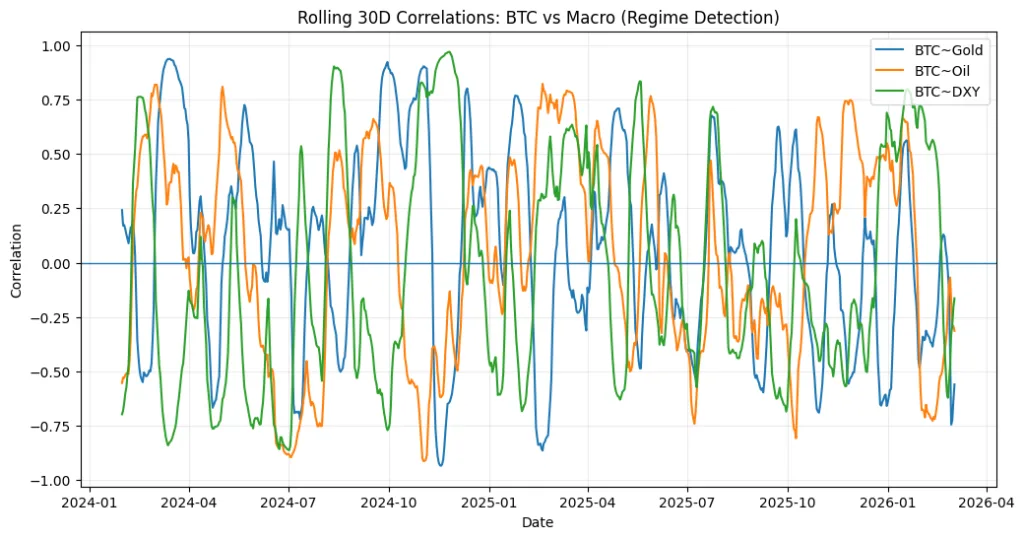
Derivatives positioning where retail gets liquidated
The financial markets experience increased instability because geopolitical conflicts create situations which traders can use for leverage. Traders who short panic moves cause funding rates to switch to negative values. The market shows an abrupt increase in options implied volatility. Traders create liquidation clusters which develop around easily visible support zones. Retail market participants make trades with excessive leverage because they choose to follow current news instead of performing proper structural analysis. The markets experience an overshooting effect during the initial stages of conflict.
Retail traders establish positions by purchasing when prices drop below support or when they anticipate short sellers to exit their positions. Institutions utilize volatility compression together with market confirmation as their waiting strategy. Retail investors can safeguard their financial assets through knowledge of open interest and funding divergence and skew statistics.
The market usually interprets extremely negative funding conditions together with stable price levels as an indication that many traders have entered short positions which will not lead to further price drops. The news about war causes people to experience strong feelings. The derivatives market reveals the existence of irregularities in trader positions.
Stablecoins & capital flight the hidden indicator
In sanction-affected regions, stablecoin volumes often surge. Users convert local currency into dollar-denominated stablecoins to preserve purchasing power. On-chain USDT and USDC transfers can increase significantly during crisis moments.This behavior signals capital preservation, not speculation.Retail investors should monitor stablecoin supply changes and exchange inflow/outflow metrics. Rising exchange outflows during crisis periods may indicate long-term holders moving to self-custody. Rising stablecoin minting may indicate defensive positioning.War does not just impact price. It impacts capital flow architecture.
Retail strategy hedging vs speculating
The retail mistake is binary thinking.Either crypto is a hedge, or it is collapsing.The world operates through conditional situations.The combination of rising oil prices and increasing yields and strengthening dollar value causes problems for risk assets. The current economic situation makes it unsafe to maintain high levels of debt. The focus needs to shift toward maintaining assets through reduced risk exposure instead of pursuing aggressive market activities.
Bitcoin achieves greater value in its censorship-resistant design when political instability increases and governments impose financial restrictions. The key distinction is liquidity conditions. The crypto market operates through liquidity which has a greater impact than news stories. Retail participants should focus on portfolio construction rather than single trades. A crisis is not a signal to gamble. It is a signal to reassess exposure.
Psychological discipline the invisible edge
War headlines trigger fear responses through their international news coverage. Social media amplifies extremes through its content distribution system. Retail traders chase narratives instead of analyzing regimes.Disciplined investors observe volatility structure before reacting. During periods of uncertainty they decrease their use of borrowed funds. Structural conditions must be met before they will increase their investment.
Crisis survival requires organizations to establish protection measures against potential losses rather than establishing methods to forecast future events. Organizations should aim for protection against potential losses instead of attempting to forecast future developments. When market conditions become stable again after a period of volatility investors who maintain their capital will find better investment chances.