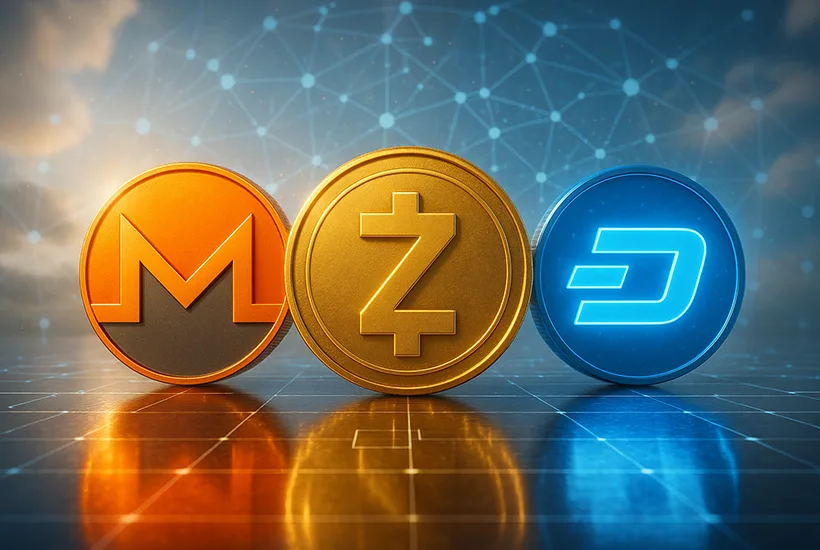



In a world where blockchain technology promises radical transparency, a curious anomaly has emerged, that of privacy coins. These cryptocurrencies are designed to conceal transaction details, offering users a layer of anonymity that traditional blockchains like Bitcoin and Ethereum do not. As debates around surveillance, financial freedom, and digital rights intensify, privacy coins have carved out a niche. But it also challenges the very ethos of public ledgers.
What are privacy coins?
Privacy coins are a category of cryptocurrencies that prioritize confidentiality. Unlike mainstream cryptos, which record every transaction on a public ledger, privacy coins use cryptographic techniques to hide details such as the sender, receiver, and transaction amount. Their core mission is to give users control over their financial data, shielding it from prying eyes, whether those belong to corporations, governments, or malicious actors.
Several privacy-focused cryptocurrencies have gained traction over the years, each with its own approach to anonymity.

- Monero (XMR): Often considered as the gold standard of privacy coins. Monero uses ring signatures, stealth addresses, and RingCT to ensure that every transaction is private by default.
- Zcash (ZEC): Offers optional privacy through zk-SNARKs, allowing users to choose between transparent and shielded transactions.
- Dash (DASH): Originally a fork of Bitcoin, Dash includes a feature called PrivateSend, which mixes coins to obscure transaction origins.
- Firo (FIRO): Formerly known as Zcoin, Firo uses the Lelantus protocol to enable anonymous transactions without a trusted setup.
- Horizen (ZEN): Combines privacy with scalability, using zk-SNARKs and sidechains to support private messaging and decentralized applications.
How do privacy coins work?
Privacy coins employ a range of sophisticated technologies and advanced cryptography to achieve anonymity. Take, for example, ring signatures that is used by Monero. This method blends a user’s transaction with others, making it impossible to determine the true sender. As for stealth addresses, these generate one-time addresses for each transaction, hiding the recipient’s identity. And finally a Ring CT (Confidential Transactions,) which conceals the transaction amount.
Zcash and Horizen use zk-SNARKs (Zero-Knowledge Proofs). These allow users to prove a transaction occurred without revealing any details. Whereas Dash’s PrivateSend uses CoinJoin to mix transactions, making it harder to trace funds.
All these technologies are constantly evolving, and some coins even allow for selective disclosure, where users can prove transaction validity without compromising privacy.
Challenges faced by privacy coins
Despite their appeal, privacy coins face significant hurdles. Governments and financial watchdogs worry that privacy coins can facilitate money laundering, tax evasion, or illicit trade. As a result, many exchanges have delisted them to comply with anti-money laundering (AML) laws. Their anonymity can attract bad actors, which tarnishes their reputation and invites further regulation. In fact, many wallets and platforms don’t support privacy coins due to technical or legal concerns. And given their complexity, these privacy features can be difficult for average users to understand or use correctly, limiting their adoption.
Privacy coins versus regular cryptocurrencies
While all cryptocurrencies operate on blockchain technology, privacy coins diverge in key ways. Some of them are listed in the table below.
Features Regular Cryptos
(e.g. Bitcoin, Ethereum)Privacy Coins
(e.g. Monero, Zcash)Transaction Visibility Fully public and traceable Hidden Sender/Receiver Info Pseudonymous but linkable Concealed using cryptography Amount Visibility Transparent Often encrypted Default Privacy No Yes
Privacy coins represent a bold counter-narrative in the blockchain ecosystem. While most cryptocurrencies embrace transparency, privacy coins champion discretion, autonomy, and financial freedom. Whether they become mainstream or remain niche will depend on evolving technologies, user demand, and regulatory landscapes. But one thing is clear, in a world increasingly defined by data visibility, the right to financial privacy is more relevant than ever. Even so if privacy coins create a philosophical and technical tension within the crypto ecosystem.